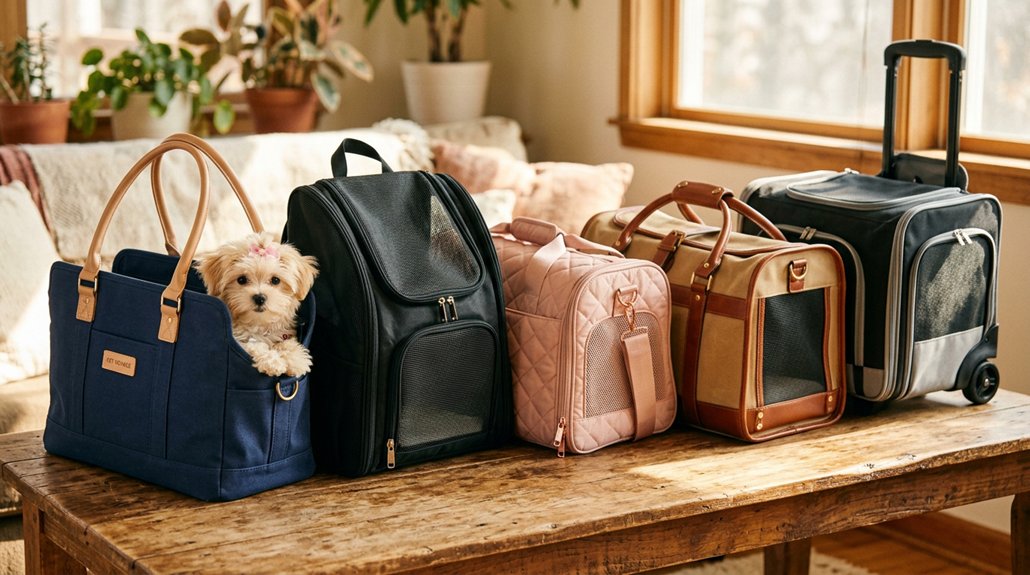
Over 23 million Americans traveled with their pets last year, and most of them learned the hard way that not every carrier cuts it. If your dog’s comfort and safety matter to you, you can’t afford to grab just anything off the shelf. The right carrier makes all the difference, and the five options ahead might surprise you.
Safety Features to Prioritize in a Small Dog Travel Carrier
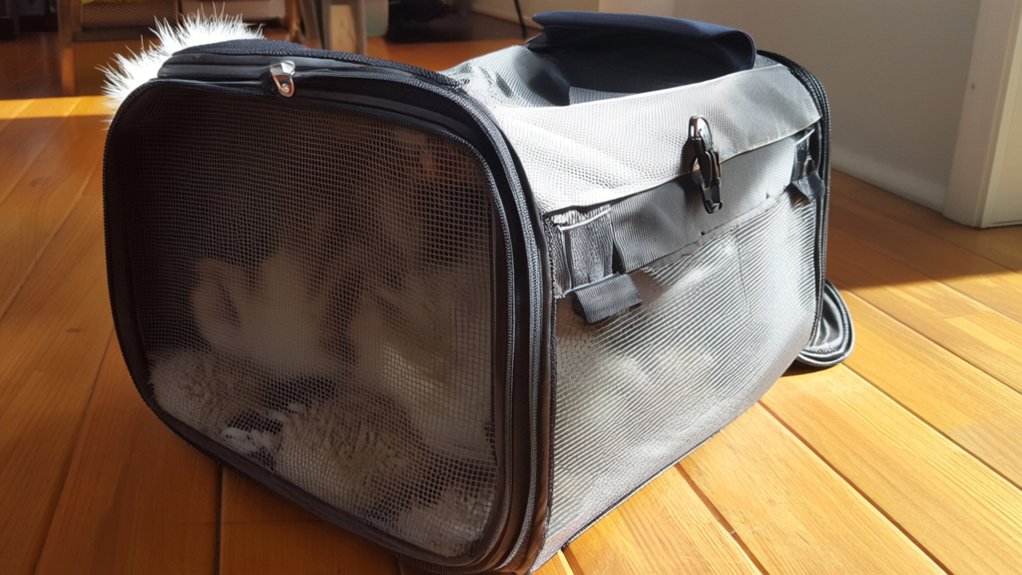
When shopping for a small dog travel carrier, safety should be your top priority—not aesthetics or price. Your furry drama queen deserves better than a stylish bag that falls apart mid-flight.
Look for these non-negotiables:
Secure zippers and locks — Because your Chihuahua *will* find the one weak spot and exploit it dramatically.
Ventilation panels — Multiple mesh sides keep air flowing so your pup doesn’t turn into a sad, overheated meatball.
Sturdy, reinforced base — A wobbly bottom means an anxious dog, and nobody wants that chaos.
Safety leash attachment — An interior clip keeps your escape artist contained if the carrier opens unexpectedly.
Airline-approved dimensions — Measure twice, book once. Getting rejected at the gate is everyone’s nightmare.
Airline-Approved vs. Car Carriers: Which Does Your Dog Actually Need?
Not all carriers are created equal, and choosing the wrong one could mean getting turned away at the airport or failing to keep your pup safe on the road. Airline-approved carriers must meet strict size and ventilation requirements — each airline differs, so double-check before booking. They’re designed to fit under the seat, keeping your dog close without annoying your neighbor more than necessary.
Car carriers prioritize crash safety, often featuring seatbelt attachments and reinforced walls. They’re bulkier but worth it when highway speeds are involved.
Here’s the real talk: if you travel both ways, invest in a dual-purpose carrier meeting airline standards *and* securing properly in your car. It’ll cost more upfront but save you from owning two carriers — and two headaches.
Top 5 Travel Carriers for Small Dogs Ranked
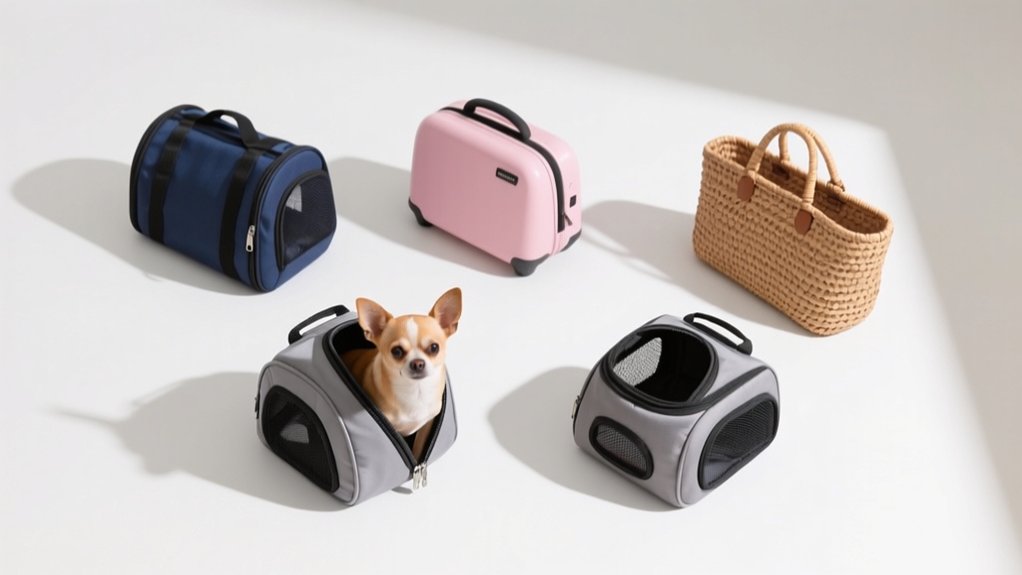
Now that you know what to look for in a carrier, here are the five best options that hold up in real-world travel — whether you’re boarding a plane or hitting the road.
Not all carriers survive real-world travel — these five actually do, whether you’re flying or just road-tripping.
- Sherpa Original Deluxe — airline-approved, mesh ventilation, and your dog won’t plot revenge
- Sleepypod Air — doubles as a bed, because your dog deserves better than you do
- Pecute Expandable Carrier — budget-friendly with bonus wiggle room
- K&H Travel Carrier — crash-tested for car safety, unlike your GPS decisions
Each option balances comfort, durability, and practicality differently. Your perfect match depends on whether you’re maneuvering through TSA checkpoints or just surviving a road trip with a dramatic Chihuahua shotgun.
How to Pick the Right Carrier Size for Your Small Dog
Picking the right carrier size comes down to 3 simple measurements: your dog’s length, height, and weight. Measure your pup from nose to tail base, then from the floor to the top of their head. Add 2–4 inches to both measurements so they’re not traveling like sardines in a tin can.
Weight matters too, since every carrier has a limit — and no, your dog’s “big personality” doesn’t count as extra pounds. Most small dog carriers accommodate pets under 20 lbs.
Once you’ve got your numbers, check the carrier’s interior dimensions, not the exterior. Manufacturers love making bags look spacious on the outside while hiding the truth within. Your dog deserves better than an accidental game of canine Tetris.
How to Train Your Small Dog to Love Their Carrier
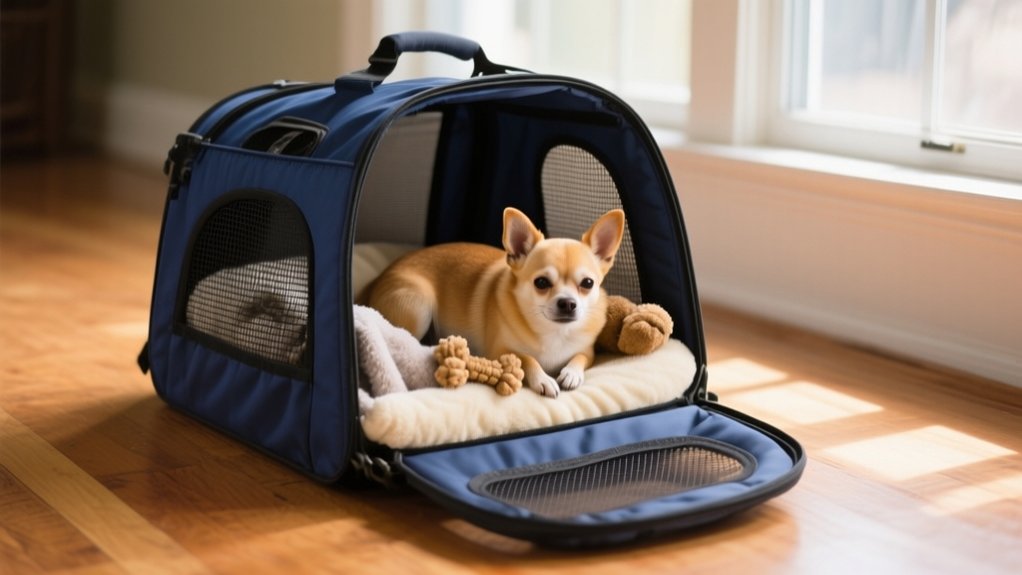
Getting your small dog to love their carrier takes patience, but it’s more straightforward than you might think.
Think of it as convincing a tiny, dramatic roommate that moving boxes aren’t scary. Follow these steps:
- Place the carrier out with the door open so your dog investigates it on their own terms.
- Toss treats inside without forcing them in — let curiosity do the heavy lifting.
- Feed meals near the carrier, gradually moving the bowl inside over several days.
- Practice short trips around the block before attempting cross-country adventures.
Consistency matters more than speed here. Some dogs warm up in days; others need weeks. Don’t rush it — you’ll end up with a confident traveler instead of a trembling, betrayed furball.