Your petite companion isn’t built for the elements the way larger breeds are. When temperatures drop, tiny dogs lose body heat fast, and that can become a serious problem. Knowing how to dress them correctly makes all the difference between a comfortable walk and a dangerous one. The right coat, the right fit, the right fabric — it’s not as simple as it sounds.
Does Your Tiny Dog Actually Need Winter Clothes?
Before rushing out to buy your tiny dog a sweater, it’s worth knowing whether they actually need one. Spoiler: they probably do.
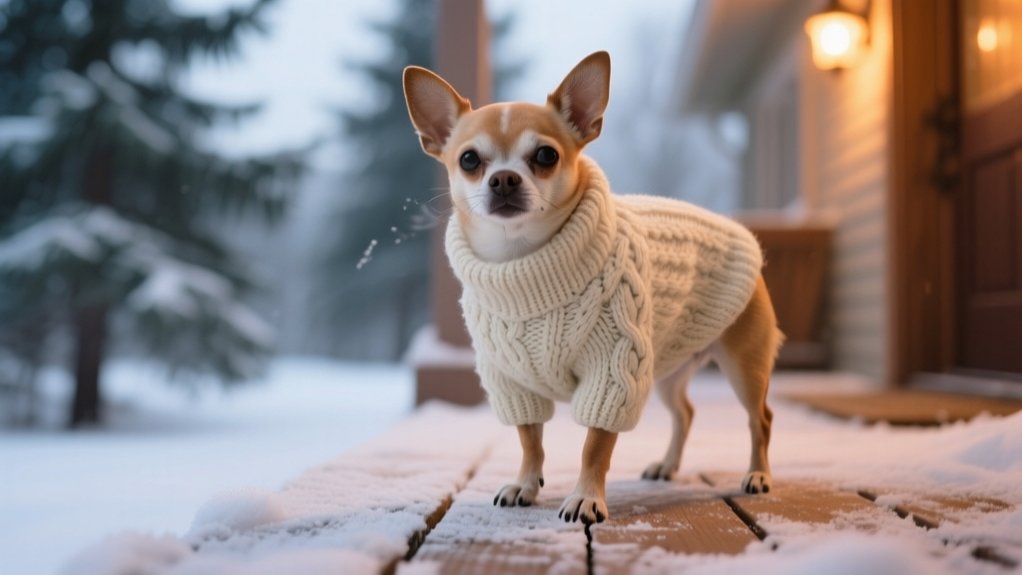
Small dogs like Chihuahuas, Dachshunds, and Toy Poodles have a rough deal when it comes to winter. Their tiny bodies lose heat faster than larger breeds, and many lack the thick double coats that nature gave bigger dogs as a built-in parka.
Small dogs like Chihuahuas lose heat fast and lack the thick coats bigger breeds were lucky enough to be born with.
Signs your little guy needs bundling up include shivering, reluctance to go outside, and that pitiful look that says, “You did this to me by adopting a dog bred for warmer climates.”
If your dog’s a Husky mix or has a naturally thick coat, skip the outfit. But for most tiny breeds? Winter clothes aren’t just adorable — they’re genuinely necessary.
How to Measure Your Small Dog for the Perfect Coat Fit
Once you’ve decided your tiny dog needs a coat, getting the right fit is everything — too tight and it restricts movement, too loose and it’s useless against the cold. Grab a soft measuring tape and measure these four key spots:
- Back length — base of neck to base of tail
- Chest girth — widest part of the chest, behind the front legs
- Neck circumference — where a collar typically sits
- Weight — because sizing charts love ignoring reality without it
Compare your numbers against the brand’s specific size chart — don’t assume a “small” is universal. It absolutely isn’t. When in doubt, size up slightly; you can layer underneath, but you can’t un-squeeze a miserable Chihuahua.
Puffer, Fleece, or Parka: Which Style Is Best for Tiny Dogs?
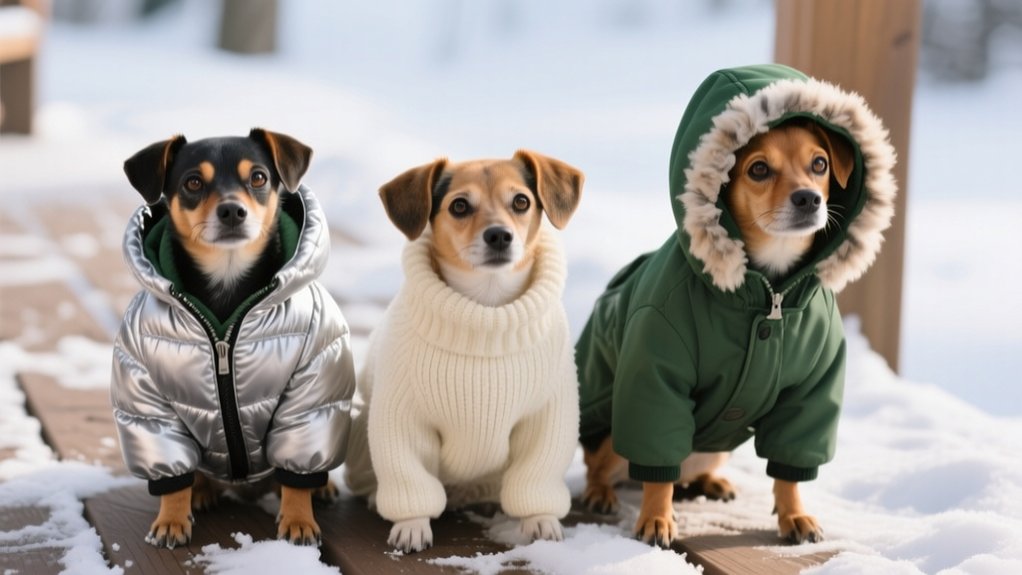
Now that you’ve got your measurements locked in, it’s time to figure out what kind of coat actually makes sense for your dog — because not every style suits every situation, breed, or climate.
| Coat Style | Best For |
|---|---|
| Puffer | Bitter cold, drama queens |
| Fleece | Mild temps, couch potatoes |
| Parka | Snow, rain, tiny adventurers |
| Vest | Active dogs, layering lovers |
Puffers trap heat brilliantly but restrict movement — great for standing around looking fabulous, less ideal for zoomies. Fleece is cozy and flexible but won’t block wind or moisture. Parkas handle harsh weather like champions but can feel bulky on teacup-sized pups. Match the coat to your climate, not just your aesthetic vision.
Which Fabrics Actually Keep Tiny Dogs Warmest?
When choosing a coat for your tiny dog, fabric matters just as much as style. Natural materials like wool offer excellent insulation by trapping body heat, while synthetic options like fleece and polyester filling provide lightweight warmth that’s also moisture-resistant. You’ll want to weigh the tradeoffs between the two, since natural fabrics tend to be heavier and pricier, but synthetics can lack breathability on warmer winter days.
Best Insulating Fabric Types
Choosing the right fabric makes all the difference in keeping your small dog genuinely warm rather than just dressed up. Skip the fashion-forward nonsense and focus on what actually works:
- Fleece – Lightweight, breathable, and your Chihuahua won’t dramatically collapse under the weight.
- Wool – Excellent heat retention, though it can irritate sensitive skin, so look for merino.
- Sherpa – That fluffy cloud material that makes tiny dogs look like cartoon characters while genuinely trapping heat.
- Thermal knits – Stretchy, cozy base layers perfect for layering under waterproof shells.
Avoid cotton entirely — it absorbs moisture and stays wet, practically turning your pup’s outfit into a cold compress. Your dog deserves better than that.
Natural Vs Synthetic Warmth
Whether you go natural or synthetic comes down to more than just warmth — it’s about how each fabric behaves when conditions get tough. Wool is nature’s original performance wear. It regulates temperature, resists moisture, and doesn’t collapse the moment your Chihuahua side-eyes a puddle. Fleece, meanwhile, is wool’s overachieving synthetic cousin — lightweight, fast-drying, and impressively warm. The real difference? Wool keeps insulating even when wet; most synthetics don’t. So if your tiny dog loves dramatically flinging themselves into snow drifts, wool wins. If you’re washing that jacket twice a week because your dog treats it like a napkin, fleece’s durability and easy care make it the smarter pick. Honestly, you can’t go wrong with either — just match the fabric to your dog’s chaos level.
How to Get Your Tiny Dog Comfortable Wearing a Coat
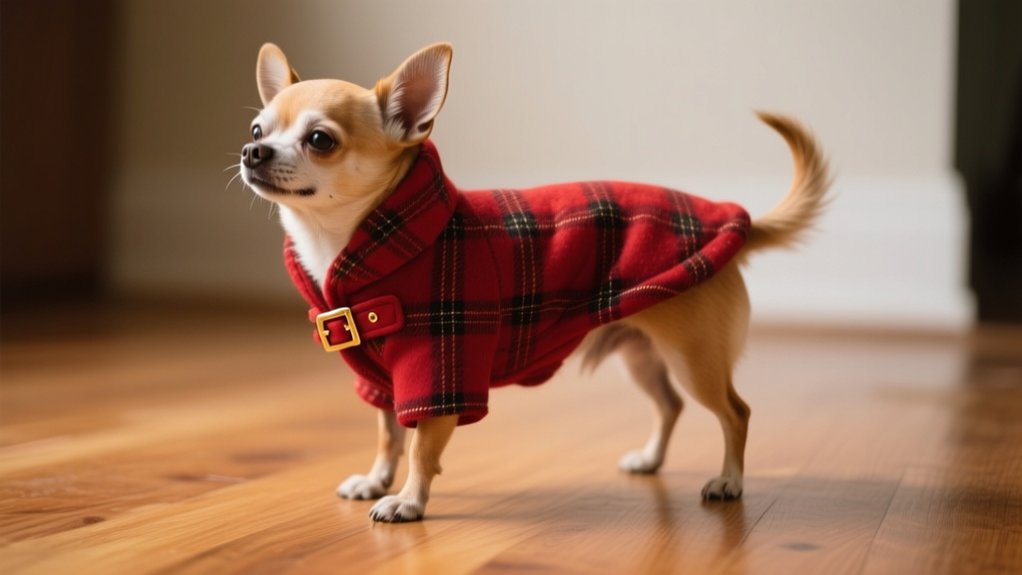
If your tiny dog resists wearing a coat, don’t panic — it’s a common reaction that you can overcome with patience. Start by letting your dog wear the coat for just a few minutes at a time, always pairing the experience with treats and praise so they build a positive association. Once they’re comfortable, you can gradually extend the wearing time until bundling up feels completely routine.
Start With Short Sessions
Once your tiny dog’s coat arrives, don’t just strap it on and head outside — that’s a recipe for a stress response. Instead, ease your pup into it like you’d ease into a cold pool.
- Let your dog sniff the coat for a day or two.
- Drape it over their back for 30 seconds without fastening anything.
- Fasten it loosely, offer treats, then remove it immediately.
- Gradually extend wearing time over several days.
Each session should feel like a party, not a hostage situation. Keep your energy calm and cheerful — dogs read you like a book. Short, positive sessions build trust, and soon your tiny fashionista will associate their coat with walks and snacks.
Pair Coats With Treats
Short sessions lay the groundwork, but treats are what seal the deal. Your dog’s brain works on a simple equation: weird thing happening + delicious reward = weird thing is actually great. Use this to your advantage.
The moment that coat slides on, immediately deliver a treat. Don’t wait. Timing matters here because dogs connect rewards to whatever just happened. Hesitate too long and you’ve rewarded them for standing still, not for wearing the jacket.
Use high-value treats — think tiny chicken pieces or cheese, not boring kibble. Save these exclusively for coat time so your dog genuinely gets excited when they see the jacket coming out. Soon enough, they’ll be sprinting toward their puffer vest like it’s the best thing that’s ever happened to them.
Gradually Increase Wearing Time
Two minutes is enough for your first session — just long enough for your dog to realize nothing terrible is happening. Then gradually stretch wearing time using this progression:
- Day 1-2: Two minutes indoors while treating aggressively
- Day 3-4: Five minutes during meal preparation
- Day 5-7: Ten minutes during a walk around the block
- Week 2+: Full outdoor adventures in style
Each session should end *before* your dog’s patience runs out. You’re building a positive track record, not testing their limits. If they’re wiggling dramatically and shooting you betrayed glances, you’ve gone too long. Keep sessions upbeat, move at your dog’s pace, and within two weeks, your tiny fashionista will be strutting confidently through winter like they invented coats.
What to Put on Your Tiny Dog for Walks, Hikes, and Extreme Cold
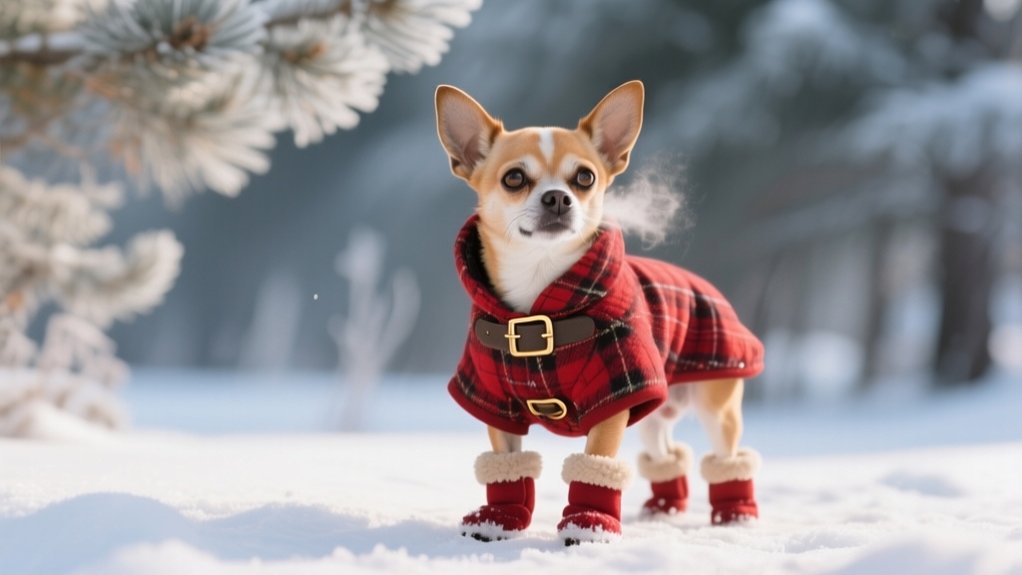
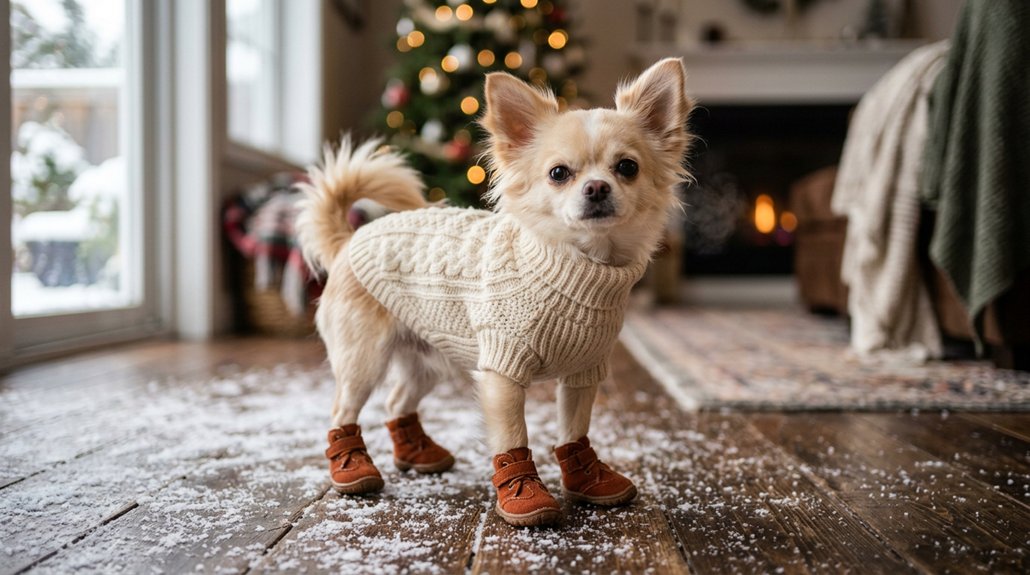
When temperatures drop and you’re heading out with your tiny dog, three key items should be part of your winter gear arsenal: a well-fitted coat or sweater, protective booties, and if conditions are severe enough, a full-body suit. Think of it as dressing your dog like a tiny arctic explorer — minus the dramatic National Geographic soundtrack.
For regular walks, a snug coat handles most winter days. Add booties when sidewalks get icy or salt-covered, since those little paws aren’t exactly built for chemical burns. Heading somewhere truly brutal? Break out the full-body suit. Yes, your dog will look ridiculous. Yes, strangers will photograph them. But they’ll be warm, comfortable, and frankly, living their best dramatic winter life.
Where to Buy Winter Coats for Tiny Dogs
Finding the right winter coat for your tiny dog is easier than you’d think, since options span everything from big-box pet retailers like PetSmart and Petco to specialty boutiques and online shops like Chewy, Amazon, and Etsy. Here’s where to focus your search:
Finding the right winter coat for your tiny dog is easier than you’d think — the options are practically endless.
- PetSmart/Petco – Reliable basics, staff who’ve seen it all, and no judgment when you hold up a sequined parka against your Chihuahua.
- Chewy – Massive selection delivered to your door, because nobody wants to drag a shivering dog through a parking lot.
- Amazon – Budget-friendly with user reviews that’ll tell you exactly how waterproof “waterproof” actually means.
- Etsy – Custom, handmade options for dogs whose fashion standards exceed their owner’s budget expectations.