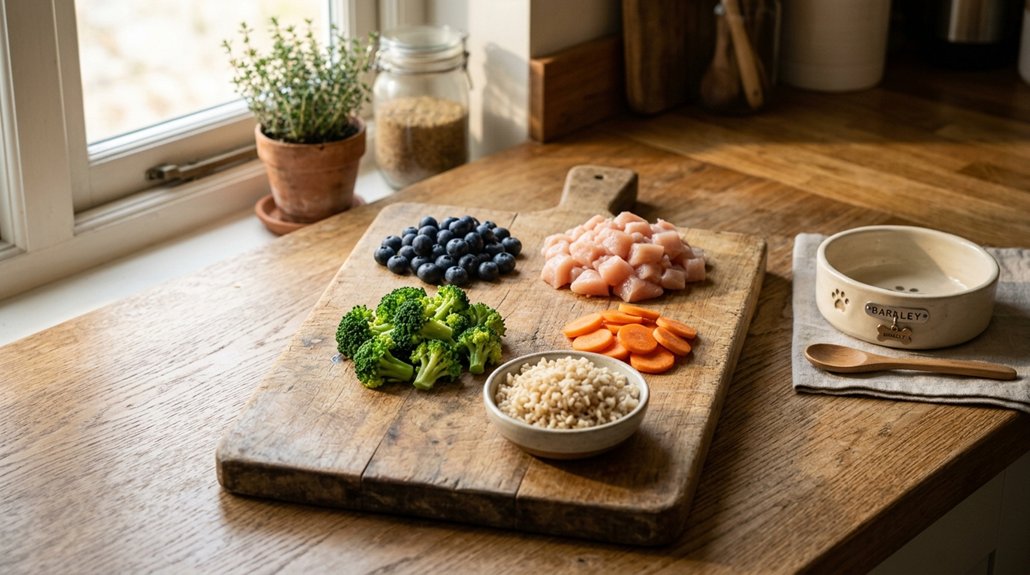
If your small dog is gaining weight, you’re not alone in this struggle. Petite breeds have unique metabolic needs that make obesity more likely than you’d think. The foods you choose matter more than portion size alone. Certain proteins, vegetables, and snacks can keep your dog lean without constant hunger. You’ll want to know exactly which ones work before your next trip to the pet store.
Why Small Dogs Gain Weight Faster Than Large Breeds
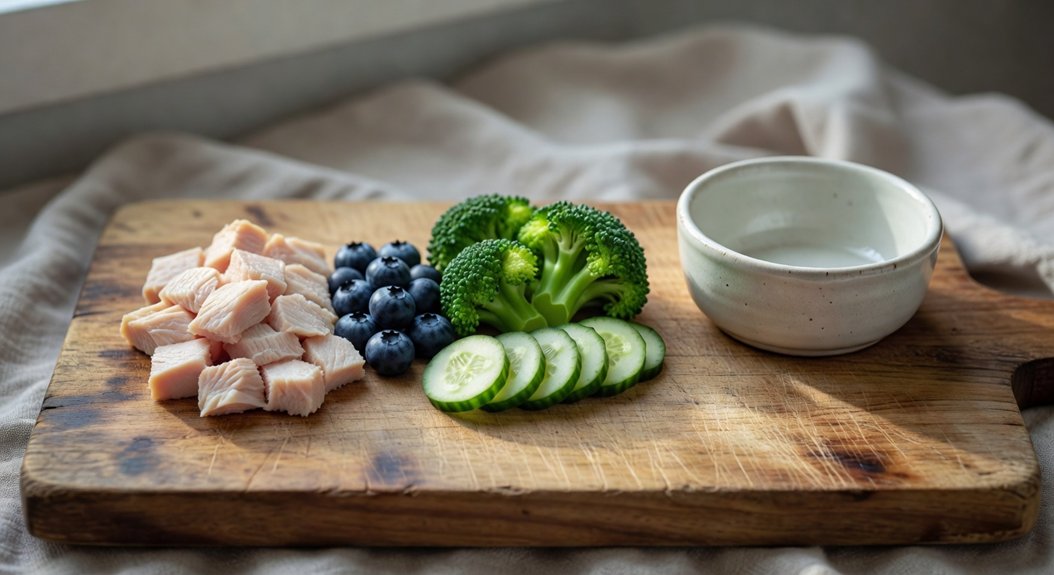
Small dogs have faster metabolisms than large breeds, but they also require fewer total calories per day—which means even minor overfeeding can quickly tip the scale toward obesity. Think of it this way: your Chihuahua doesn’t need the same caloric intake as a Great Dane, yet they’ll absolutely convince you otherwise with those dramatic, soulful eyes.
Small breeds also carry less body mass, so extra pounds hit them proportionally harder. A two-pound weight gain on a ten-pound dog is like a human suddenly packing on thirty pounds. That’s not a “little chubby”—that’s a health crisis wearing a cute sweater.
You’re in control of their portions, so don’t let their Oscar-worthy performances guilt you into overfeeding them.
How Many Calories Does a Small Dog Actually Need?
Figuring out exactly how many calories your small dog needs isn’t as straightforward as reading the back of a kibble bag. Those guidelines are basically written for the mythical “average dog,” which your dramatic little Chihuahua definitely isn’t.
Generally, small dogs need roughly 40 calories per pound of body weight daily — but that number shifts depending on age, activity level, and whether they’ve been spayed or neutered. A couch-potato Pomeranian burning calories exclusively by judging you needs far fewer calories than an energetic terrier running laps around your sanity.
Your best move is consulting your vet for a personalized caloric target. They’ll calculate what’s right, so you’re not accidentally turning your petite pup into a tiny, round potato.
Best Proteins to Keep Small Dogs Lean and Full
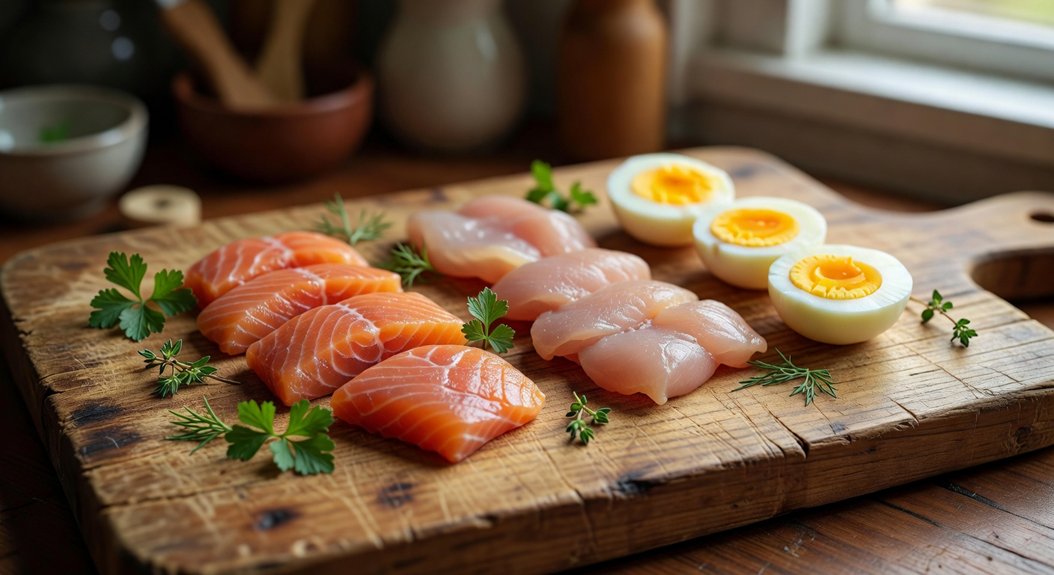
Protein is your small dog’s best friend when it comes to staying lean — it keeps them feeling full longer while supporting muscle mass instead of fat gain. Think of it as their personal tiny bodybuilder diet, minus the dramatic posing.
Lean proteins like chicken, turkey, and fish are excellent choices. They’re low in fat but high in satisfaction — basically the kale salad of dog nutrition, except your pup will actually enjoy it. Eggs and cottage cheese also work well as occasional protein boosts.
Avoid heavily processed meats loaded with fillers, sodium, or mystery ingredients. Your small dog deserves better than whatever “meat by-product” actually means. Stick to whole, identifiable protein sources, and you’ll keep their metabolism humming and waistline respectable.
Low-Calorie Vegetables That Work for Small Dog Portions
Vegetables can be a surprisingly smart addition to your small dog’s diet, offering bulk and nutrients without loading up their tiny calorie budget. Think of them as nature’s filler—keeping your pup satisfied without the guilt trip on the scale.
Try these small-portion-friendly options:
- Carrots – Crunchy, low-cal, and doubles as a chew toy. Win-win.
- Cucumber slices – Basically flavored water in vegetable form, perfect for hydration.
- Green beans – Fiber-packed and filling; your dog won’t even notice they’re eating “healthy.”
- Zucchini – Mild flavor, minimal calories, and easy to dice into bite-sized pieces for tiny mouths.
Just skip onions, garlic, and grapes—those aren’t negotiable, and your vet will thank you.
Common Foods That Cause Hidden Weight Gain in Small Dogs
While loading your small dog’s bowl with the right vegetables is a solid step, the real weight-gain culprits often hide in plain sight. That innocent peanut butter lick off the spoon? Calorie bomb. The “tiny” cheese cube? Your Chihuahua isn’t burning that off anytime soon.
Common offenders include:
- Peanut butter – high fat, high calories, and suspiciously addictive
- Cheese – delicious treachery in dairy form
- Commercial treats – often packed with sugar and fillers
- Bread and crackers – empty carbs your petite pup absolutely doesn’t need
- Deli meats – sodium-loaded and sneakily caloric
You’re not intentionally sabotaging your dog’s waistline, but these foods add up fast. Treat portions matter enormously for small breeds.
Should Your Small Dog Eat Wet Food, Dry Food, or Both?
The wet-versus-dry debate isn’t just about what your small dog prefers—it genuinely affects caloric intake and weight management. Wet food fills their tiny stomachs faster, while dry kibble supports dental health. Mixing both? Totally valid, but measure carefully—those calories add up sneakily.
Consider these key points:
- Wet food contains higher moisture, keeping your pup hydrated and feeling fuller longer.
- Dry kibble is calorie-dense, so overpouring is embarrassingly easy.
- Mixed feeding requires calculating *combined* calories—not just eyeballing portions.
- Portion control matters more than food type—even “healthy” options cause weight gain when overfed.
Your small dog’s ideal diet depends on their specific health needs, so consulting your vet beats following whatever the internet’s most confident stranger recommends.
What Small Breed Dog Food Labels Actually Tell You About Calories
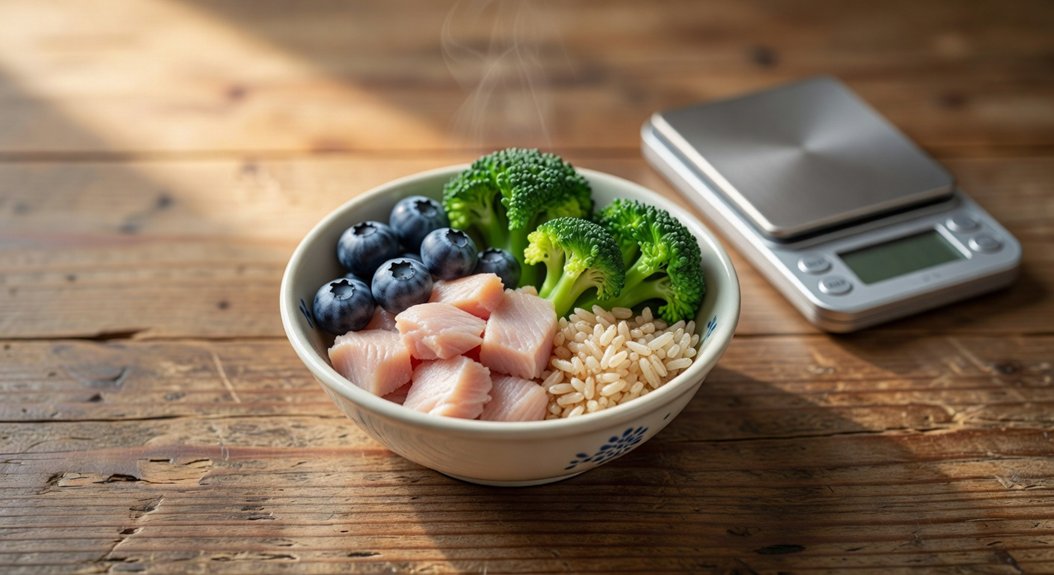
When you flip a bag of small breed dog food over, the calorie content label can tell you a lot—but only if you know how to read it. You’ll typically see kilocalories per cup or per kilogram, which reflects the food’s calorie density and helps you compare brands without being misled by portion-size tricks. The term “metabolizable energy” (ME) refers to the calories your dog’s body can actually absorb and use, making it a more accurate measure than gross calorie counts.
Decoding Calorie Density Labels
Decoding a small breed dog food label‘s calorie information isn’t as straightforward as it looks. Manufacturers use sneaky math that’d make your accountant sweat. Here’s what those numbers actually mean:
- Kcal/kg measures calories per kilogram of food — not per serving, so do the math yourself.
- “As fed” basis reflects moisture content, meaning wet food looks less calorie-dense than it truly is.
- Metabolizable Energy (ME) represents digestible calories — the ones your dog actually absorbs.
- Serving size suggestions are often generous, conveniently encouraging you to buy more food faster.
Understanding these distinctions helps you compare foods accurately without accidentally turning your tiny Chihuahua into a rotund little blimp. Label literacy isn’t glamorous, but your dog’s waistline will thank you.
Understanding Metabolizable Energy Claims
| ME Level | Kcal/Cup | Verdict |
|---|---|---|
| Low-density | Under 300 | Weight-friendly winner |
| Moderate | 300–400 | Acceptable middle ground |
| High-density | Over 400 | Portion discipline required |
Think of ME like your dog’s caloric “budget.” Small breeds need roughly 40 kcal per pound daily, so a high-ME food turns portion control into Olympic-level precision. Always locate the ME statement — typically buried near the guaranteed analysis — before purchasing. Your tiny dog’s waistline depends on it.
How to Measure the Right Portion for a Small Dog
Once you’ve read your small dog’s food label, you’ll need to calculate their daily caloric needs based on their weight, age, and activity level, since a five-pound dog may only require 200–300 calories per day. You shouldn’t eyeball portions—use a proper measuring cup or, better yet, a kitchen scale, because even small inaccuracies add up quickly over time. Getting these measurements right from the start is one of the most effective ways you can protect your pet from weight gain.
Understanding Daily Caloric Needs
Knowing how many calories your small dog needs each day is the foundation of healthy portion control. It’s not one-size-fits-all — a couch-potato Chihuahua burns far fewer calories than an energetic Terrier zooming laps around your furniture.
Use these key factors to calculate your pup’s daily caloric needs:
- Weight — Most small dogs need 40 calories per pound daily.
- Activity level — Active dogs need roughly 10-20% more calories.
- Age — Senior dogs typically require fewer calories than puppies.
- Health conditions — Spayed or neutered dogs need approximately 20% fewer calories.
Once you’ve nailed these numbers, you’ll stop guessing and start measuring with confidence — because nobody wants a dog that rolls instead of walks.
Using Measuring Tools Correctly
Even though you’ve calculated your dog’s daily caloric needs, those numbers mean nothing if you’re eyeballing portions with a coffee mug or a random kitchen spoon. Surprise — those aren’t measuring tools. Invest in a proper digital kitchen scale, because weighing food beats volume-based measuring every time. Kibble pieces vary wildly in size, so a “cup” of one brand isn’t a “cup” of another. Use the scale daily, measuring every meal separately rather than eyeballing a daily total and splitting it mentally. For wet food, the same rule applies — scoop it onto the scale, not into your hand. Your petite pup’s waistline depends on your precision, not your optimism. Consistency here genuinely prevents obesity better than any fancy superfood ingredient ever could.
Treats That Won’t Break a Small Dog’s Calorie Budget
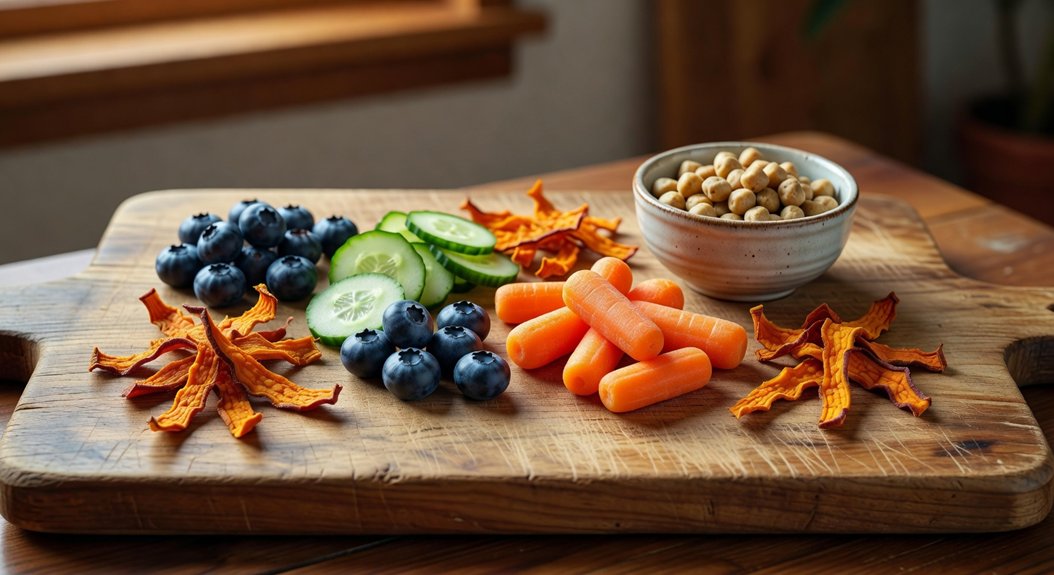
Small dogs have tiny calorie budgets, so every treat counts. You’re basically managing a microscopic snack economy, so choose wisely or your Chihuahua might waddle instead of strut.
Smart low-calorie treat options include:
- Baby carrots – Crunchy, sweet, and practically guilt-free at roughly 4 calories each.
- Blueberries – Antioxidant-packed little powerhouses clocking in around 1 calorie per berry.
- Plain rice cakes broken into tiny pieces – Your dog won’t know it’s diet food.
- Cucumber slices – Basically flavored water in vegetable form, nearly zero calories.
The Best Feeding Schedule to Keep Small Dogs From Overeating
Choosing the right treats is only half the battle—when and how often you feed your small dog matters just as much. Think of your pup’s stomach as a tiny coin purse; overstuffing it causes problems fast.
| Feeding Schedule | Why It Works |
|---|---|
| Morning meal (7–8 AM) | Jumpstarts metabolism early |
| Midday snack (12 PM) | Prevents afternoon begging drama |
| Evening meal (5–6 PM) | Avoids late-night calorie hoarding |
Stick to measured portions twice or three times daily rather than free-feeding—that’s basically leaving a buffet unattended. You wouldn’t do that at a party, would you? Use a kitchen scale instead of eyeballing servings, because “a little extra” adds up faster than you’d think.