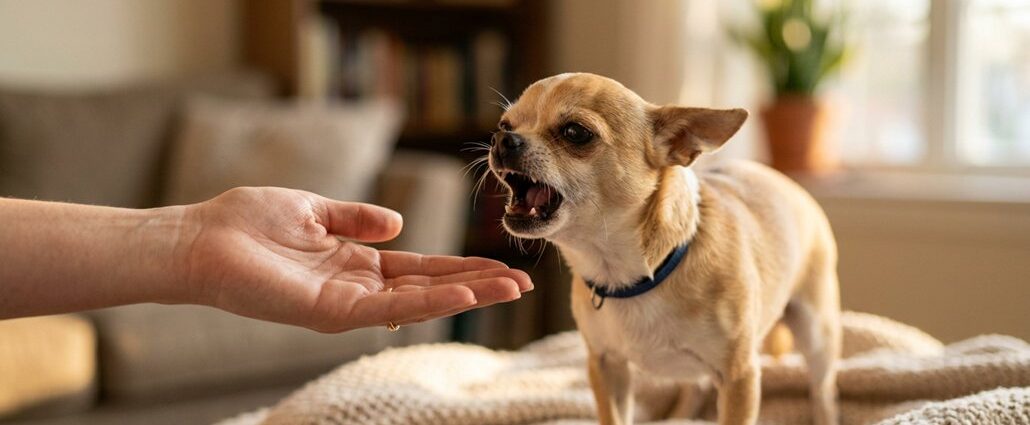
You might not realize that your small dog’s aggression toward larger breeds often stems from your own protective instincts, not theirs. When you swoop in or tighten the leash, you’re signaling danger before anything’s even happened. That reaction quietly teaches your dog to be afraid. The good news is that you can reverse this pattern, and it’s more straightforward than you’d expect.
The Real Reason Small Dogs Go After Bigger Ones
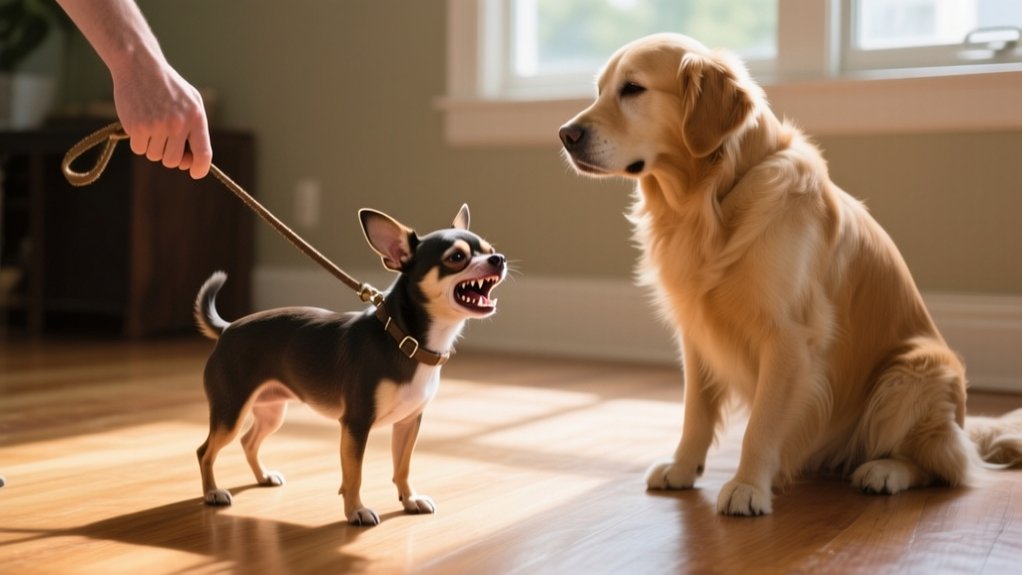
Small dogs often charge at larger ones not out of bravery, but out of fear. Think of it as your Chihuahua doing its best impression of a tiny, furious bouncer who’s terrified but won’t admit it. It’s called “small dog syndrome,” and it’s basically your pup overcompensating for feeling vulnerable.
Here’s the twist — you’re probably part of the problem. When you coddle your little guy after he goes full Tasmanian Devil on a Great Dane, you’re rewarding that behavior. He learns that growling equals cuddles, and suddenly he’s picking fights with dogs twelve times his size.
Understanding this fear-based motivation is your first step toward fixing it. Your dog isn’t tough — he’s scared, and he needs your guidance, not your nervous laughter.
Socialize Your Small Dog With Larger Breeds Early
One of the best things you can do for your small dog is expose them to larger breeds early, as this builds the confidence they need to feel secure rather than threatened. Set up supervised playdates with calm, well-mannered bigger dogs so your pup learns that larger breeds aren’t a danger. Use positive reinforcement — treats, praise, and calm energy — to reward relaxed behavior during these interactions, and you’ll shape a dog that’s far less likely to lash out.
Early Exposure Builds Confidence
Confidence is something your small dog builds gradually, and early socialization with larger breeds is one of the most effective ways to foster it. Introducing your tiny warrior to bigger dogs early teaches them the world isn’t as terrifying as they’ve convinced themselves. Structured, positive encounters help rewire that “I must destroy everything” mentality.
Try these experiences to build your pup’s confidence:
- Supervised puppy playdates with calm, gentle large breeds
- Leashed walks alongside friendly bigger dogs in familiar environments
- Positive reinforcement treats during every calm, non-chaotic interaction
- Group training classes where size differences become totally irrelevant
- Regular park visits where your pup watches larger dogs behaving normally
Each experience tells your small dog, “Hey, you’ve actually got this.”
Supervised Playdates Reduce Fear
Supervised playdates are where all that confidence-building actually gets tested. Think of it as your small dog’s first real social audition — minus the dramatic elimination rounds. Arrange meetups with calm, well-mannered larger dogs, keeping both on leashes initially. You’re watching for healthy curiosity, not territorial standoffs that look like David vs. Goliath rematches.
Choose neutral territory, like a park, so neither dog feels like they’re defending their kingdom. Keep sessions short — fifteen to twenty minutes max. Your little one’s confidence tank empties faster than you’d expect.
Watch body language closely. Stiff posture, raised hackles, and whale-eyes mean someone’s uncomfortable. Redirect immediately. With consistent, positive playdates, your small dog stops seeing larger breeds as threats and starts seeing them as friends worth tolerating.
Positive Reinforcement Encourages Calm
Rewarding calm behavior the moment it happens is the fastest way to teach your small dog that big dogs aren’t worth panicking over. Skip the drama and grab those treats when your pup keeps it together near a larger dog.
Watch for these golden moments to reward:
- Your Chihuahua sniffing a Labrador without staging a full meltdown
- Your terrier sitting calmly while a Great Dane walks past
- Your tiny warrior choosing curiosity over chaos
- Your pup making eye contact with you instead of the “threat”
- Your little dog accepting a treat near a bigger breed without trembling
You’re fundamentally paying your dog to be reasonable. Honestly, that’s a fair deal for everyone involved.
Use Space and Structure to Prevent Fear-Based Triggers
Fear is often at the root of dog aggression, so managing your dog’s environment can be just as important as training. Think of it as baby-proofing, but for a tiny furball with a Napoleon complex. Give your little one enough space to feel safe, and don’t force greetings with strangers or bigger dogs — that’s practically asking for chaos. Create predictable routines so your pup knows what’s coming next. Structured walks, designated rest zones, and controlled introductions work wonders. If your dog’s overwhelmed, remove them from the situation before they go full drama-queen mode. You’re fundamentally their personal bodyguard and event planner. When your dog feels secure in their environment, they’re far less likely to throw tiny, teeth-baring tantrums.
Stop Accidentally Rewarding Your Small Dog’s Aggressive Outbursts
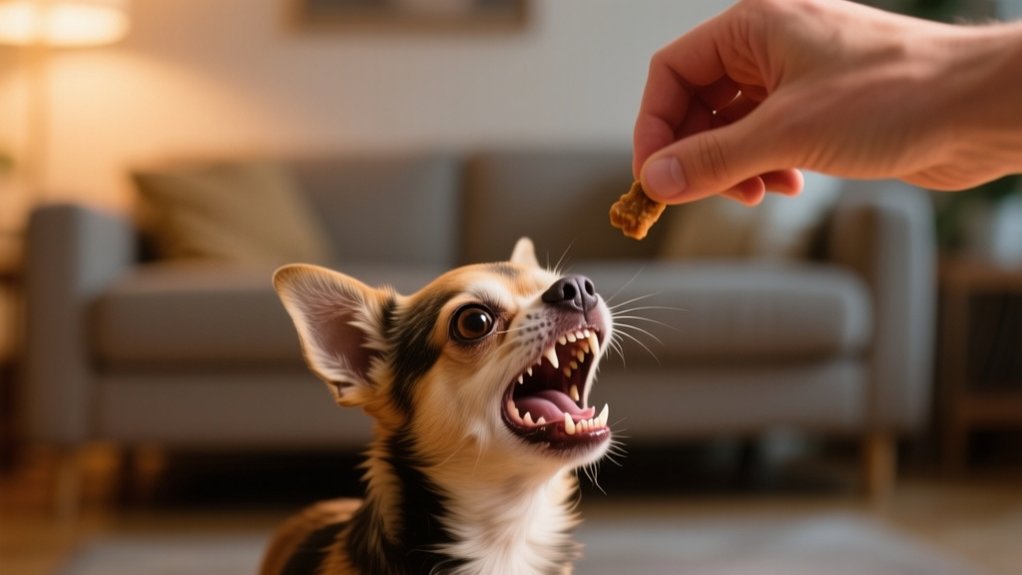
Once you’ve got your dog’s environment under control, it’s time to look at your own behavior — because you might be part of the problem. Small dog owners unknowingly reward aggression constantly. When your Chihuahua launches into full demon-mode, you probably:
- Pick them up immediately, teaching them that growling = elevator service
- Laugh nervously, signaling the chaos is adorable and acceptable
- Apologize to strangers while cradling your snarling gremlin protectively
- Redirect with treats, rewarding the meltdown instead of calm behavior
- Baby-talk them down, fundamentally praising the performance
Your dog’s learning that aggression gets results. Instead, withdraw attention completely during outbursts and only reward calm behavior. No treats, no cuddles, no nervous giggles — until they’ve genuinely settled down.
Use Treats and Praise to Change How Your Small Dog Reacts
Treats and praise aren’t just rewards — they’re tools for rewiring your dog’s emotional response to the things that set them off. When your Chihuahua spots the “enemy” — a stranger, another dog, or apparently a plastic bag — you want them thinking “oh nice, snacks!” instead of “DESTROY EVERYTHING.” This is called counter-conditioning, and it’s surprisingly effective.
Start small. Expose your dog to their trigger from a safe distance, then immediately reward calm behavior with a high-value treat. Think cheese, chicken, or whatever makes them forget they’re supposed to be furious. Gradually close that distance over multiple sessions. You’re fundamentally bribing your dog into better mental health, which honestly sounds ridiculous but genuinely works. Consistency is everything here — don’t skip sessions.
Teach Your Small Dog to Ignore Other Dogs on Leash
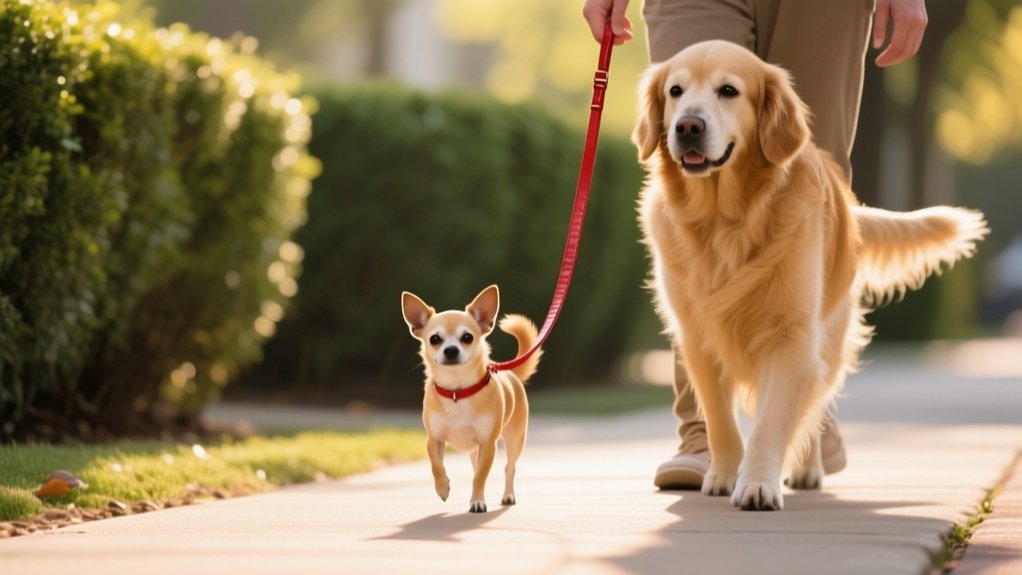
Leash reactivity in small dogs is incredibly common, and it makes sense — your dog feels trapped, sees another dog approaching, and goes into full meltdown mode. Your tiny furball’s basically auditioning for a horror film. Fortunately, you can train that chaos away.
Practice these steps consistently:
- Start at a comfortable distance where your dog notices but doesn’t explode
- Mark and reward calm glances toward other dogs immediately
- Gradually decrease distance as your dog improves
- Use a happy, upbeat voice — your energy influences theirs
- Practice daily, keeping sessions short and ending victoriously
Patience wins here. Your dog won’t transform overnight, but consistent repetition rewires their response from “ENEMY DETECTED” to a casual, unbothered stroll.
Harnesses, Head Collars, and Leashes That Prevent Reactive Incidents
The right gear can make or break your reactive dog’s training progress. Think of it as suiting up your tiny warrior before battle — except the battle is a Labrador three blocks away.
For small reactive dogs, front-clip harnesses are game-changers. They redirect your dog’s momentum toward you instead of launching them forward like a furry missile. Head collars, like the Gentle Leader, give you steering-wheel control without choking. Your dog won’t love wearing one initially, but neither do toddlers wearing shoes.
Pair these with a standard 4-6 foot leash — not a retractable one. Retractable leashes give reactive dogs too much runway to build speed and fury before you can intervene. Control the equipment, control the chaos.
Spot the Warning Signs Before a Bite Happens
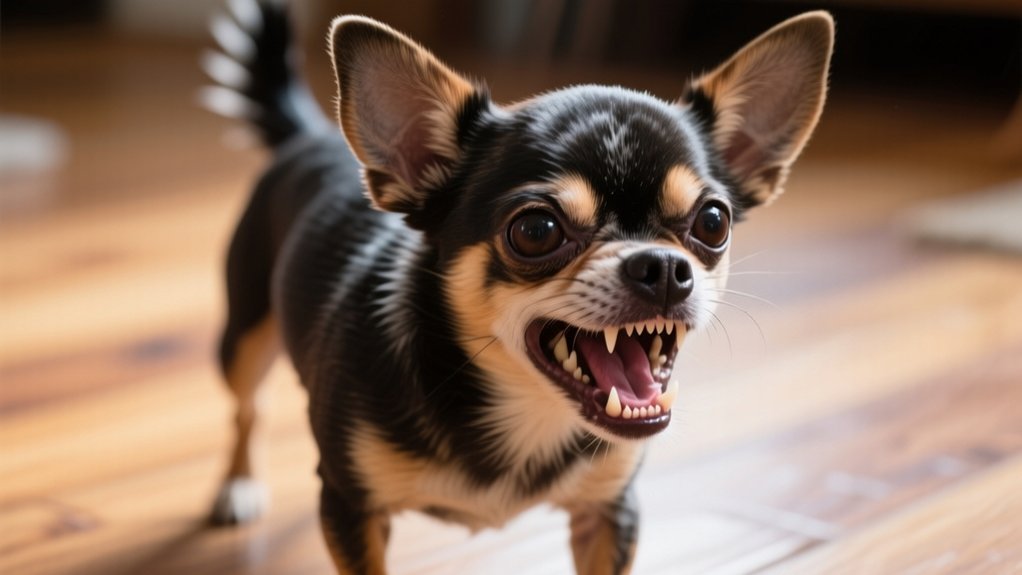
Catching aggression early means watching for subtle cues like stiff body posture, a fixed stare, raised hackles, or a low growl before the situation escalates. You’ll also want to recognize the specific triggers that set your dog off, whether it’s strangers approaching, resource guarding, or feeling cornered, since understanding the “why” behind snapping makes prevention far more manageable. Once you can read your dog’s warning signs and connect them to their triggers, you’re in a much stronger position to intervene before a bite ever happens.
Early Aggression Warning Signs
Most dog owners don’t realize a bite is coming until it’s too late, but dogs rarely attack without warning. Your little drama queen’s practically sending engraved invitations. Watch for these red flags:
- Stiff body posture – like they’ve swallowed a ruler
- Hard, unblinking stare – the “I will end you” look
- Raised hackles – tiny mohawk of doom along their spine
- Lip curling or teeth baring – their version of a formal complaint
- Low growling – nature’s most honest warning system
Don’t ignore these signals. Many owners laugh them off because their dog weighs eight pounds, but those teeth are real regardless of the package they come in. Catch these signs early, and you’ll prevent a nasty situation.
Body Language Red Flags
While the previous section covered the biggest warning signs, a dog’s body language tells a much deeper story than just hackles and growls. Think of it as your dog’s dramatic one-man show — and you’re the audience who’d better pay attention.
Watch for these red flags:
- Whale eye — that unsettling side-eye showing lots of white
- Stiff, frozen posture — like a furry statue contemplating poor decisions
- Lip licking without food nearby — pure stress, not hunger
- Tail position — a rigid, high tail isn’t always happy excitement
- Piloerection — raised fur along the spine, nature’s built-in warning alarm
- Yawning excessively — your dog’s saying “I’m uncomfortable,” not tired
Recognizing these signals early means you’re preventing bites, not just reacting to them.
Triggers Behind Snapping Behavior
Spot the Warning Signs Before a Bite Happens
Snapping rarely comes out of nowhere — there are usually 3 to 5 clear triggers driving the behavior before a dog ever makes contact. Your little guy’s been sending you memo after memo, and you’ve been ignoring every single one. Here’s what’s actually setting him off:
- Pain or discomfort — touching a sore spot uninvited
- Resource guarding — that’s *his* kibble, his toy, his throne
- Fear response — strangers looming over him like skyscrapers
- Territorial invasion — someone crossed an invisible boundary line
- Overstimulation — too much petting flipped the switch
Recognize these triggers consistently, and you’ll intercept the snap before tiny teeth become a very embarrassing vet bill story.
Signs Your Small Dog Needs a Professional Trainer or Behaviorist
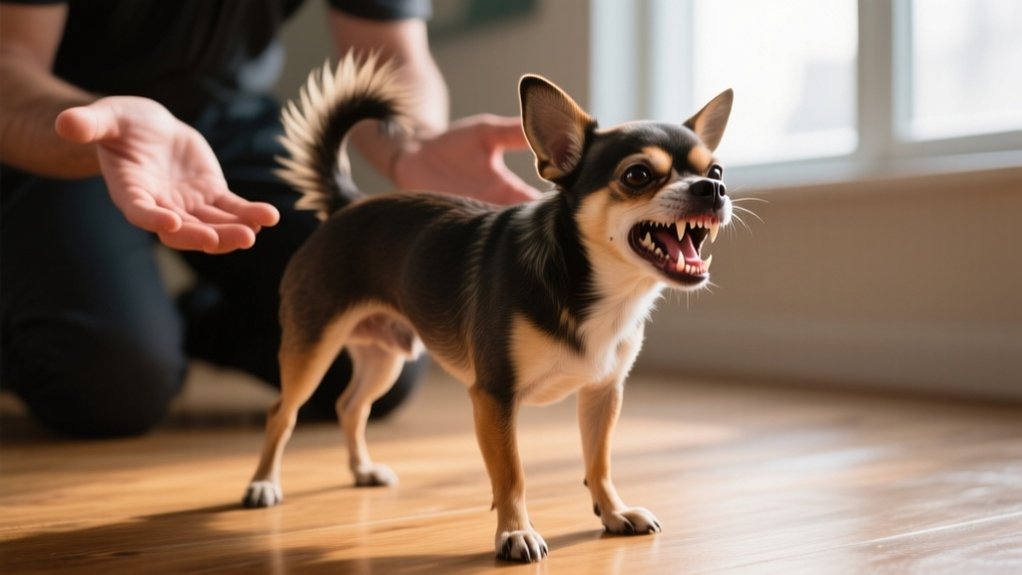
Knowing when to seek professional help for your small dog’s aggression can make the difference between a manageable problem and a dangerous one. If your tiny furball has bitten someone—even breaking skin once—that’s your cue to call a professional, not watch another YouTube tutorial. When your dog’s growling escalates into full snapping episodes despite your best efforts, you’re outmatched. If guests refuse to visit because they’re terrified of your five-pound menace, that’s a red flag. Other signs include aggression that’s worsening instead of improving, unpredictable attacks without obvious triggers, or resource guarding so intense your dog’s basically running the household. A certified behaviorist or trainer won’t judge you—they’ve seen worse. Don’t wait until someone gets seriously hurt.
Build Your Small Dog’s Confidence Around Larger Breeds
Building your small dog’s confidence around larger breeds starts with gradual, controlled exposure—introduce them at a distance, then slowly close the gap as your dog stays calm. You’ll want to use positive reinforcement throughout, rewarding relaxed behavior with treats and praise to create strong, reassuring associations. Once your dog’s comfortable, safe socialization play sessions with well-matched, gentle larger dogs will reinforce that confidence and reduce fear-driven aggression.
Gradual Controlled Exposure Steps
- Start with distant sightings of larger dogs across the street or park
- Let your pup observe calm, leashed big dogs from a safe buffer zone
- Reward relaxed behavior with high-value treats like tiny chicken pieces
- Slowly shrink that distance over several sessions, never forcing interaction
- Finally, arrange a face-to-face meeting with a known gentle giant
You’re fundamentally teaching your chihuahua that Great Danes aren’t monsters—just oversized, goofy roommates they haven’t met yet. Patience and consistency will transform those terrified trembles into confident tail wags.
Positive Reinforcement Builds Confidence
Confidence isn’t handed to a small dog—it’s earned through repeated, rewarding experiences that teach them the world isn’t as threatening as it seems. Every time your tiny commander successfully navigates a calm encounter with a larger dog, reward it immediately. Treats, praise, enthusiastic celebration—whatever makes your dog feel like they’ve just conquered Everest. You’re fundamentally building a highlight reel of positive memories that override the fearful ones. Keep sessions short; small dogs have small patience reserves. Don’t push encounters too fast, or you’ll undo your progress faster than a Chihuahua can side-eye a Great Dane. Consistency is everything here. Repeated positive experiences gradually rewire your dog’s anxiety into actual confidence, turning your little drama king into a surprisingly composed social butterfly.
Safe Socialization Play Sessions
When it comes to socialization, controlled play sessions are your most powerful tool for helping a small dog build real comfort around larger breeds. Think of yourself as a tiny dog’s personal bouncer — keeping things safe while your pup figures out that big dogs aren’t monsters.
Set your sessions up for success by:
- Choosing calm, gentle larger dogs as your small dog’s first “classmates”
- Using neutral territory, like a park, so nobody’s playing “this is my kingdom”
- Keeping initial meetings short — five minutes beats a traumatizing hour
- Rewarding confident body language immediately with treats
- Watching for stiff tails, whale eyes, or raised hackles — nature’s little red flags
Your small dog’s confidence grows one successful interaction at a time.


Comments are closed, but trackbacks and pingbacks are open.