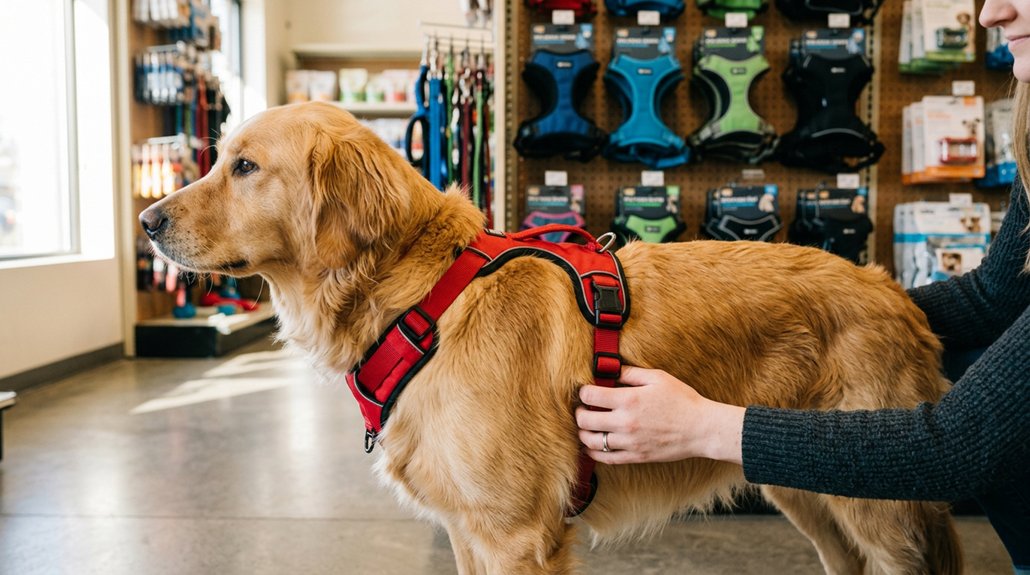
You’ve probably bought a harness that looked perfect, only to watch your dog slip out of it or refuse to move. It’s a frustrating cycle, and it happens more than you’d think. The problem usually isn’t your dog — it’s the harness. Knowing what to look for changes everything, and what you’re about to discover might surprise you.
Why Most Dog Harnesses Fail Small Dogs
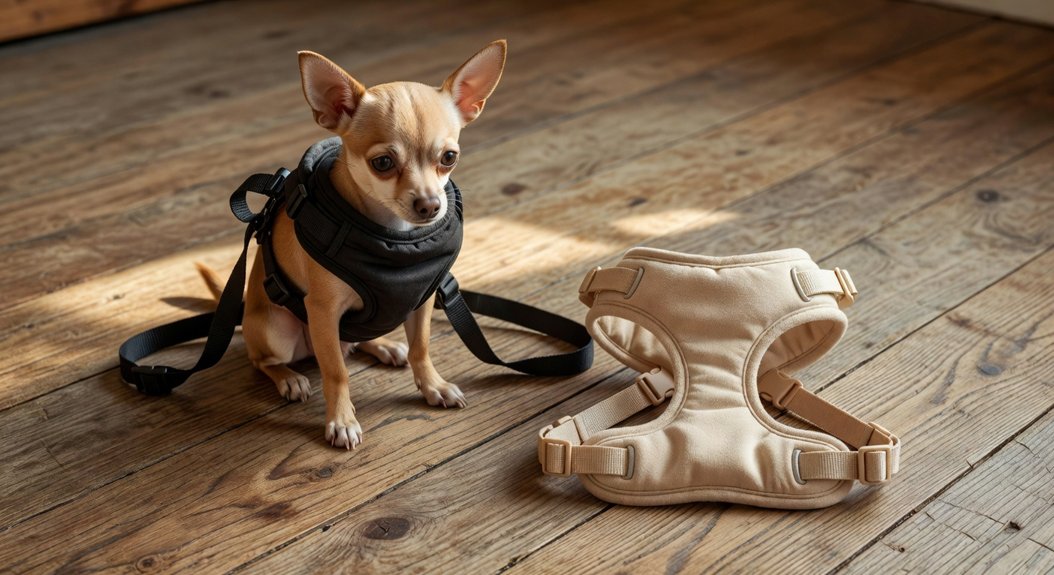
Most harnesses are engineered with medium to large dogs in mind, which means small breeds are often left wearing ill-fitting gear that causes more problems than it solves. If your Chihuahua looks like it’s auditioning for a tiny parachute commercial, that’s a red flag. Oversized harnesses shift constantly, create painful chafing, and give your dog zero freedom to move naturally. Worse, a loose harness becomes an escape hatch — and suddenly you’re chasing a furious Pomeranian through the neighborhood. Small dogs have narrow chests, short torsos, and delicate frames that standard sizing simply doesn’t accommodate. You’ll want a harness specifically designed for small breeds, one that distributes pressure evenly without restricting breathing or movement. Your little dog deserves gear that actually fits.
The 4 Harness Types and Which One Actually Fits Small Dogs
There are four main harness types you’ll encounter when shopping for your small dog: back-clip, front-clip, dual-clip, and step-in. Each design serves a different purpose, but not all of them work well for small breeds with narrow chests, short legs, or delicate frames. Knowing the differences upfront will save you from wasting money on a harness that slips, chafes, or simply doesn’t fit.
Four Common Harness Types
When shopping for a dog harness, you’ll encounter 4 main types: back-clip, front-clip, dual-clip, and step-in harnesses. Each serves a different purpose, so picking the wrong one is basically setting yourself up for a chaotic walk.
Back-clip harnesses attach at the spine, making them easy to put on but useless for pullers. Front-clip harnesses connect at the chest, redirecting your dog’s pulling energy back toward you — genius for leash training. Dual-clip harnesses offer both attachment points, giving you maximum control without commitment issues. Step-in harnesses require your dog to step into loops before you clip them up, which sounds simple until your dog decides uncooperating is their personality.
Knowing each type helps you match the harness to your dog’s size, behavior, and energy level.
Best Fit For Small Dogs
Small dogs have unique anatomy — narrow chests, delicate necks, and compact builds — so not every harness type translates well at a smaller scale. Think of it like squeezing a Chihuahua into gear designed for a Labrador — it’s chaos.
Here’s what actually works:
- Step-in harnesses are your small dog’s best friend. They’re easy to put on a wiggling, dramatic potato of a dog and distribute pressure gently.
- Vest harnesses offer excellent coverage without creating awkward bunching around tiny frames.
- Back-clip harnesses work reasonably well, though they won’t help if your Yorkie thinks he’s a sled dog.
- Front-clip harnesses are trickier — they can restrict movement on very small breeds.
Stick with step-in or vest styles for small dogs. You’ll both be happier.
The 5 Features That Make or Break a Small Dog Harness
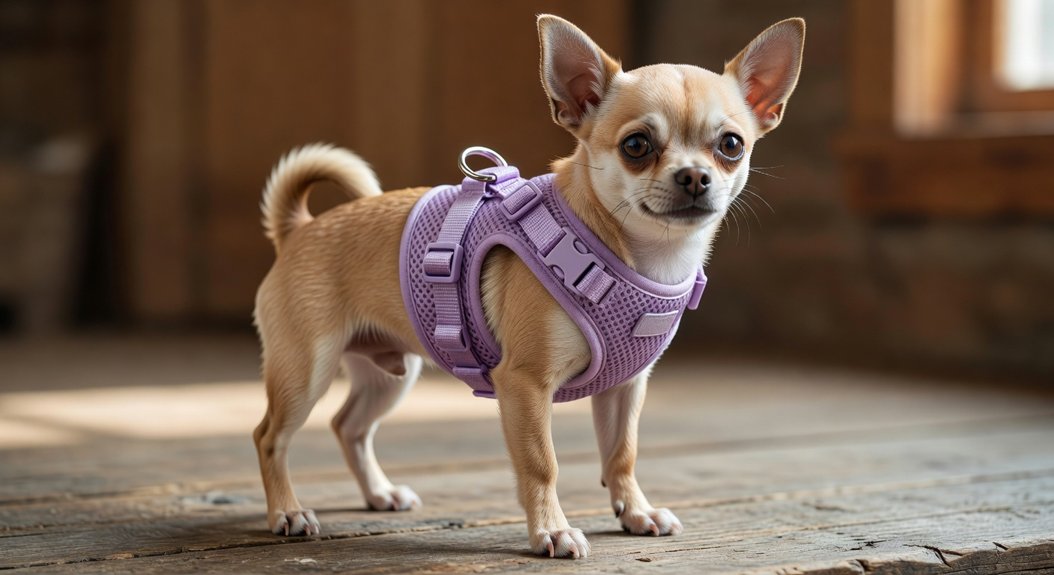
When shopping for a small dog harness, you’ll want to prioritize proper fit above all else, since a loose or overly tight harness can cause chafing, escape risks, or restricted breathing. You’ll also need to check the strength of the safety clip, as flimsy hardware on a small dog harness can snap under sudden pressure, leaving your pup vulnerable near traffic or other hazards. These two features alone can determine whether a harness genuinely protects your dog or simply looks the part.
Proper Fit Matters
A poorly fitted harness can turn every walk into a struggle—or worse, a safety hazard. If it’s too loose, your dog becomes a tiny escape artist. Too tight, and you’ve basically created a furry sausage. Neither outcome is ideal.
To nail the perfect fit, remember these three rules:
- The two-finger rule — You should slip two fingers comfortably under any strap.
- Check the chest and belly bands separately — both need individual adjustments, not just one.
- Re-measure regularly — puppies grow, and even adult dogs fluctuate in size seasonally.
A properly fitted harness keeps your dog secure, comfortable, and moving naturally. It’s the difference between a pleasant stroll and a chaotic circus act on a leash.
Safety Clip Strength
Even the best-fitted harness fails if the clip holding everything together snaps under pressure. Think of the safety clip as your dog’s last line of defense against chasing that squirrel into the next zip code. You’ll want metal clips over plastic ones — plastic breaks, and your dog absolutely knows this.
Test the clip’s strength before buying by giving it a firm tug in multiple directions. If it wiggles, creaks, or looks at you apologetically, walk away. For small dogs, a D-ring metal clip rated for at least twice your dog’s weight is your gold standard.
Don’t overlook stitching around the clip either. A bulletproof clip attached to fraying fabric is just expensive disappointment waiting to happen.
How to Measure Your Small Dog for the Right Fit
Getting the right fit for your small dog’s harness starts with three key measurements: the neck, chest, and back length. Grab a flexible measuring tape — not the rigid kind you’d use to measure furniture — and get your pup’s cooperation (good luck with that).
Here’s what you’ll need to measure:
- Neck: Measure where the collar naturally sits, adding two fingers of wiggle room.
- Chest: Wrap the tape around the widest part of their ribcage, right behind the front legs.
- Back Length: Measure from the base of the neck to the base of the tail.
When in doubt, size up. A slightly roomy harness beats one that’s squeezing your dog like a furry little sausage.
Best Harnesses for Small Dogs Who Pull
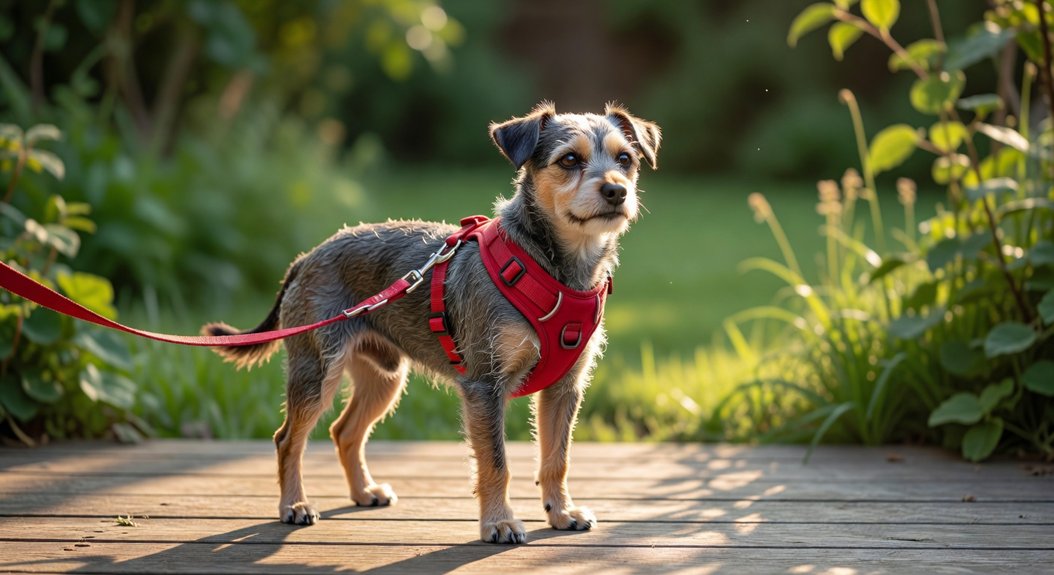
Small dogs pull for a variety of reasons, including excitement, prey drive, or simply because they’ve never been taught to walk calmly on a leash. When shopping for a harness to address pulling, you’ll want to look for features like a front-clip attachment, padded chest panels, and secure adjustable straps that distribute pressure safely across your dog’s small frame. In the sections below, you’ll find reviews of the top-rated harnesses designed specifically to manage pulling in small dogs, so you can choose the one that best fits your pup’s needs and size.
Why Small Dogs Pull
Many small dogs pull on the leash just as forcefully as larger breeds, and it’s not simply a matter of stubbornness or bad behavior. Their tiny legs move fast, but their curiosity moves faster. Small dogs pull for surprisingly relatable reasons:
- Excitement overload – The world smells amazing, and they’re convinced every blade of grass deserves investigation.
- Lack of training – Small dogs often escape leash training because owners can physically manage them. Big mistake.
- Instinct – Many small breeds were originally working dogs, so they’ve got big ambitions stuffed into compact bodies.
Understanding *why* your dog pulls helps you choose the right harness to redirect that enthusiasm without turning walkies into a daily tug-of-war championship.
Top Harness Features
When shopping for a harness for a small dog that pulls, there are four key features you’ll want to prioritize: a front-clip attachment, padded chest and belly straps, an adjustable fit, and a sturdy back handle.
| Feature | Why It Matters |
|---|---|
| Front-clip attachment | Redirects pulling instead of rewarding it |
| Padded chest strap | Prevents chafing on dramatic dogs |
| Padded belly strap | Distributes pressure evenly |
| Adjustable fit | Accommodates your dog’s “fluffy” phase |
| Back handle | Lets you grab your escape artist quickly |
These features work together to give you actual control without hurting your tiny powerhouse. Skip any one of them, and you’ll likely regret it during your next sidewalk battle with a squirrel.
Recommended Harnesses Reviewed
After testing dozens of options against the features that actually matter, a handful of harnesses consistently stand out for small dogs that pull. These aren’t just pretty vests—they’re legitimate escape-proof systems for your tiny chaos agent.
Top performers worth your money:
- Ruffwear Front Range – Padded, front-clip genius that redirects pulling without drama
- Julius-K9 IDC Powerharness – Heavy-duty build for the dog convinced it’s a husky
- PoyPet No-Pull Harness – Budget-friendly, dual-clip option that doesn’t sacrifice function
Each handles pulling differently, so match the harness to your dog’s specific shenanigans. Front-clip designs work best for redirecting momentum, while dual-clip options give you flexible control during training. You’ll thank yourself later.
Best No-Escape Harnesses for Anxious Small Dogs
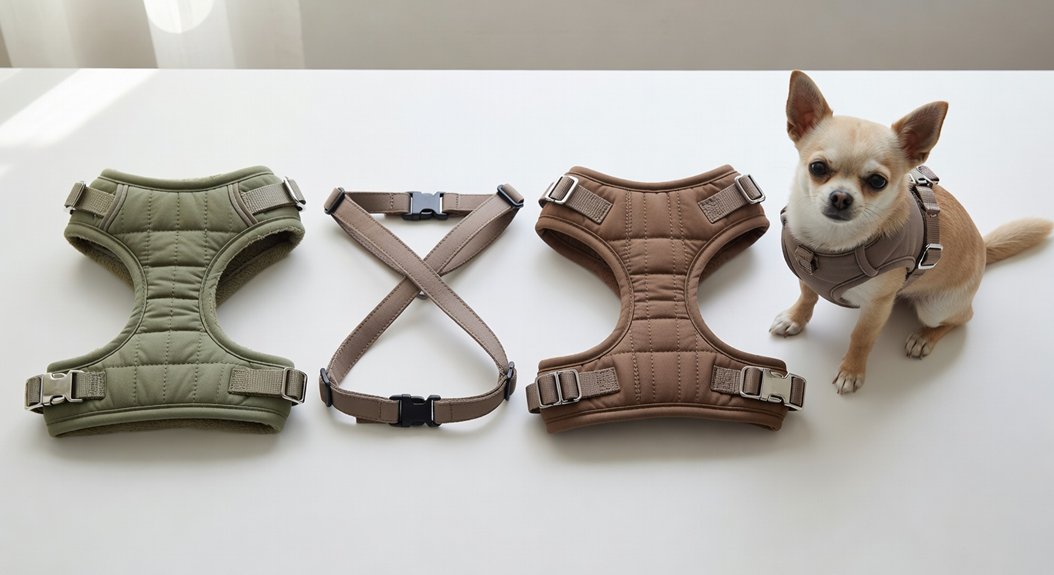
Small dogs that are anxious or prone to slipping out of standard harnesses need a no-escape design that keeps them secure without adding to their stress. Think of it as Houdini-proofing your pup — because nothing’s more thrilling than watching your Chihuahua vanish mid-walk.
Look for harnesses featuring dual connection points, adjustable chest and belly straps, and a wraparound design that distributes pressure evenly. The Gooby Escape-Free Harness and Puppia Soft Harness are crowd favorites for anxious small breeds, offering snug fits without restrictive tightness.
You’ll also want padded interior lining — stressed dogs squirm, and chafing makes everything worse. Skip harnesses with flimsy buckles; your dog’s escape artistry doesn’t need encouragement. Prioritize security, comfort, and simplicity, and your tiny drama queen stays safely by your side.
Best Lightweight Harnesses for Tiny Breeds
Tiny breeds like Chihuahuas, Yorkies, and Toy Poodles don’t need bulky hardware weighing them down — a harness that’s heavier than your dog defeats the purpose entirely. You’ll want something featherlight, breathable, and snug without resembling a tiny medieval suit of armor.
A harness heavier than your Chihuahua defeats the purpose — go featherlight, breathable, and snug.
Look for these features:
- Mesh fabric — keeps your peanut-sized pup cool and comfortable during walks
- Lightweight buckles — plastic over metal prevents unnecessary strain on fragile frames
- Adjustable chest and belly straps — because a three-pound dog deserves a custom fit too
You’re fundamentally dressing a sentient cotton ball, so prioritize softness alongside function. Brands like Puppia and Voyager consistently nail this balance, offering harnesses that feel like nothing while keeping your tiny companion secure.
How to Harness a Wiggly Small Dog Without the Fight
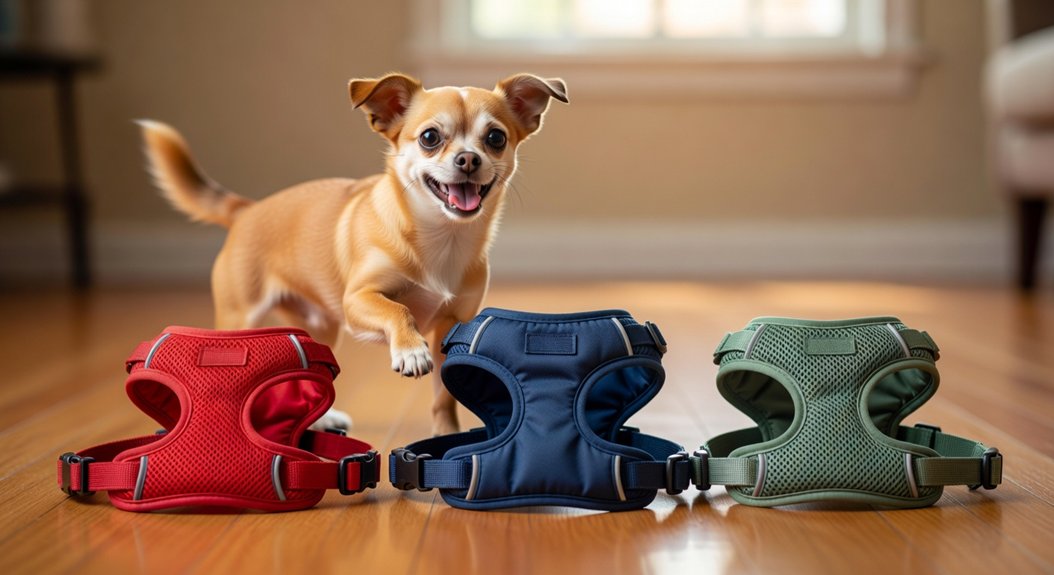
Wrangling a wiggly small dog into a harness can feel like trying to gift-wrap a live fish, but a few simple techniques make the process faster and far less chaotic. First, use high-value treats to keep your dog briefly focused — think tiny chicken bits, not sad little kibble. Lay the harness flat and let your dog sniff it before attempting anything heroic. Step-in harnesses work brilliantly for squirmy dogs since you’re not wrestling anything over their head. Slip their front paws in while they’re distracted, then click the buckles quickly before they remember they hate this. Practice daily, even without actually going anywhere, so your dog stops treating harnessing like an ambush. Consistency genuinely transforms the struggle into something almost civilized.
How to Tell If Your Small Dog’s Harness Fits Wrong
Once you’ve got the harness on your squirmy dog, the next question is whether it actually fits right. A bad fit isn’t just uncomfortable — it’s a one-way ticket to escape artistry or chafing disasters.
Watch for these three red flags:
- The Two-Finger Rule Fails — You should slide two fingers under any strap. Too tight means restricted breathing; too loose means your dog’s auditioning for Houdini’s understudy.
- Shoulder Restriction — Watch your dog walk. If they’re waddling awkwardly or shortening their stride, the chest strap’s sitting wrong.
- Chafing Spots — Red, irritated skin under the straps after walks means the harness is rubbing, not hugging.
Fit problems are fixable — ignore them, and you’re just making your dog miserable.
How Long a Small Dog Harness Should Last
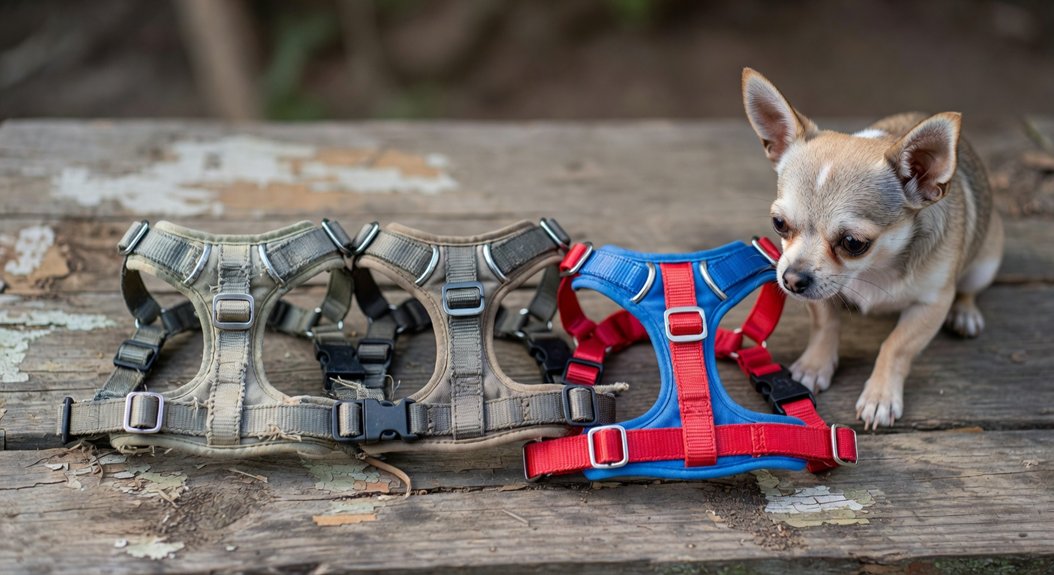
A well-made small dog harness should last 1–3 years, but how long yours actually holds up depends on three things: material quality, how often your dog wears it, and how well you maintain it. If your pup’s a chaos agent who drags you through mud daily, don’t expect miracles.
| Factor | Impact on Lifespan |
|---|---|
| High-quality nylon/leather | Lasts 2–3 years |
| Cheap polyester | Fades and frays within months |
| Regular cleaning | Extends life considerably |
You’ll know it’s time to replace the harness when stitching unravels, buckles crack, or it starts looking like your dog chewed through a garage sale. Inspect it monthly—your dog’s safety isn’t negotiable.
The Best Small Dog Harnesses Right Now
Now that you know what to look for regarding durability, here are the small dog harnesses that actually hold up—and keep your pup comfortable while doing it.
Three fan-favorites consistently earn top marks from small dog owners:
- Ruffwear Front Range Harness – padded, escape-proof, and built like it survived a zombie apocalypse.
- Voyager Step-In Air Dog Harness – breathable mesh that won’t have your Chihuahua sweating through existential dread on summer walks.
- Julius-K9 IDC Powerharness – adjustable, durable, and makes your tiny dog look surprisingly intimidating.
Each option balances comfort, security, and longevity without making your wallet cry. Your small dog deserves reliable gear—not something that falls apart before the second walk around the block.