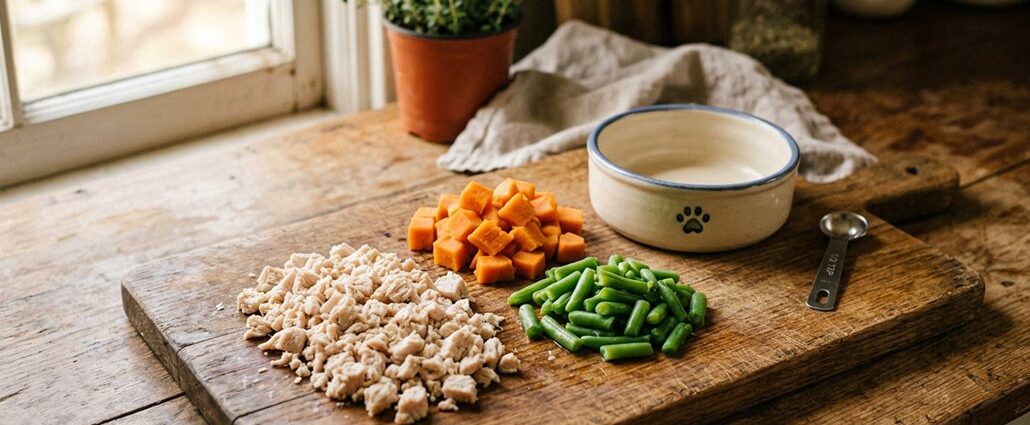
You don’t need a veterinary degree to feed your small dog well at home. With the right ingredients and ratios, homemade meals can genuinely support their health. Small breeds have distinct nutritional needs that differ from larger dogs, and getting it wrong can cause real harm. What you’re about to discover could completely change how you approach your pup’s diet.
Why Small Dogs Need Different Homemade Meals Than Large Breeds
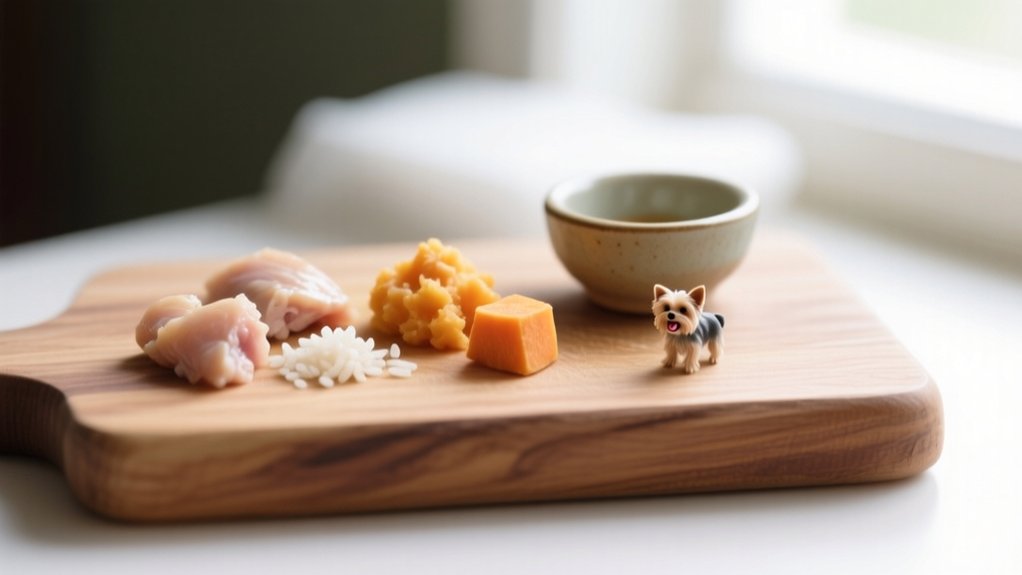
When it comes to feeding your dog, size matters more than most pet owners realize. Your tiny Chihuahua isn’t just a shrunken Great Dane, so don’t treat mealtime like a one-size-fits-all situation. Small dogs have faster metabolisms, meaning they burn through calories quicker than their larger counterparts. They also need nutrient-dense meals served in smaller portions to avoid blood sugar crashes — yes, your pocket-sized pup is that dramatic. Large breed recipes often contain ingredient ratios that overwhelm a small dog’s digestive system. Furthermore, small breeds are prone to dental issues, so food texture and ingredient choices genuinely matter. Homemade meals let you control exactly what’s going into that tiny, opinionated body — and that’s a significant advantage worth embracing.
Calcium, Protein, and Fat Ratios Small Dogs Actually Need
Getting the ratios right is non-negotiable once you start cooking homemade meals for a small dog. Their tiny bodies demand precision, not guesswork.
Here’s what you’ll need to nail:
- Protein: Aim for 25–30% of their diet — chicken, turkey, or beef all work brilliantly
- Fat: Keep it around 10–15%; too much and you’ve got a chunky little drama queen on your hands
- Calcium: Target roughly 1.2–1.4% of dry matter — bone meal or eggshell powder does the job
- Phosphorus: Balance it with calcium at a 1.2:1 ratio or you’re asking for skeletal trouble
Small dogs process nutrients faster than large breeds, so these numbers aren’t suggestions — they’re survival math. Get a kitchen scale. Use it religiously.
Can Homemade Food Actually Cover Everything Small Dogs Need?
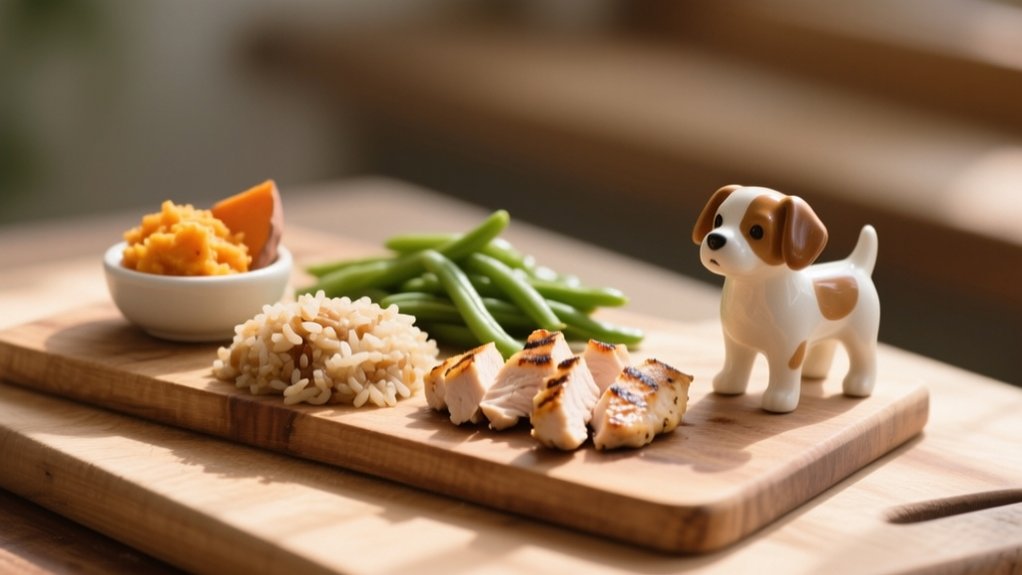
Homemade meals can be nutritious, but they rarely cover every micronutrient your small dog needs without careful planning. Common gaps include calcium, vitamin D, zinc, and omega-3 fatty acids, all of which are critical for petite breeds with fast metabolisms and small bone structures. To fill those gaps, you’ll likely need targeted supplements like a canine calcium powder, fish oil, and a complete multivitamin formulated for small dogs.
Nutritional Gaps In Homemade Diets
One of the biggest concerns with preparing your small dog’s meals at home is whether those meals can truly deliver complete nutrition. Spoiler: they often don’t — at least not without careful planning. Homemade diets frequently miss critical nutrients, leaving your tiny companion running on fumes.
Common nutritional gaps include:
- Calcium and phosphorus imbalance — skipping bones or supplements creates weak joints and brittle teeth
- Zinc deficiency — leads to dull coats and immune system drama nobody asked for
- Missing B vitamins — your pup’s energy and nerve function take a hit
- Inadequate omega-3 fatty acids — brain health and inflammation control suffer considerably
Without addressing these gaps, your homemade meals become glorified snacks instead of proper nutrition.
Essential Supplements For Small Dogs
Plugging those nutritional gaps doesn’t have to mean scrapping homemade meals altogether — it just means you’ll need the right supplements in your corner.
Think of supplements as your dog’s nutritional bodyguards — small but mighty, just like them.
| Supplement | Why It Matters |
|---|---|
| Calcium | Prevents brittle bones |
| Omega-3 Fatty Acids | Supports coat and brain health |
| Vitamin D | Regulates calcium absorption |
| Zinc | Boosts immunity and skin repair |
| B-Complex Vitamins | Fuels energy metabolism |
You’ll want to consult your vet before adding anything, since small dogs have surprisingly specific dosing needs. Too much of a good thing — especially calcium — can backfire spectacularly. Get it right, and your pup’s homemade meals become genuinely complete.
Foods That Are Dangerous for Small Dogs at Any Amount
While homemade meals give you full control over your small dog’s diet, certain foods are completely off-limits regardless of portion size. Think of these as your pup’s ultimate nemesis list — no exceptions, no “just a tiny bite” negotiations.
Here’s what you’ll never let near their bowl:
- Xylitol — found in sugar-free products, it causes rapid blood sugar crashes and liver failure
- Grapes and raisins — even one can trigger kidney failure (yes, really)
- Chocolate — theobromine is toxic, and small dogs can’t metabolize it efficiently
- Onions and garlic — they destroy red blood cells, making your pup dangerously anemic
Your dog’s dramatic begging face doesn’t change the science. Keep these foods permanently out of reach.
Top Lean Proteins That Work in Homemade Small Dog Recipes
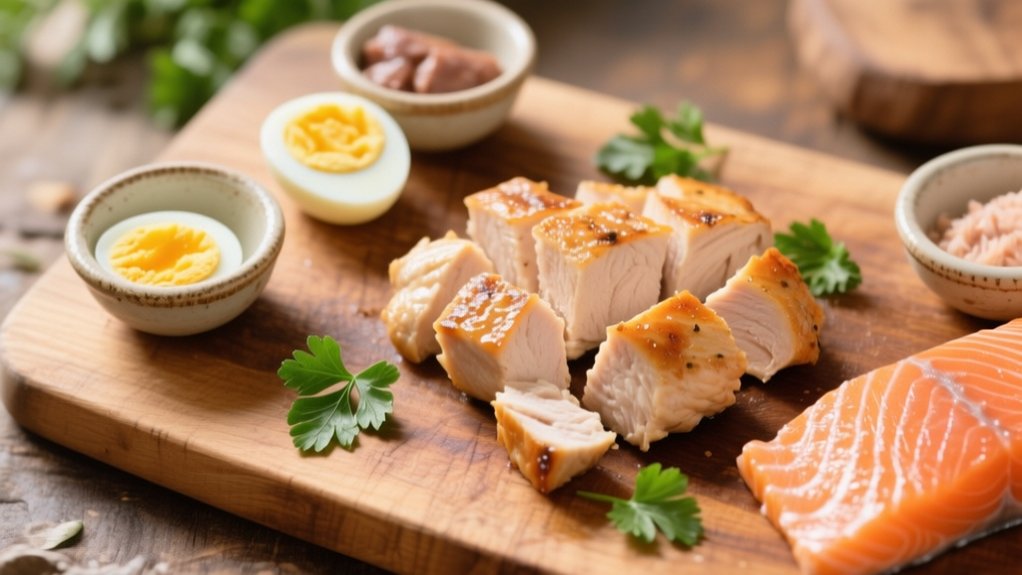
Lean protein is the foundation of any balanced homemade meal for your small dog, and thankfully, you’ve got plenty of options that are both safe and nutrient-dense. Think of yourself as a tiny Michelin-star chef crafting meals for a very demanding, four-legged critic.
Your best protein picks include:
- Chicken breast – boneless, skinless, and cooked thoroughly
- Turkey – lean ground or shredded works beautifully
- Salmon – packed with omega-3s, but always cooked, never raw
- Eggs – a complete protein source your pup will obsess over
- Lean beef – low-fat ground or diced, cooked plain
Skip the seasoning entirely. Your dog doesn’t care about flavor complexity — they’d happily eat cardboard if it smelled interesting enough.
Safe Vegetables Small Dogs Can Actually Digest
When adding vegetables to your small dog’s homemade meals, cooked carrots are a smart starting point since they’re easy to digest and support gut health. You’ll also want to include leafy greens like spinach or kale, but keep portions tiny to avoid upsetting your pup’s sensitive stomach. Zucchini’s another gentle option that won’t irritate your dog’s digestive system and works well steamed or finely chopped into meals.
Cooked Carrots Digestive Benefits
Cooked carrots are one of the safest and most digestible vegetables you can add to your small dog’s homemade meals. Softening them through cooking breaks down tough cell walls, making nutrients easier to absorb. Your pup’s tiny tummy will thank you!
Key digestive benefits include:
- Gentle fiber boost — keeps things moving without triggering dramatic bathroom emergencies
- Beta-carotene absorption — cooking actually increases bioavailability, making it more beneficial than raw
- Low calorie density — perfect for small breeds who gain weight by simply *looking* at food
- Prebiotic support — feeds beneficial gut bacteria, promoting a healthier digestive environment
Always serve them plain, soft, and chopped small. Skip butter, salt, or seasonings — your dog doesn’t need a gourmet experience, just a healthy one.
Leafy Greens Small Portions
Beyond carrots, leafy greens can also earn a spot in your small dog’s bowl — but portion size matters far more here. Think of it this way: your Chihuahua doesn’t need a salad bar experience. A few shredded pieces of spinach or chopped kale go a long way.
Spinach offers iron and vitamins, but it’s high in oxalates, so don’t overdo it — your tiny pup’s kidneys aren’t running a detox retreat. Kale works well in small amounts too, though too much can cause gas, and nobody wants that kind of ambiance at home.
Always chop leafy greens finely, skip dressings entirely, and steam lightly when possible. Small dogs digest softer textures far better than raw, tough leaves.
Zucchini Gentle Tummy Options
Zucchini might just be the most underrated vegetable you can add to your small dog’s homemade meals. It’s gentle on tiny tummies, low in calories, and packed with vitamins. Your pup won’t even know they’re eating healthy — sneaky, right?
Here’s why zucchini deserves a spot in the bowl:
- Easy digestion — it won’t send your little guy running for the bathroom
- High water content — keeps them hydrated without drama
- Low calorie — no chunky Chihuahuas on your watch
- Vitamin-rich — B6, C, and potassium without the fuss
Serve it steamed, raw, or lightly cooked — just skip the seasoning. Your dog’s stomach will thank you, even if they can’t say it.
Fruits That Are Safe and Healthy for Small Dog Breeds
Many fruits make a wonderful addition to your small dog’s homemade meals, offering natural vitamins, antioxidants, and hydration. Think of it as your pup’s fancy fruit salad, minus the champagne. Blueberries are tiny powerhouses packed with antioxidants — perfect for a tiny dog who clearly deserves only the best. Watermelon (seedless, please) delivers hydration and sweetness your pup will lose their mind over. Apples, minus seeds and core, provide fiber and vitamins A and C. Bananas offer potassium but should stay occasional treats since they’re sugar-heavy. Always skip grapes, raisins, and cherries — they’re toxic and nobody’s got time for a vet emergency. Keep portions small since your petite pup’s tummy isn’t exactly a industrial-sized storage unit.
Simple Homemade Meal Recipes for Small Dogs
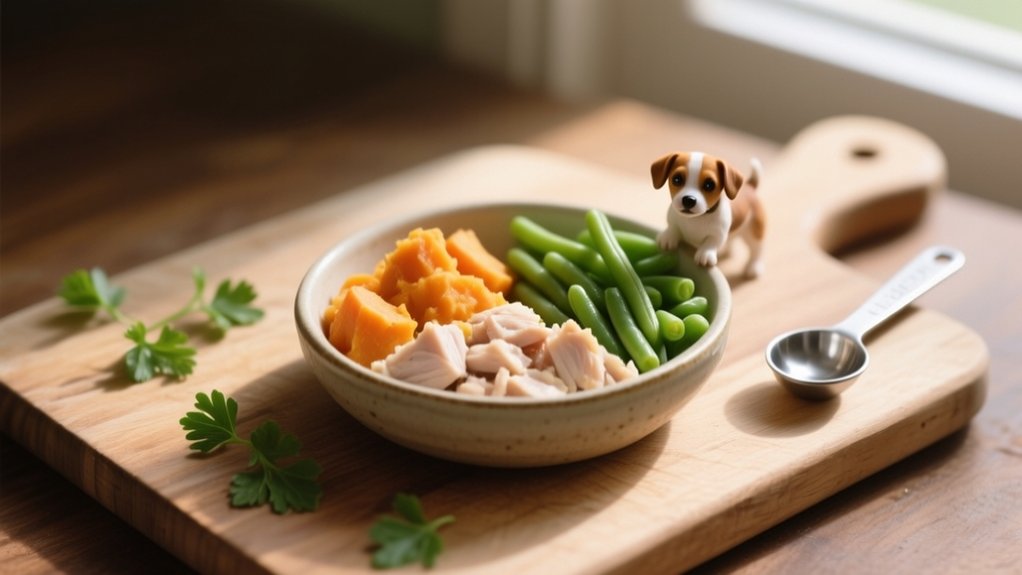
Putting together homemade meals for your small dog doesn’t have to feel like a culinary marathon. Think of yourself as a pint-sized personal chef — no Michelin stars required. Here are four crowd-pleasing recipes your tiny foodie will absolutely inhale:
Your dog deserves homemade goodness — and you don’t need a culinary degree to make it happen.
- Chicken and Rice Bowl: Boiled chicken, white rice, and a spoonful of pumpkin puree — simple, digestible, and genuinely delicious
- Turkey and Sweet Potato Mash: Lean ground turkey mixed with mashed sweet potato for a meal that smells better than yours
- Salmon and Veggie Scramble: Cooked salmon with steamed zucchini and carrots
- Beef and Pea Stew: Lean ground beef simmered with peas and a splash of low-sodium broth
Portion sizes matter — your dog’s tiny stomach isn’t a bottomless pit.
How Much to Feed a Small Dog on a Homemade Diet
Now that you’ve got the recipes down, knowing how much to feed your small dog is just as important as what you’re feeding them. Small dogs have tiny stomachs but surprisingly enormous appetites — don’t let those puppy eyes fool you into overfeeding.
Generally, homemade meals should make up about 2-3% of your dog’s body weight daily. So a 10-pound pup needs roughly 3-4 ounces per meal, split across two servings. Think of it like portioning tapas, not a Thanksgiving feast.
Every dog’s metabolism differs, so monitor their weight regularly. If your pup’s getting chunky, dial it back. If they’re looking like a tiny skeleton, add more. When in doubt, consult your vet — they’re the real portion police.
How to Transition Small Dogs to Homemade Food
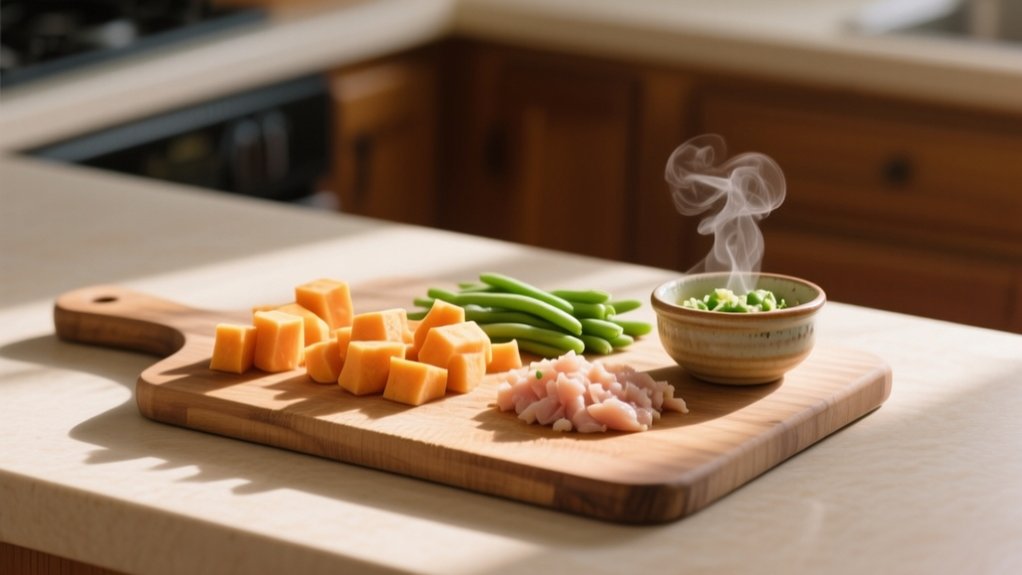
Switching your small dog to homemade food too quickly can cause digestive upset, so a gradual change over 7-10 days is the way to go. Nobody wants a gassy Chihuahua ruling the household.
Follow this simple adjustment plan:
- Days 1-3: Mix 25% homemade food with 75% current food
- Days 4-6: Split it 50/50—your pup’s basically a foodie now
- Days 7-9: Flip it to 75% homemade, 25% old food
- Day 10: Full homemade meals—congratulations, you’ve got a gourmet dog
Watch for loose stools or vomiting during adjustments. If either occurs, slow down the process. Your dog’s tiny digestive system deserves patience, not a culinary revolution overnight.


Comments are closed, but trackbacks and pingbacks are open.