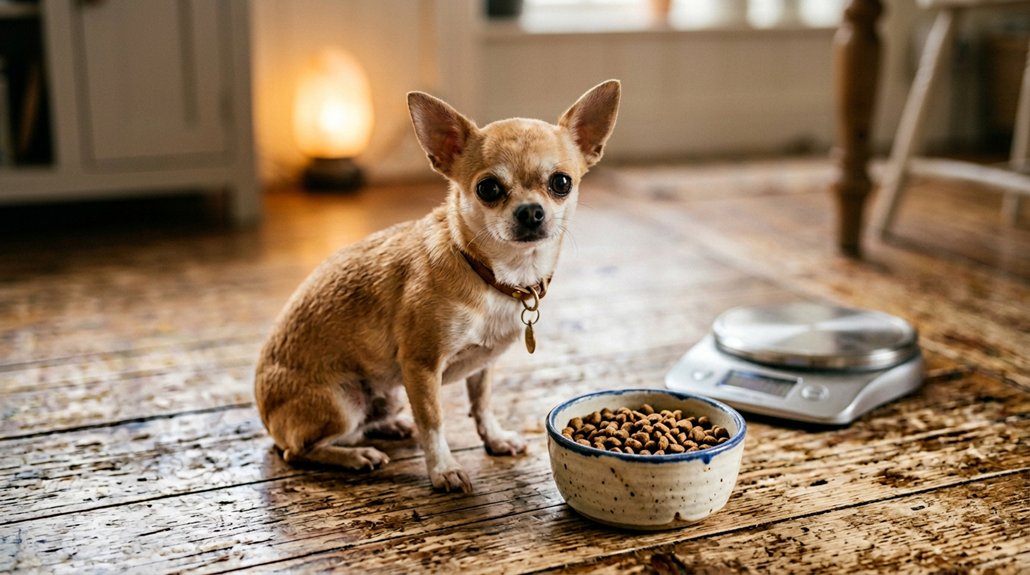
Chihuahuas are tiny dogs with surprisingly big nutritional needs, and getting their feeding amounts wrong can seriously affect their health. Whether you’re a new owner or you’ve had your Chi for years, portions matter more than you might think. Feed too little, and you risk hypoglycemia. Feed too much, and obesity becomes a real threat. What you discover next could change how you approach every single meal.
How Much Should a Chihuahua Eat Each Day?

Chihuahuas typically need between ¼ and ½ cup of dry food per day, split into two meals. Yes, you read that right — your tiny drama queen eats less than you’d put in a snack bowl. The exact amount depends on your dog’s age, weight, and activity level. A 4-pound couch potato needs less than a 6-pound dog who acts like they’re training for the Chihuahua Olympics.
Don’t let those enormous, guilt-tripping eyes fool you into overfeeding. Chihuahuas are masters of the “I’m starving” performance, but obesity is a serious health risk for small breeds. Stick to measured portions, follow your vet’s guidance, and resist the emotional manipulation. Your Chihuahua’s tiny body deserves precision, not pity snacks.
Chihuahua Feeding Amounts by Age and Weight
Age and weight are the two biggest factors in determining how much your Chihuahua should eat each day. Think of it like fueling a tiny sports car — too little and it stalls, too much and you’ve got a round little sausage on legs.
Puppies under six months need about half a cup of food daily, split into three to four meals. Between six months and one year, bump it to three-quarter cup split into two meals. Adult Chihuahuas weighing two to four pounds need about one-third cup daily, while four to six pounders need roughly half a cup. For chunkier Chihuahuas topping six pounds, consult your vet — your dog’s probably already giving you enough judgment without adding overfeeding to the mix.
How Often Should You Feed a Chihuahua?

Meal frequency matters just as much as portion size when you’re feeding a Chihuahua. These tiny drama queens have small stomachs and fast metabolisms, so spreading meals throughout the day keeps their blood sugar stable and prevents hypoglycemia — a real risk for small breeds.
Puppies under three months need four meals daily because their bodies burn through energy like a toddler on Halloween candy. From three to six months, drop to three meals. Once your Chihuahua hits six months, two meals per day works perfectly.
Free-feeding sounds convenient, but it’s basically an open buffet invitation your Chihuahua will absolutely abuse. Stick to scheduled mealtimes, keep portions consistent, and you’ll avoid an overweight pup waddling around like a furry little sausage.
Wet Food, Dry Food, or Both: What Chihuahuas Actually Need
Once you’ve nailed down how often to feed your Chihuahua, the next question is what actually goes in the bowl. Spoiler: your tiny overlord has opinions.
| Food Type | Pros | Cons |
|---|---|---|
| Dry Kibble | Affordable, dental benefits | Less palatable |
| Wet Food | Hydrating, highly tasty | Pricier, spoils fast |
| Mixed Both | Best of both worlds | Requires portion math |
Dry kibble supports dental health, which matters because your Chihuahua’s mouth is basically a tiny drama machine. Wet food keeps them hydrated and excited about mealtime. Mixing both? That’s the sweet spot most vets recommend. Just remember to adjust portions so you’re not accidentally creating a bowling ball with legs. Balance is everything.
Signs You’re Feeding Your Chihuahua Too Much or Too Little
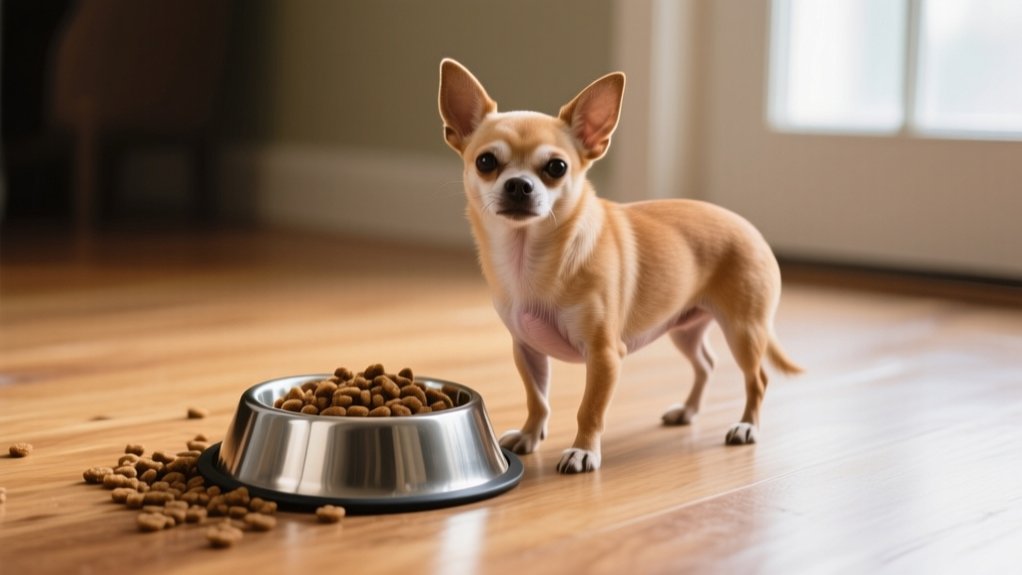
How do you know if your Chihuahua’s getting the right amount of food? Easy — look at them. An overfed Chihuahua resembles a sausage with legs, has difficulty jumping, and pants after minimal effort. You might also notice a rounder belly with no visible waist when viewed from above. An underfed Chihuahua, on the other hand, has visible ribs, a sunken abdomen, low energy, and a dull coat.
The ideal Chihuahua should have a slight waist, ribs you can feel but not see, and enough energy to make your life chaotic in the best possible way. If you’re unsure, your vet can do a body condition score assessment — basically a report card for your dog’s figure.