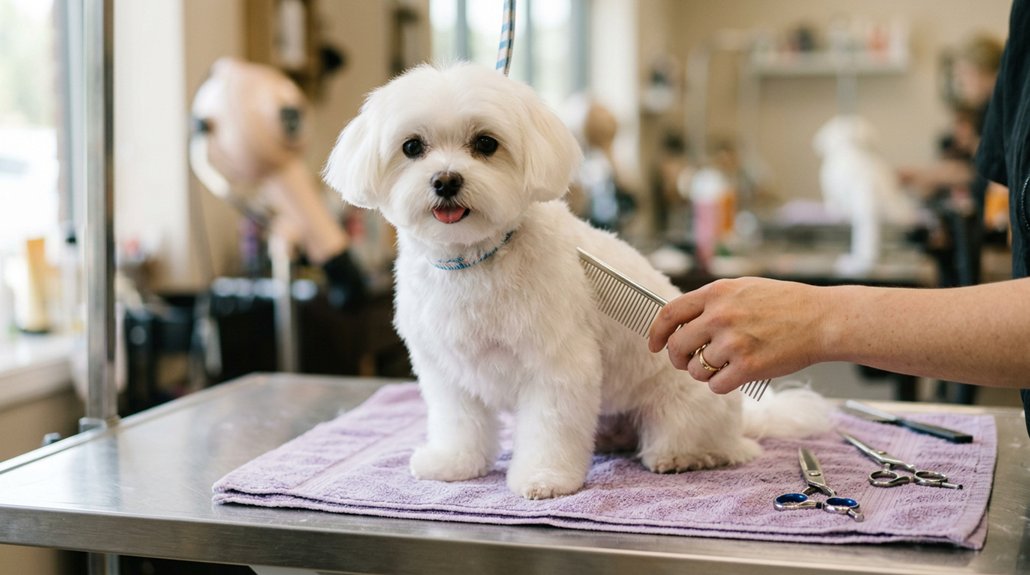
Grooming your small dog at home can save you money and strengthen your bond — but it’s not as simple as grabbing a brush and hoping for the best. The wrong tools, rushed techniques, or skipping key steps can turn a calm session into a stressful one for you both. Fortunately, with the right approach, it doesn’t have to be that way.
What Tools Do You Actually Need to Groom a Small Dog?
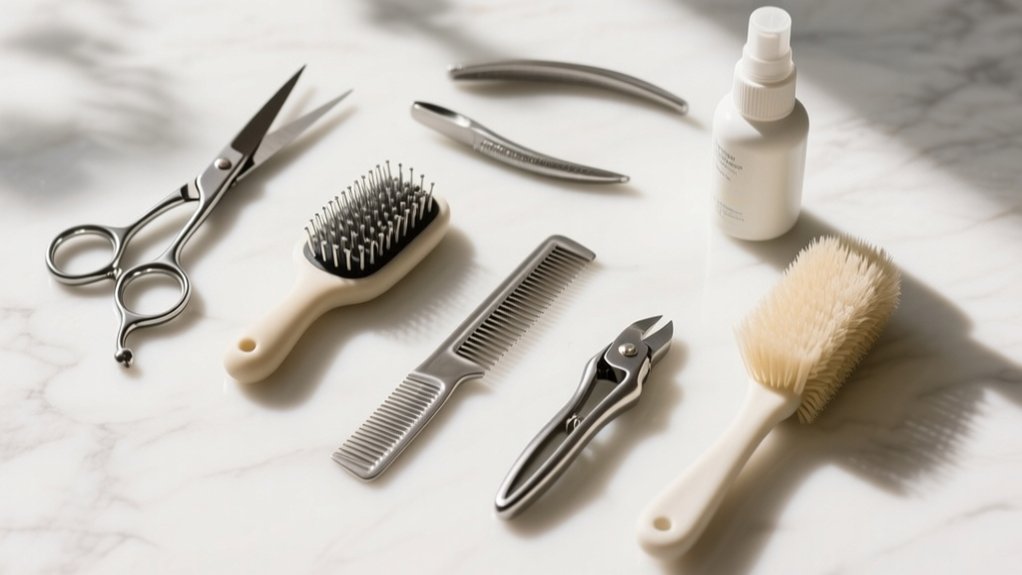
Grooming a small dog doesn’t require a professional-grade arsenal, but a few essential tools will make the process easier and more effective for both you and your pup. You’ll need a slicker brush for detangling, a fine-tooth comb for finishing, and nail clippers (because those tiny talons aren’t decorative). A quality dog shampoo, conditioner, and a microfiber towel are bathroom must-haves. If your pup has longer hair, grab grooming scissors and thinning shears. A detachable-blade clipper handles serious trimming without traumatizing either of you. Don’t forget styptic powder for nail-clipping oopsies — it happens to everyone. Skip the bargain-bin tools; cheap equipment makes the job harder and your dog grumpier. Invest wisely, and you’ll both survive grooming day.
How to Keep Your Small Dog Calm Before and During Grooming
Even the best tools won’t help if your small dog is a trembling, squirming mess the moment the brush comes out. Thankfully, you can outsmart a five-pound drama queen with some preparation.
Here’s what actually works:
- Tire them out first — A short walk before grooming transforms your anxious gremlin into a cooperative potato.
- Use high-value treats — Forget the cheap stuff; pull out the good snacks and suddenly grooming’s a party.
- Keep sessions short — Ten focused minutes beats a forty-five-minute wrestling match every single time.
You’re not just grooming your dog — you’re negotiating with a tiny, opinionated tornado. Patience and treats are your greatest weapons.
The Right Grooming Routine for Your Small Dog’s Coat Type
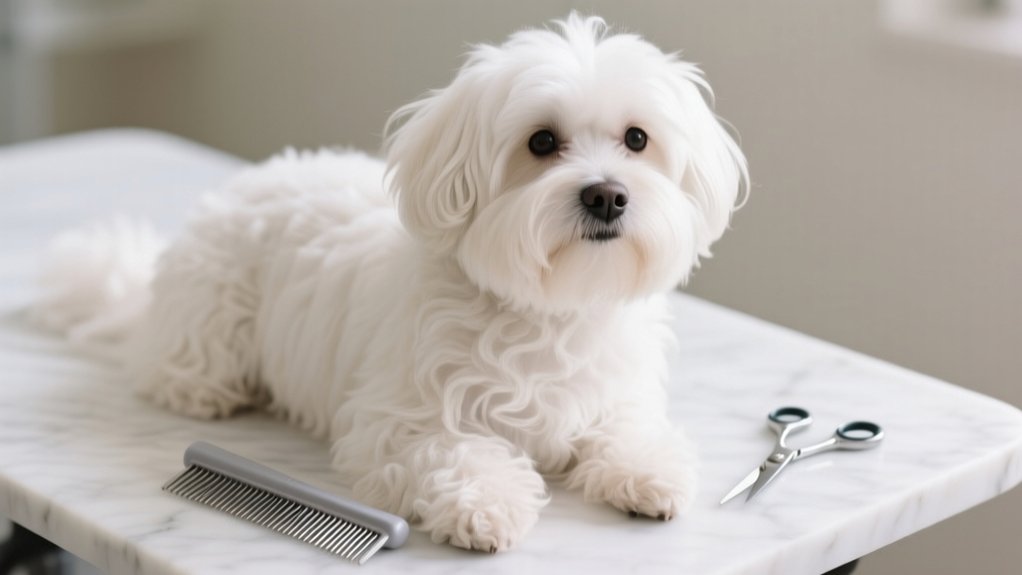
Your small dog’s coat type determines everything about how you’ll groom them, so start by identifying whether they have a short, smooth coat or a long, flowing one. If your pup’s got a short coat, you’ll need little more than a rubber brush and occasional baths to keep them looking sharp. Long-coated dogs, however, require daily brushing, detangling sprays, and more frequent trims to prevent painful mats from forming.
Identifying Your Dog’s Coat
Before you can establish the right grooming routine, you need to know what type of coat your small dog has. Think of it as solving a fluffy mystery — except the clues are literally stuck to your couch cushions.
Here are the three main coat types you’ll encounter:
- Smooth coats — Short, sleek, and low-maintenance. Your Chihuahua basically grooms itself (don’t tell it that, though).
- Long coats — Flowing and dramatic, like your dog’s auditioning for a shampoo commercial daily.
- Wire or curly coats — Thick, textured, and surprisingly high-maintenance for something that looks like a tiny cloud.
Knowing your dog’s coat type means less guessing, less wasted product, and fewer bathroom disasters. Everyone wins.
Short Coat Care Tips
Short-coated dogs like Chihuahuas and Miniature Pinschers are genuinely low-maintenance, but that doesn’t mean you can skip grooming altogether. Think of it this way: even a sports car needs an occasional wash.
Brush your pup weekly using a rubber grooming mitt or soft-bristle brush. This removes loose hair, distributes natural oils, and keeps their coat looking sharp — not like they lost a bet. Bathing every four to six weeks works perfectly unless your dog has discovered something unspeakable in the backyard.
Don’t forget the extras: trim nails every two to three weeks, clean ears weekly, and wipe down their coat with a damp cloth between baths. Short coat doesn’t mean zero effort — it just means *less* effort.
Long Coat Maintenance Steps
Long-coated small dogs like Shih Tzus, Maltese, and Yorkies are a different story entirely — gorgeous, yes, but they demand a real commitment. Think of it as having a tiny celebrity roommate who always needs their hair done.
Here’s your no-nonsense routine:
- Brush daily — Skip this, and you’ll spend hours detangling a matted disaster later. Slicker brushes are your best friend.
- Detangle before bathing — Wet mats tighten like a grudge. Always work through knots beforehand.
- Trim regularly — Every 6–8 weeks keeps things manageable. Around the eyes and paws especially, unless you enjoy your dog bumping into furniture.
Consistency is everything. Your long-coated pup’s fabulous look doesn’t maintain itself — unfortunately.
How to Brush a Small Dog Without Stressing Them Out
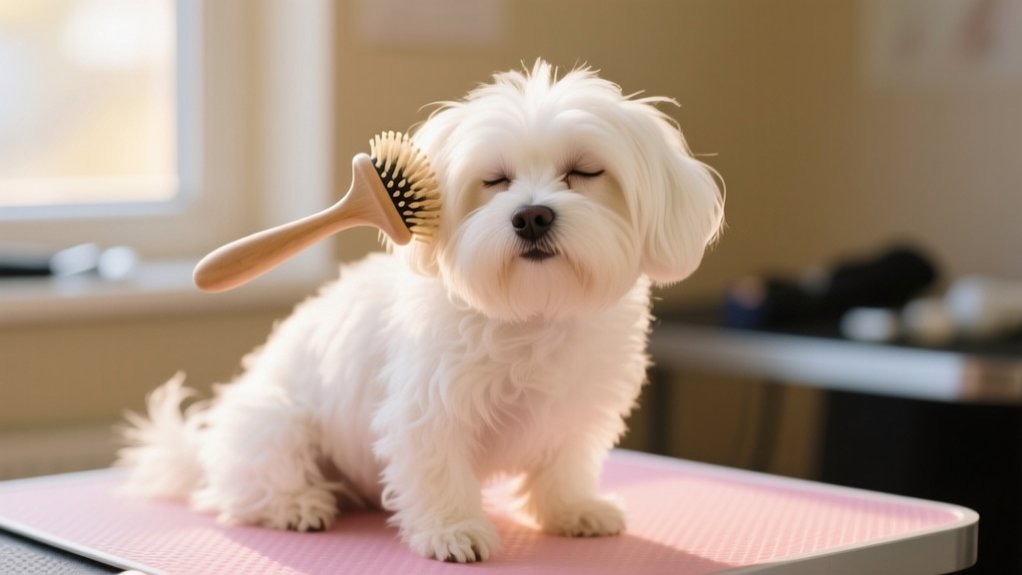
Before you grab a brush, take a moment to calm your pup — offer a treat, speak softly, and let them sniff the brush so it’s not a foreign object. You’ll want to choose a brush suited to your dog’s coat, whether that’s a slicker brush for longer fur or a bristle brush for short, smooth coats. Starting your grooming session this way sets a positive tone and makes the whole process easier for both of you.
Calming Your Dog First
A calm dog makes the grooming process smoother for both of you, so it’s worth taking a few minutes to help your small dog relax before you ever pick up a brush. Think of it as a pre-game warm-up, except the stadium is your living room and the MVP is a five-pound furball.
Try these calming tricks before brushing:
- Take a short walk to burn off that frantic “something’s about to happen” energy your dog somehow always senses.
- Offer a high-value treat to bribe — sorry, *encourage* — cooperation from the start.
- Speak softly and move slowly, because dramatic gestures will convince your dog that grooming equals danger.
A relaxed pup means fewer escape attempts and fewer scratches on you.
Choosing The Right Brush
Once you’ve got a calm dog on your hands, the next step is picking the right brush — and yes, it actually matters. Grabbing the wrong one is like using a rake on a Chihuahua. Not ideal.
For short-haired dogs, a rubber curry brush or bristle brush works perfectly — it removes loose hair without turning grooming into a dramatic ordeal. Long-haired or double-coated breeds need a slicker brush or undercoat rake to tackle tangles before they evolve into full-blown dreadlocks.
Sensitive skin? Go softer bristles. Wirehaired breeds? A pin brush does the job. When in doubt, ask your vet or groomer — they’ve seen every coat type imaginable and won’t judge your confusion. Probably.
How to Bathe a Small Dog Without Making It a Battle
Bathing your small dog doesn’t have to feel like a wrestling match if you set everything up before you bring your pup into the bathroom. Gather your supplies, warm the water, and have towels ready so you’re not scrambling mid-scrub while your dog judges you silently.
Prep everything before bath time — your dog’s already suspicious, and scrambling mid-scrub won’t help your case.
Here’s what’ll save your sanity:
- Use a non-slip mat — your dog’s dramatic slipping performance deserves a closed audience.
- Keep treats nearby — bribery isn’t weakness; it’s strategy.
- Work quickly but calmly — panicking is contagious, and your dog’s already suspicious of the whole operation.
Rinse thoroughly, because leftover shampoo causes itching, and an itchy, resentful dog is nobody’s friend. Dry your pup completely to avoid that lovely wet-dog-on-the-couch situation.
How to Trim Your Small Dog’s Nails Without the Drama
Nail trimming tends to terrify dog owners more than it terrifies the dogs — though your small dog will absolutely pretend otherwise. Get a quality pair of small dog nail clippers and styptic powder for emergencies, because you’ll eventually nick the quick. Don’t panic when that happens — it bleeds dramatically but it’s not a crisis.
Clip just the curved tip, avoiding the pinkish quick inside lighter nails. For dark nails, take tiny snips until you see a grey dot in the center — that’s your stop sign.
Bribe shamelessly. A smear of peanut butter on a lick mat transforms your dog from a four-legged drama queen into a surprisingly cooperative participant. Trim weekly to keep nails short and the quick retreated naturally.
How to Clean Your Small Dog’s Ears the Right Way
Small dogs — especially those with floppy ears like Cavaliers or Cocker Spaniels — are prone to ear infections, so regular cleaning isn’t optional. Think of it as avoiding a very smelly, very expensive vet bill.
Floppy-eared dogs don’t just look adorable — they’re basically walking ear infection machines. Clean them regularly or pay the vet bill.
Here’s your no-drama ear-cleaning game plan:
- Grab a vet-approved ear cleaning solution — not Q-tips, not cotton balls soaked in mystery liquids, not good intentions alone.
- Squeeze a little solution into the ear canal, then gently massage the base for 20–30 seconds. Your dog will shake their head — that’s the point.
- Wipe away the loosened debris with a cotton ball, going only as deep as your finger fits comfortably.
Weekly cleaning keeps infections away. Your dog’s ears will thank you — silently, because they’re dogs.
How to Trim the Hair Around Your Small Dog’s Eyes and Paws
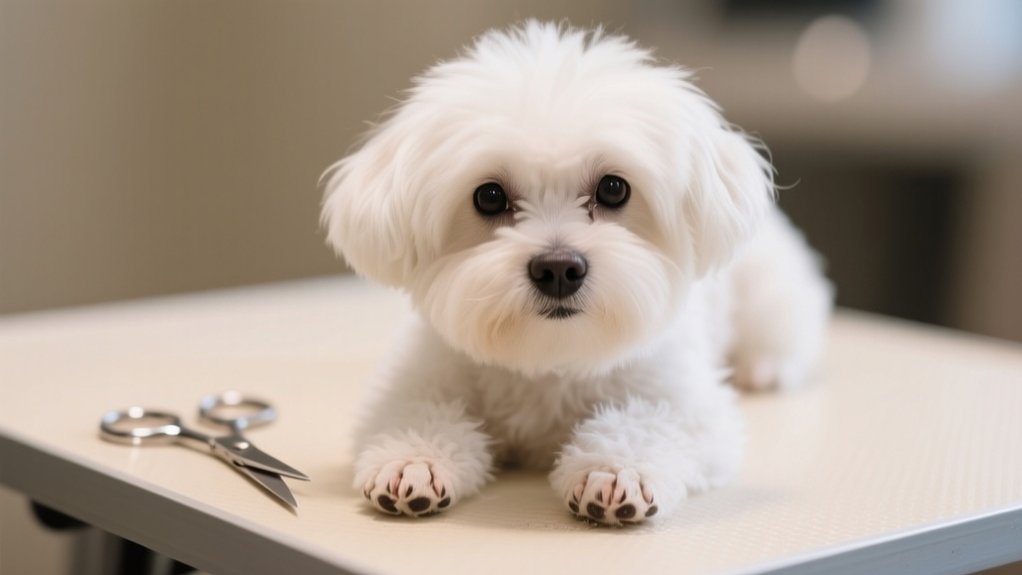
Trimming the hair around your small dog’s eyes and paws isn’t difficult, but you’ll need the right tools—specifically, blunt-tipped scissors, a fine-tooth comb, and a steady hand. For eye hair, carefully comb the hair away from the eyes before making small, cautious snips to prevent irritation and improve your dog’s visibility. When tackling paw hair, trim the fur between the pads flush with the paw’s surface to prevent matting, slipping, and debris buildup.
Eye Hair Trimming Tips
When it comes to trimming the hair around your small dog’s eyes and paws, you’ll want to use a pair of blunt-nosed scissors or grooming shears to avoid accidental injury. Nobody wants a one-eyed Shih Tzu on their conscience!
- Distract your pup with a treat before trimming — a bribed dog is a cooperative dog.
- Trim small amounts at a time, working slowly around the eyes to prevent poking or nicking sensitive skin.
- Comb the hair upward before cutting, giving you better visibility and control over length.
Always trim in good lighting, and never rush the process. If your dog’s wiggling like they’ve had three espressos, take a break and try again later.
Paw Hair Trimming Guide
Just like the eyes, your small dog’s paws need regular hair trimming to prevent matting, slipping on smooth floors, and debris buildup between the toes. Nobody wants their tiny furball doing involuntary splits across the kitchen tiles.
Here’s how to handle it:
- Lift each paw gently and spread the toes to expose the hidden fur jungle underneath.
- Use blunt-tip scissors or a small clipper to trim the hair flush with the paw pads.
- Snip the fur around the paw’s perimeter to keep things tidy.
- Check for mats between toes — they’re sneaky little troublemakers.
Trim every three to four weeks, and your dog’s paws’ll stay clean, grippy, and gloriously non-embarrassing at the dog park.
Tools You’ll Need
Before you start snipping around those sensitive eyes and paws, you’ll want to have the right tools on hand — using the wrong ones can startle your dog or cause accidental nicks. Think of it like surgery, but cuter and with fewer lawsuits.
Here’s what you’ll need:
- Blunt-tipped scissors — These rounded tips prevent accidental pokes near your dog’s eyes and paws. Safety first, drama second.
- Fine-toothed grooming comb — Perfect for detangling and lifting hair before cutting. No more surprise knots ruining your masterpiece.
- Styptic powder — Because mistakes happen, and this stops minor bleeding fast. Keep it close; your dog’s judging eyes won’t let you forget it.
Common Small Dog Grooming Mistakes and How to Avoid Them
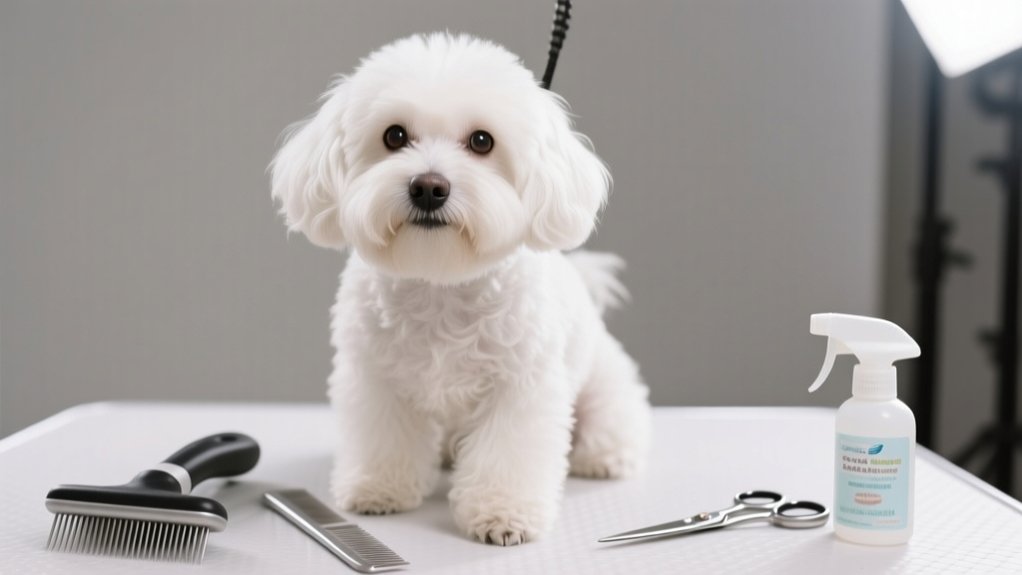
Even the most well-intentioned dog owners make grooming mistakes that can cause discomfort or even harm to their small dogs. Don’t worry, though — you’re not alone, and your pup probably forgives you. Mostly.
Here are the big slip-ups to dodge:
- Cutting nails too short — You’ll hit the quick, causing bleeding and a grudge that lasts approximately three days.
- Skipping ear cleaning — Moisture and debris build up fast, inviting infections nobody wants.
- Brushing matted fur incorrectly — Never yank through tangles. Work from the ends upward.
- Bathing too frequently — Strip those natural oils and you’ll have one itchy, unhappy dog.
- Using human products — Your shampoo’s pH is wrong for their skin. Don’t do it.
Learn these lessons now; your dog’s dignity depends on it.
When DIY Isn’t Enough: Signs Your Small Dog Needs a Groomer
There’s a point where your best DIY efforts simply won’t cut it, and recognizing that threshold is part of being a responsible dog owner. Sometimes, you’ve got to call in the professionals before your pup starts resembling a tiny, matted tumbleweed.
Watch for these telltale signs:
- Severe matting — If brushing feels like untangling Christmas lights, stop. Forcing through mats causes pain and skin damage.
- Nail anxiety — If your dog treats nail trims like a horror movie audition, a groomer’s experience prevents injuries to both of you.
- Skin abnormalities — Redness, sores, or unusual odors hiding beneath the coat need professional eyes before scissors get involved.
Knowing your limits isn’t defeat — it’s wisdom wearing a very cute, well-groomed disguise.

Comments are closed, but trackbacks and pingbacks are open.