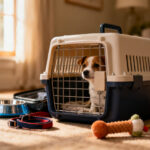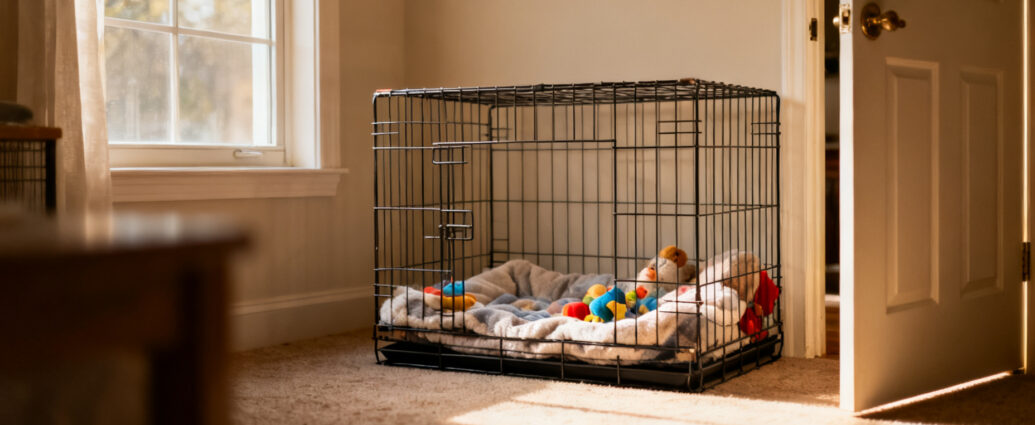
Get the Sizing Right (It’s Smaller Than You Think)
The “just enough room to stand, turn around, and lie down” rule isn’t some random idea someone made up. It really matters when you’re working with a tiny four-pound Yorkie. Give that little puppy a 24-inch crate and guess what happens? They’ll use one corner as their bathroom and sleep at the other end. Dogs won’t go potty where they sleep, but they have zero problems peeing just three feet away.
Here’s what size you need for tiny dogs:
• Chihuahuas, Yorkies, and other toy breeds: 18 to 19 inches
• Slightly bigger small dogs like Westies or Miniature Schnauzers: 22 to 24 inches
Measure your actual puppy if you’re not sure. They should be able to stand up without hitting their head and turn around in a circle. But they shouldn’t have room to throw a party in there!
The really smart move? Buy one grown-up-sized crate right from the start and use a divider panel to block off the extra space. As your puppy gets bigger, you just move the panel back a little bit at a time. Picture a three-month-old Pomeranian with about 12 inches of space to use, then expanding to 16 inches when they’re five months old, and finally the whole 22 inches by eight months. You’ll save money and won’t end up with a bunch of old crates piled up in your garage like my neighbor down the street!
And those cute soft-sided crates? Super adorable, yes. Good for crate training? Absolutely not. Your puppy will chew right through that mesh material, dig under the zipper, or just think it’s a cozy cave with walls that don’t really count. Save the soft crate for later when they’re fully trained and you need something easy to carry for trips.
Make the Crate Irresistible (Bribery Works)
Really good treats for a three-pound puppy are totally different than treats for a big Labrador. We’re talking about pieces the size of a pea – like tiny bits of cooked chicken, a super thin slice of cheese, or one single freeze-dried liver treat. Not a whole biscuit. Not a training treat that’s as big as their entire head. Tiny dogs need tiny rewards that they can actually eat without getting too full or needing a nap right after.
Feed every single meal inside the crate for the first week, with the door standing wide open. Your puppy walks in, eats their food, walks back out. No shutting them in yet. You’re building a connection in their brain: crate equals good stuff happening, not jail time.
Between meals, play crate games with them. Toss a treat inside. Let your puppy run in, grab it, and leave. Do this ten to fifteen times every day. This isn’t formal training where you’re being all serious – it’s just making the crate the most interesting spot in your whole house. The goal is for your Chihuahua to start checking the crate on their own, hoping something yummy just appeared like magic.
Here’s my honest advice: Put the crate in the room where you actually hang out. If you stick it way back in the laundry room, your Pomeranian will throw a fit that your neighbors three houses down will hear. Dogs are social animals who want to be around their people. Small dogs are extremely social animals – even more than big dogs sometimes. They want to be near you, even when they’re in their crate. Put it right in the living room, near the couch, where your puppy can see you and hear you doing your normal evening stuff.
Handle the Whining Without Caving (The Hardest Part)
There’s whining because your puppy really needs to pee, and there’s whining because your puppy just wants attention and is testing you. A ten-week-old puppy can only hold their bladder for maybe two to three hours, maximum. If it’s been that long, they probably really do need to go outside. If it’s only been twenty minutes and they’re just making noise, that’s different.
When you do take them out for a potty break, keep it super boring. No looking at them, no talking, no excitement at all. Walk straight outside to the bathroom spot you picked. Wait three minutes. If they go potty, give them quiet praise and go back inside. If they don’t go, right back in the crate they go. This is not playtime or fun time. This is a bathroom break that just happens to be at 2 a.m.
Wait for even ten seconds of silence before you open that crate door. That’s the lesson your puppy needs to learn. Making noise gets you nothing. Being quiet gets you freedom. It’s really hard to listen to the whining – I know it feels terrible – but if you give in after ten minutes, you’ve just taught your puppy that ten minutes of crying is the price they need to pay to get out.
For super-clingy breeds like Yorkies or Maltese – dogs who really struggle with being alone more than, say, a terrier who’s perfectly happy to ignore you – try white noise or a special heartbeat toy in the crate. This isn’t spoiling them. It’s understanding that some breeds are born to find being alone really stressful, and a little sound comfort can help them while they’re learning to settle down.
Use the Crate to Nail Housetraining (It’s a Shortcut)
Small breed puppies have smaller bladders and their bodies work faster. The math just doesn’t work in your favor. They need to go outside more often than a bigger puppy, not less, even though some people think a tiny dog can just hold it longer because everything about them is small.
The “age in months plus one” formula gives you a rough idea – like a three-month-old can hold it for about four hours – but you need to make that shorter for tiny breeds. A three-month-old Chihuahua? Maybe three hours, and that’s really pushing it. Don’t test it and find out the hard way.
| Puppy Age | Regular Puppy | Small Breed Puppy |
|---|---|---|
| 2 months | 3 hours | 2 hours |
| 3 months | 4 hours | 3 hours |
| 4 months | 5 hours | 4 hours |
Crate your puppy right after meals and water for fifteen to twenty minutes, then take them straight outside to the bathroom spot you picked. The crate keeps them from wandering off and peeing under the dining table while you’re putting dishes away. It buys you time to get them outside right when their bladder is the fullest.
Your puppy isn’t really housetrained until they’ve gone four whole weeks without any accidents. Two weeks of success is just them following the rules, not actually learning it for good. They’re still figuring things out. Don’t celebrate and stop watching them at the two-week mark, or you’ll be back to square one when they have an accident in the hallway and you’re left scratching your head wondering what went wrong.
Manage Separation Anxiety Before It Starts
Some breeds are just born to be velcro dogs – stuck to you like glue. Maltese, Cavaliers, Havanese – they were actually bred hundreds of years ago to be companion dogs, not independent workers who do their own thing. That doesn’t mean you can’t crate train them, but it does mean your timeline will be slower and you’ll need to go more gradually. Expect it from the start. Plan for it.
Start with just thirty seconds of crate time while you’re sitting right there in the same room. Add fifteen seconds each day. Not fifteen minutes. Fifteen seconds. This feels super slow – like watching paint dry – but jumping from one minute to an hour on day three is exactly how you end up with a panicked puppy who thinks the crate means you’re abandoning them forever.
Leave a t-shirt you wore recently in the crate. Your smell is comforting to them without you hovering nearby all worried, which actually makes your puppy more stressed. The shirt tells them “my person exists and will come back,” which is exactly the message you want to send.
My advice from experience: Crate your puppy several times a day when you’re actually home. Mid-morning for twenty minutes while you’re folding laundry. Mid-afternoon while you’re checking emails or watching TV. This way, the crate doesn’t mean “oh no, my person is leaving me.” It’s just a normal part of the day, not a big flashing warning sign that says “you’re about to be all alone.”
Avoid the Small-Dog Crate Training Mistakes Everyone Makes
Carrying your tiny puppy everywhere because they’re so small and cute is actually hurting their independence training. Yes, they’re adorable. Yes, they fit right in your hand like a little stuffed animal. But if they never have to walk around the world on their own four paws, they’ll never learn to settle down in a crate without you right there.
The “just this once” trap is super real, and I see people fall into it all the time around here. Let your whining Pomeranian out after ten minutes one single time, and you’ve taught them that ten minutes of noise actually works. They’ll do it again and again. Being consistent isn’t just a nice idea – it’s the entire way that crate training actually works.
Never, ever use the crate as punishment after an accident or bad behavior. The crate is not doggy jail or timeout. If your puppy pees on the rug and you angrily shove them in the crate, you’ve just created a bad feeling about the crate that will take weeks to fix. The crate should only mean good things are coming: meals, treats, rest time, feeling safe.
Stop expecting the same timeline as your neighbor with a Labrador. Small breeds often take two to three weeks longer to feel secure and comfortable in a crate, and that’s completely normal and okay. Their size makes them feel more vulnerable to danger, they get more attached to their people, and their bladders are way less forgiving. Adjust what you’re expecting or you’ll just get frustrated with yourself and your puppy.
Know When to Adjust Your Approach
Real distress looks totally different from a puppy just testing boundaries. Panting, drooling, frantic attempts to escape, or going potty in the crate even though they’re already housetrained – those are signs your puppy is actually panicking, not trying to manipulate you or be sneaky. Rhythmic whining that stops and starts, or crying that gets quiet the second you walk back where they can see you, is testing you.
If your puppy is still panicking after a whole week of gradual work, you’re moving way too fast. Slow down. Go back to shorter times, give rewards more often, put less pressure on them. Imagine a twelve-week-old Maltese who’s still panting and stressed after three days of thirty-second crate sessions – that puppy needs you to drop back to just ten seconds and rebuild from there, even though it feels like starting over.
For really extreme cases where nothing seems to work, try a crate-adjacent modification instead. Set up an exercise pen around the crate with the crate door standing open. Your puppy can choose to go inside or stay in the pen area. Slowly make the pen smaller over two weeks until the crate is the only option left. It’s slower, but it works when the regular approach is just too overwhelming for them.
Real Talk: Proper crate training for small breeds takes three to six weeks for basic comfort – where your puppy will go in willingly and settle down without drama. True reliability, where you can crate them for a few hours without worrying, takes eight to twelve weeks. That’s way longer than most online guides tell you, but it’s the actual reality when you’re working with a six-pound dog whose survival instincts are still screaming “don’t leave me alone with the predators out there.”