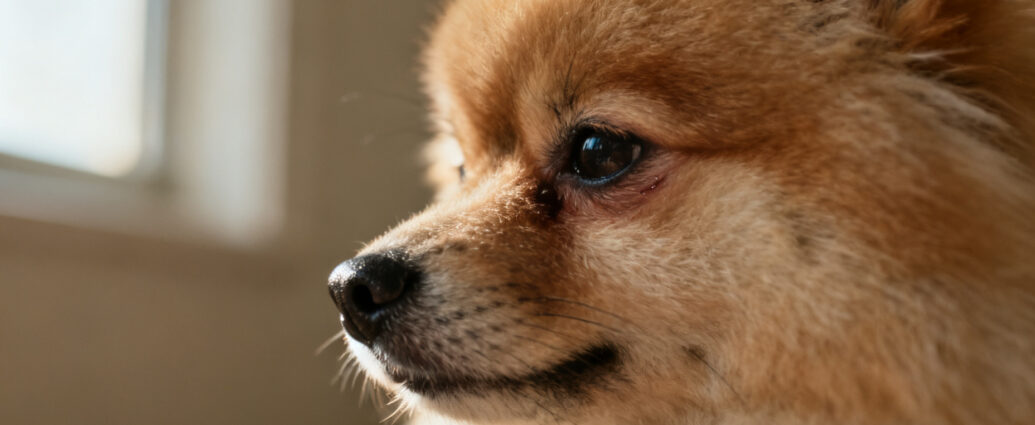
Tear stains aren’t just about looks. They’re like a map showing what’s going on inside your Pom – and a lot of it starts right at the food bowl.
Those reddish-brown streaks that show up so clearly on cream and white Pomeranian faces come from porphyrins. These are compounds with iron in them that build up in tears and spit. When your dog’s body is dealing with yeast problems or the wrong pH balance, these compounds increase. The tears overflow. The fur stays wet. Yeast grows, and the staining gets worse.
Small dogs with shallow eye sockets – and Pomeranians definitely fit here – already cry more than other dogs because there’s less room for tears to drain the normal way. Add water with lots of minerals, certain food ingredients, or even the wrong type of bowl, and you’re making the problem bigger.
But here’s what really matters: how you feed your Pom is just as important as what you feed them. You don’t need to throw out all your dog food or buy expensive prescription meals to see a change. Adjust how you handle mealtime, and you can see real changes in three to four weeks. The stained fur has to grow out, yes, but the new fur growing in will be cleaner.
Switch to Filtered or Distilled Water (And Clean the Bowl Daily)
Tap water is easy to use. It’s also full of iron, magnesium, and copper – minerals that directly feed the porphyrin compounds that cause staining. A basic carbon filter (the kind you attach to your faucet or put in a pitcher) removes most of these minerals.
Distilled water works too, though some Pom owners worry about taking out all the minerals for a long time. Filtered water is the smart middle choice.
Now let’s talk about the bowl itself. Even filtered water becomes a bacteria party in twelve to twenty-four hours, especially in plastic bowls. Those tiny scratches in plastic trap gross stuff. Bacteria and yeast love it there. Your Pom drinks from it, and that contamination makes them tear up more.
Here’s what you need to do:
• Wash the water bowl with hot water and plain dish soap after every meal – not every few days, but every single time
• Use stainless steel or ceramic bowls only
• Throw out any plastic bowls, even the ones that say “BPA-free”
One more trap that catches Pom owners: those cute water bottles that hang on the cage like hamsters use. The metal ball collects bacteria in tiny crevices, and many Poms end up with more tears from the irritation. Get rid of them. A clean bowl that you refill twice a day works way better.
Picture a Pomeranian owner who spent forty-five dollars on a fancy hanging water bottle system, only to watch their dog’s tear stains get worse over six weeks. That’s money down the drain when a simple stainless bowl would’ve worked.
Ditch the Plastic Bowls (Even the ‘BPA-Free’ Ones)
Plastic has tiny holes you can’t see. Even after washing, it holds onto bacteria and yeast in microscopic scratches. Every time your Pomeranian’s face touches the rim, that contamination creates irritation on their skin – and irritation means more tears.
Some Poms get mild reactions from the plastic itself. The reaction isn’t dramatic – no bumps or swelling – just a bit more eye watering that you might not connect to the bowl at all.
Switch to stainless steel or ceramic. Shallow and wide works better than deep and narrow – four to five inches across keeps your Pom’s fluffy face fur out of the food and water while they eat. Less contact with wet surfaces means less staining.
Eliminate Red Dye, Artificial Colours, and Beet Pulp from the Current Bowl
Fake dyes – Red 40, Yellow 5, and others like them – build up in tears and spit. They don’t always increase how much your dog tears up, but they make the stain color darker. The problem might stay the same, but the visible streaks look worse.
Beet pulp is trickier. It’s a common filler (you’ll see it listed as “beet pulp,” “dried beet pulp,” or “beet fiber”) that has natural pigments in it. Some Pomeranians push those pigments out through their tears. Not all dogs do this, but enough do that it’s worth checking.
Quick Check: Flip your dog food bag over right now. Look at the first ten ingredients for anything with “colour,” “dye,” or “beet.” If you’re feeding a mix with colored kibble bits – those red or green fun shapes – pick them out.
If beet pulp is in there and you’re not ready to switch foods completely, look for the same protein type from the same brand without that ingredient. Many companies make multiple formulas.
Raise the Bowl to Snout Height
Eating from the floor makes your Pomeranian’s eyes angle downward and inward. That position squeezes the tear ducts and makes tears overflow during meals. Tears spill onto fur. Stains happen.
Raise the bowl two to three inches – just enough to bring the food to the bottom of your Pom’s chest when they’re standing up. You can use a flipped-over ceramic bowl, a wooden block, a stack of books, or a proper pet feeder riser.
The right bowl height also stops gulping and that awkward head-tilting that causes reflux. Reflux means stomach acid irritation, and irritation means more facial moisture. Both add to tear staining in ways that aren’t obvious right away but add up over weeks.
Imagine a Pomeranian eating from a bowl flat on the kitchen floor, head bent at a weird angle, tears pooling in the corners of their eyes with every bite. Now picture that same dog eating comfortably from a raised platform, head level, tears draining normally. That’s the difference two inches can make.
Feed Smaller, More Frequent Meals to Reduce Reflux and Eye Irritation
Toy breeds with short snouts and squished-together anatomy – Pomeranians included – often get mild acid reflux. Upset stomach and feeling sick trigger more tearing. Many owners completely miss this connection because the reflux isn’t dramatic. No throwing up, no obvious signs of distress. Just a bit more eye watering.
Split your Pom’s daily food into three or four mini-meals instead of one or two big ones. Same food, same total amount, just spread out through the day. This keeps blood sugar steady and reduces the nausea-related tearing that sneaks in after big meals.
Sample Feeding Schedule:
| Time | Amount |
|---|---|
| 7:00 AM | ¼ of daily portion |
| 12:00 PM | ¼ of daily portion |
| 5:00 PM | ¼ of daily portion |
| 9:00 PM | ¼ of daily portion |
The overnight gap is another problem. A twelve-plus-hour stretch between dinner and breakfast can trigger bile reflux by morning. Your Pom wakes up with crusty, stained eyes, and you think it’s just “how they are.” It’s not. A small snack before bed – a few kibbles, a bite of plain cooked chicken – closes that gap and cuts down morning gunk significantly.
Add a Probiotic or Plain Kefir to the Current Food
Gut problems and yeast overgrowth don’t stay inside. They show up on the outside as tear staining, among other things. A daily probiotic – made for dogs, one to five billion CFUs for a Pomeranian – helps fix the gut balance without needing to change food.
Plain kefir is the other choice. One teaspoon of unsweetened, unflavored kefir mixed into meals gives your Pom live cultures that specifically fight yeast. Picture a Pomeranian owner spooning it over kibble like a tiny, probiotic gravy. It’s that simple.
This approach works in two to three weeks. Reducing yeast inside the body decreases the reddish color in tears, even if the amount of tearing stays the same. The tears are still there, but they’re clearer. Less staining follows.
Track Changes Week by Week (And What to Watch For)
Tear stains take twenty-one to twenty-eight days to show improvement. The stained fur has to grow out and be trimmed or naturally fall out. You won’t see results overnight, but you will see them if you stick with it.
Use these feeding changes along with a daily face-wipe routine: a dry or barely-damp cloth after each meal to stop fresh tears from sitting on fur. No harsh wipes, no hydrogen peroxide. Just a gentle swipe to keep the area dry.
Watch for warning signs that mean the problem isn’t food-related:
• Sudden increase in tearing
• Eye gunk that’s green or yellow
• Squinting or pawing at the face
• Redness around the eyes
All of these mean you need to visit the vet to rule out blocked ducts or infection. Tear stains are usually harmless, but they can also hide something that needs medical help.
If you’ve made these changes and you’re still seeing heavy staining after a month, the problem might be structural (shallow tear ducts, eyelash problems) or medical (low-grade infection, allergies). But for many Pomeranians, these seven shifts – no new food required – are enough to see cleaner fur and a face that finally matches the rest of your fluffy little cloud of a dog.