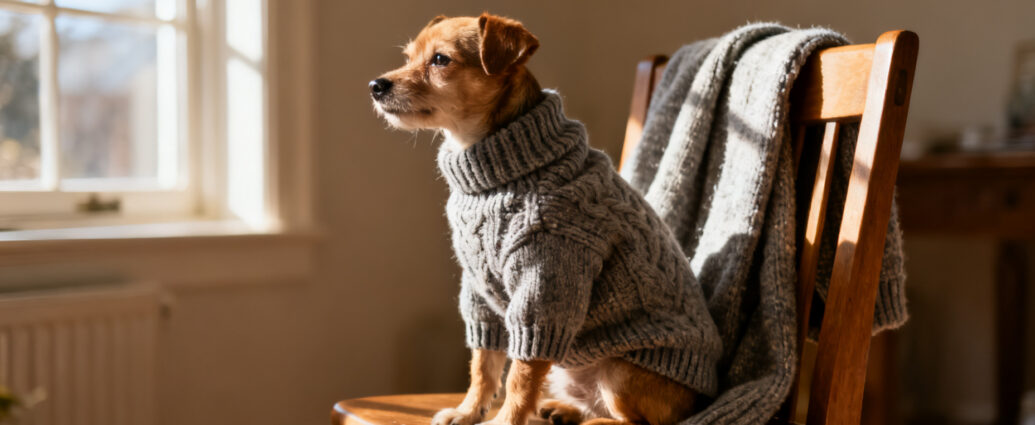
Do Small Dogs Really Need Sweaters, or Is It Just Cute?
Let’s talk about why tiny dogs get cold so fast. Small dogs lose body heat much quicker than big dogs. It’s just how their bodies work. Think about it like this: they have way more skin compared to what’s inside their body. And many small breeds (like Chihuahuas, Italian Greyhounds, and Yorkies) don’t have that thick, fuzzy undercoat that keeps cold-weather dogs toasty. They’re basically walking around in a t-shirt while other dogs have winter coats built right in!
Here’s when your small dog really needs a sweater:
• When it’s below 45°F outside, most tiny dogs need some help staying warm
• When it’s below 32°F (freezing!), thin-coated dogs absolutely must wear something
• When it’s windy, because wind makes it feel 10-15 degrees colder than it actually is
Some small dogs handle cold better than others. Westies and Cairn Terriers have thick double coats, so they’re pretty tough in winter. But dogs with thin coats, no hair at all, or older dogs who’ve lost some of their fluff? They’re genuinely freezing out there. Imagine a tiny four-pound Italian Greyhound trying to handle a February morning in Chicago – that pup is seriously cold, and it’s not just in your head.
Your dog will show you when they’re too cold. Watch for these signs:
• Shivering (this one’s obvious!)
• Hunching down low like they’re trying to curl into a ball
• Lifting their paws up over and over
• Really not wanting to go outside
• Running to warm spots like heating vents or sunny windows
These aren’t just your dog being picky. They’re actually uncomfortable and need help warming up.
For Thin-Coated Breeds: Full-Torso Coverage That Actually Insulates
Chihuahuas, Min Pins, and Italian Greyhounds need serious coverage from chest all the way to tail. Not some flimsy decorative thing that just looks cute in pictures. We’re talking about real insulation – fleece-lined nylon or thick quilted fabric that actually traps warm air and blocks wind.
A good sweater needs to cover the chest high up on the neck and wrap all the way around the belly. The chest area is where heat escapes fastest. Picture a four-pound Chihuahua standing on frozen sidewalk in 30-degree weather – that tiny body is losing heat in just minutes. The belly panel isn’t there to look cute. It’s protecting the areas with almost no natural padding where cold air comes right up from the frozen ground.
What makes a sweater actually work:
• Covers from the base of the neck all the way to where the tail starts
• Leg holes don’t leave the ribs or belly exposed
• Fits snug but not tight – no cold air gets in, but your dog can still move normally
• If your dog looks stuffed like a sausage or can’t trot around normally, the fit is wrong
Different breeds need different fits, even at the same weight. Chihuahuas are shaped like little barrels, so they need extra room around the chest. Italian Greyhounds have really deep chests but super skinny waists – they need that extreme taper. Yorkies? They’re all over the place! One seven-pound Yorkie might be long and lean while another is short and chunky. You absolutely cannot just grab any “small” size and expect it to work.
I’ve seen too many frustrated dog owners in pet stores around here trying to squeeze their pup into the wrong size because the weight chart said it should fit. Trust me – measure your actual dog and pay attention to their body shape, not just the number on the scale.
For Senior Dogs: Gentle Warmth with Arthritis-Friendly Design
Older dogs need sweaters even if they never did when they were young. Their fur gets thinner. Their blood doesn’t flow as well. Arthritis gets way worse in cold weather. A ten-year-old dog’s body just doesn’t work the same as when they were three.
What matters most for older dogs:
• Wide neck openings they don’t have to squeeze their head through
• Velcro or snaps instead of pullovers
• Soft inside lining that won’t rub on sensitive skin or sore joints
• Extra warmth on the lower back and hips where arthritis hurts most
Picture a twelve-year-old Pomeranian with bad hips who just needs to get outside for a quick bathroom break on a cold morning. That dog needs gentle, soothing warmth, not a wrestling match getting dressed.
A wrap-style fleece is perfect. It opens all the way up, wraps around your dog’s body, and closes without making them step through holes or push their head through tight spaces. For a senior dog who’s stiff or grumpy about getting dressed, this makes everything so much easier for both of you.
Temperature tips for older dogs:
Add 5-10 degrees to the normal rules. If a young dog needs a sweater at 40°F, your senior needs one at 45-50°F. Their internal temperature control just isn’t as good anymore. I know it seems like babying them, but their bodies genuinely can’t handle what they used to.
For Cold-Climate Walkers: Weather-Resistant Outer Layers
Fleece works great when it’s dry and cold. But when it’s raining, snowing, or sleeting? You need waterproof protection. Keeping warm and staying dry are two totally different jobs, and mixing them up means your dog ends up cold AND wet.
Imagine a Yorkie living in Minnesota who needs twenty-minute walks in January snow. That dog absolutely needs a jacket with a waterproof outside shell and warm fleece inside. Anything less just isn’t going to cut it.
Must-have features for serious winter weather:
• Waterproof outer layer that blocks wind
• Reflective strips so cars can see your dog in the dark
• Chest strap that actually stays put when your dog is moving around
• Long enough to cover the lower back and hip area
These aren’t fancy extras. They’re basic requirements if your dog spends real time outside in harsh weather.
Local Reality Check: Around here, we get real winters. I’m talking below-freezing temperatures for weeks, wind that cuts right through you, and snow that piles up fast. Your dog feels all of that just like you do – actually worse, because they’re so much closer to that frozen ground.
Double-coated breeds like Westies can usually skip the jacket unless it drops below 20°F or gets wet out. But single-coated terriers – like Toy Fox Terriers – need full protection below 35°F. Their coats just weren’t built for this kind of weather.
For Indoor/Outdoor Transitioners: Quick-On Layers for Bathroom Breaks
This is for dogs who live in warm houses but need to run outside for quick bathroom breaks in cold weather. You need something super easy to get on and off multiple times every day without fighting or stressing your dog out. You’re not preparing for a hiking trip. You’re just managing four quick potty breaks.
A pullover fleece or zip-up vest that takes less than ten seconds to put on is what you want. Picture a Pomeranian in an apartment building making four trips down the elevator and outside to the street when it’s 25°F. The sweater needs to slide right on, keep their core warm for five to ten minutes, and come off easily. That’s the whole point.
What to look for:
• Stretchy material that slides on without a struggle
• Very few buttons, snaps, or adjustments
• Covers the chest and back (the most important parts)
• Doesn’t need to cover the legs for short trips
When this isn’t enough: if your bathroom breaks regularly take more than ten minutes or it’s below 25°F, you need something heavier from the cold-weather section. A quick vest isn’t made for long outdoor time, and your dog won’t stay warm enough.
Sizing, Fit, and Safety: What Actually Matters
How to measure your dog correctly:
• Length: from the base of the neck to where the tail starts (NOT the tip of the tail)
• Chest: around the widest part, right behind the front legs
• Neck: all the way around where a collar sits
Here’s something really important: breed matters way more than weight for getting the right fit. A seven-pound Chihuahua and a seven-pound Yorkie need completely different sizes. One is short and barrel-shaped, the other is longer and narrower. If you just go by weight, you’re going to end up with something that doesn’t fit.
Danger signs that the sweater is wrong:
• Your dog can’t move their shoulders normally
• It rides up and shows their belly when they walk
• It touches or presses on their throat
• It has loose threads or decorations they could chew off and swallow
If the sweater shifts around during normal walking, it’s the wrong fit. If your dog can’t move their front legs freely, it’s actually dangerous.
What to avoid:
• Rough seams on the inside that rub and irritate
• Fabrics that don’t breathe (your dog will overheat inside)
• Anything that says “dry clean only” (you’ll wash this thing constantly)
The overheating danger is real and serious. Small dogs can get too hot really fast indoors or in cars. Sweaters are ONLY for being outside in the cold. Take it off within five minutes of coming back into your heated house. If your dog is panting while wearing a sweater indoors, they’re too hot. Overheating is just as dangerous as being too cold.
When Your Dog Doesn’t Need a Sweater (Yes, Really)
Double-coated breeds in normal winter weather don’t need sweaters. Pomeranians, Westies, and similar dogs with full, thick undercoats already have natural insulation. They only need sweaters in really harsh conditions – like when it stays below 20°F for a long time or when wet weather soaks their coat and ruins the insulation.
Indoor dogs in mild climates can skip the sweater completely if winter rarely gets below 50°F and they’re only outside for under ten minutes. At that point, a sweater is just something you think looks cute, not something your dog actually needs. Your dog is totally fine. You’re dressing them because you want to, which is perfectly okay! Just don’t confuse what you want with what they actually need.
Dogs who spend lots of time outside all year get tougher about cold than dogs who almost never go out. A Yorkie who’s outside for hours every day might handle cold better than a Yorkie who barely leaves the house. Regular exposure builds up their ability to handle it. Keeping them super sheltered all the time does the opposite.
Signs you’re going overboard:
• Your dog is panting while wearing the sweater outside
• They’re trying to pull it off themselves
• They’re lying on cold surfaces
• They refuse to move
These mean your dog is too warm, not being stubborn. If your dog is actively trying to get the sweater off, listen to them! They’re not being difficult – they’re genuinely overheating, and that’s a problem.
Honestly? Some dogs around here never need sweaters at all. I know that’s not what the pet stores want you to think, but it’s true. Pay attention to what your actual dog is telling you, not what looks adorable on Instagram.