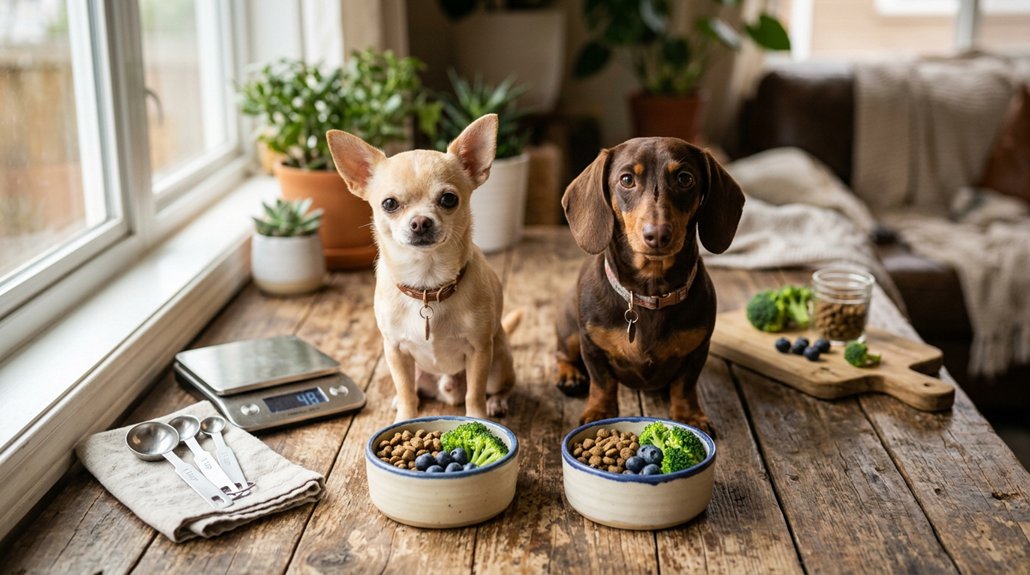
If you have a small dog, you’ve probably wondered whether their diet actually requires special attention. It does—and the difference matters more than you’d think. Small breeds have faster metabolisms, tinier teeth, and nutritional needs that standard dog food often misses entirely. What you feed your petite pup directly affects their energy, weight, and long-term health. The tips ahead will change how you approach every meal.
Why Small Dogs Need a Different Diet Than Large Breeds
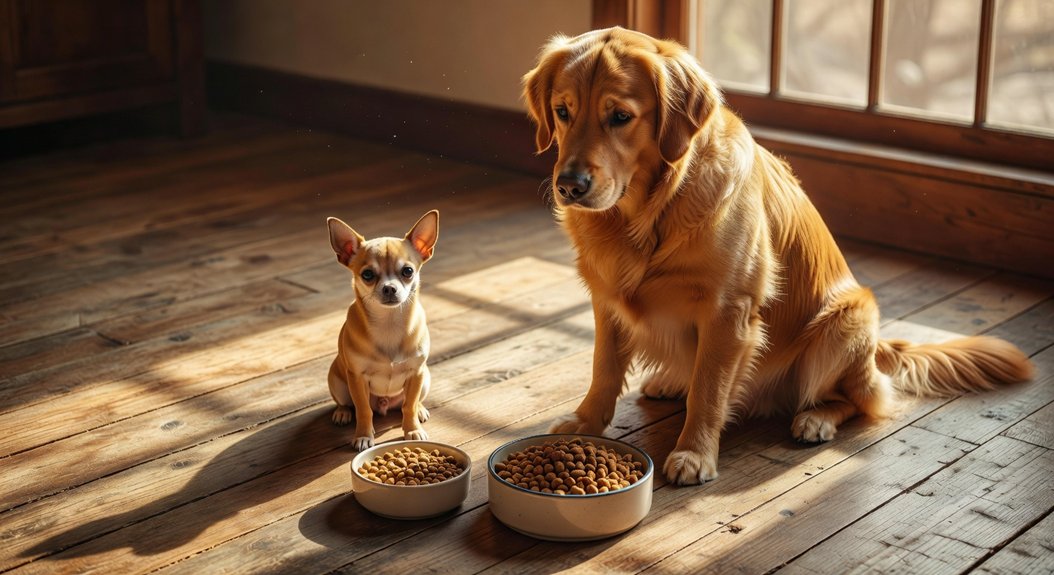
When it comes to canine nutrition, size truly matters. Your tiny Chihuahua isn’t just a smaller version of a Great Dane — it’s practically a different species with a completely different rulebook.
Small dogs have faster metabolisms, meaning they burn calories quicker than their larger counterparts. Think of them as tiny, furry sports cars with engines constantly running at full throttle. They need calorie-dense food packed into smaller portions to keep up with that nonstop energy.
Additionally, petite breeds have smaller mouths and teeth, requiring appropriately sized kibble. Feeding them oversized pieces is like expecting you to eat a whole pizza in one bite — technically possible, but nobody wants that disaster. Their nutritional needs are genuinely unique, so don’t treat them like mini large dogs.
Choose a Food Formulated for Small Breeds
When shopping for your small dog’s food, you’ll want to look for formulas specifically designed for small breeds, as they’re nutrient-dense enough to meet your pup’s high metabolic demands in smaller portions. Calorie content matters too, since petite dogs need more calories per pound than larger breeds, yet it’s easy to overfeed them without realizing it. You’ll also notice that small breed kibble is sized to fit your dog’s tiny mouth, making it easier to chew and reducing the risk of choking.
Nutrient-Dense Small Breed Formulas
Small breeds have three key nutritional advantages built into quality small-breed formulas: higher caloric density, smaller kibble sizes, and nutrient ratios calibrated for faster metabolisms. Think of it as premium fuel for a tiny, furious engine that never shuts off.
When you’re shopping, look for formulas listing real protein—chicken, fish, or lamb—as the first ingredient. Your Chihuahua isn’t fooled by “meat by-product surprise,” and honestly, neither should you be.
Smaller kibble matters more than you’d think. Large kibble forces little jaws to work overtime, which sounds like a CrossFit metaphor but is actually just uncomfortable. Nutrient-dense formulas also mean your pup eats less volume while still hitting their daily requirements—fewer calories consumed, less cleanup duty for you. Everyone wins.
Calorie Content Matters
Calorie content is one of the most overlooked factors when choosing food for a small breed dog, yet it’s certainly the most essential. Your tiny companion may be small, but their caloric needs per pound are surprisingly high compared to larger breeds. Think of it this way: they’re basically running a Ferrari engine in a go-kart body. Small breed formulas are calorie-dense by design, delivering maximum nutrition in smaller portions. Without this balance, you’ll either underfeed them or accidentally turn your petite pup into a chubby couch potato. Check the feeding guidelines on any food you’re considering and calculate daily intake carefully. Even a small surplus adds up fast when your dog weighs ten pounds. Precision here truly matters.
Kibble Size Considerations
Kibble size might seem like a minor detail, but it’s actually a bigger deal than most pet owners realize. Tossing oversized kibble at your tiny dog is like asking them to eat a whole watermelon. Small breeds need appropriately sized pieces to chew comfortably and safely. Here’s why choosing small-breed-formulated kibble matters:
- Easier chewing — prevents jaw strain and choking hazards
- Better digestion — smaller pieces break down more efficiently
- Dental health — properly sized kibble actually scrubs those tiny teeth
- Encourages slower eating — reduces gulping and bloating risks
Your petite pup deserves food engineered specifically for their little mouth. Don’t let kibble size become the overlooked villain in your dog’s nutrition story.
What to Look for on a Small Breed Dog Food Label
When shopping for small breed dog food, there are a few key things you’ll want to check on the label. First, confirm that a real protein source — like chicken, beef, or salmon — appears as the first ingredient. If “corn syrup” beats out actual meat, put it back on the shelf. Next, look for the AAFCO nutritional adequacy statement, which confirms the food meets established standards. You’ll also want higher calorie density per cup, since your tiny furball burns energy like a race car. Avoid artificial preservatives, colors, and fillers. Finally, check for DHA for brain health and omega fatty acids for that impossibly glossy coat. Your petite pup deserves real nutrition, not mystery ingredients.
Pick the Right Kibble Size for Small Mouths
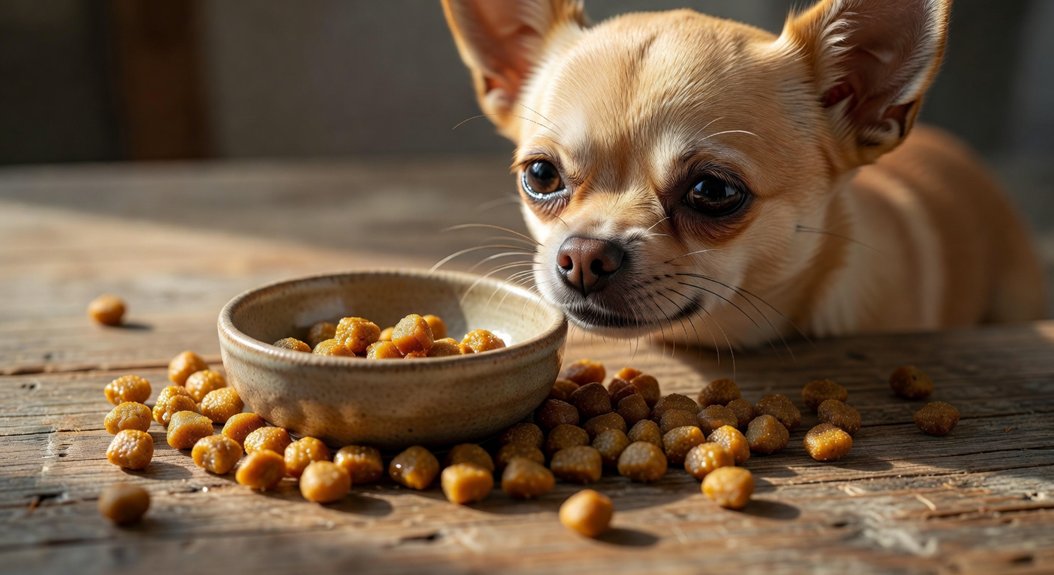
One of the most overlooked details in small breed feeding is kibble size. Your Chihuahua isn’t a Golden Retriever — stop feeding them pebbles built for a dog the size of a couch.
Here’s what to keep in mind:
- Choose small-breed-specific kibble, typically under 10mm in diameter.
- Watch for choking hazards — oversized pieces turn mealtime into a wrestling match.
- Look for kibble shaped for tiny jaws, like round or oval pieces that promote easy chewing.
- Avoid generic “all breed” formulas — their kibble size is usually designed for larger dogs.
Proper kibble size improves chewing, digestion, and dental health. It’s a small detail that makes a genuinely big difference for your little companion.
How Many Calories Does a Small Breed Dog Actually Need?
Small dogs burn calories faster than large breeds — so how much fuel does your petite pup actually need? Despite their tiny frames, small breeds have surprisingly high metabolisms, meaning they need more calories per pound than their larger cousins. A 10-pound dog typically needs around 200–275 calories daily, but that’s not a one-size-fits-all number.
Activity level, age, and whether your dog’s been “snipped” all affect their daily intake. A couch-potato Chihuahua doesn’t need the same fuel as a Terrier training for the doggy Olympics. Overfeeding is dangerously easy with small breeds — those puppy eyes are professionally trained to manipulate you. Check your food’s feeding guidelines, consult your vet, and track portions carefully. Your pup’s waistline will thank you.
How Often to Feed a Small Dog
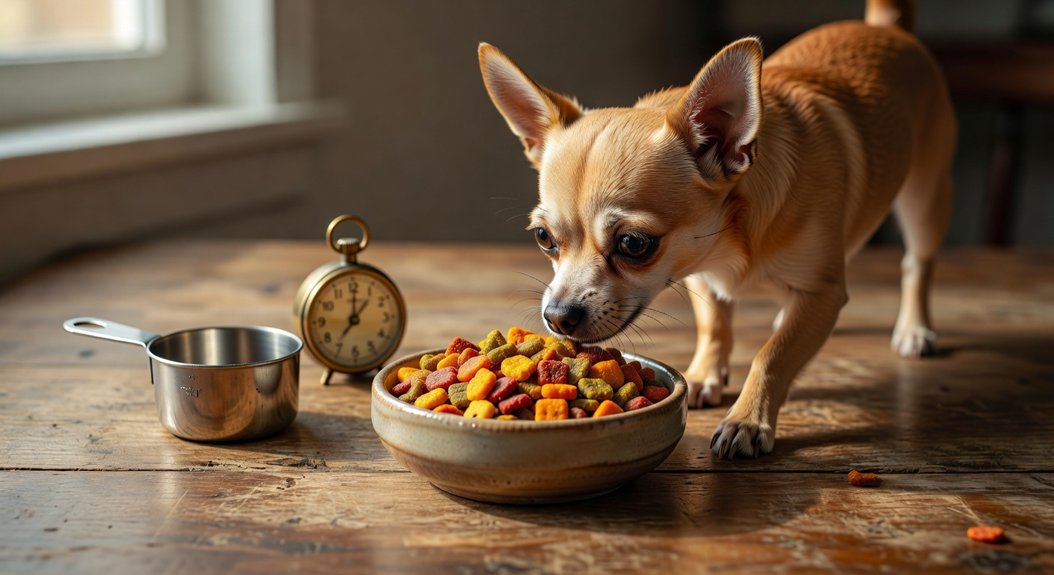
When it comes to feeding frequency, your small dog’s age matters a lot—puppies need three to four meals a day, while adults do well with two. Because small breeds have tiny stomachs, you’ll want to keep each portion small and measured rather than free-feeding. Sticking to consistent meal times and controlled portions helps prevent overeating, obesity, and the blood sugar crashes that petite breeds are prone to.
Meal Frequency By Age
How often you feed your small dog matters just as much as what you feed them, and the right schedule evolves as they age.
- Puppies (under 3 months): Feed four times daily. Their tiny tummies can’t handle big gaps between meals.
- Young puppies (3–6 months): Three meals daily keeps blood sugar stable and meltdowns minimal.
- Older puppies (6–12 months): Shift to twice daily. They’re basically teenagers now — still dramatic, but more manageable.
- Adults (1+ years): Twice daily works perfectly. Some owners do once daily, but small breeds handle that poorly.
Skipping scheduled meals risks hypoglycemia in small breeds, which isn’t fun for anyone. Consistency isn’t just helpful — it’s genuinely essential for their health.
Portion Control Per Feeding
Once you’ve nailed down a feeding schedule, the next piece of the puzzle is making sure you’re putting the right amount in the bowl. Spoiler: “eyeballing it” isn’t a nutrition strategy.
| Dog Weight | Calories/Day | Per Meal (3x Daily) |
|---|---|---|
| 2–4 lbs | 100–200 kcal | 33–67 kcal |
| 5–9 lbs | 200–350 kcal | 67–117 kcal |
| 10–12 lbs | 350–450 kcal | 117–150 kcal |
| 13–15 lbs | 450–550 kcal | 150–183 kcal |
| 16–20 lbs | 550–700 kcal | 183–233 kcal |
These ranges shift based on activity level and age. Always cross-reference your dog’s food label, since caloric density varies wildly between brands. When in doubt, your vet’s the tiebreaker.
Ingredients and Foods to Avoid in a Small Dog’s Diet
Knowing which ingredients and foods to avoid is just as important as choosing the right ones for your small dog’s diet. Your petite pup’s tiny tummy can’t handle everything, so steer clear of these troublemakers:
Knowing what to avoid is just as crucial as knowing what to feed your small dog’s tiny, sensitive tummy.
- Xylitol – Found in sugar-free products, it’s basically kryptonite for dogs.
- Grapes and raisins – Cute snacks for you, kidney failure for them. Hard pass.
- Onions and garlic – They’ll destroy your dog’s red blood cells faster than you’d believe.
- High-sodium foods – Small dogs process salt poorly, risking dangerous sodium poisoning.
Beyond these, avoid artificial preservatives like BHA and BHT in commercial kibble. Your dog’s size makes them more vulnerable, so reading labels isn’t optional—it’s essential.
How to Spot Weight Gain in Small Dogs Early
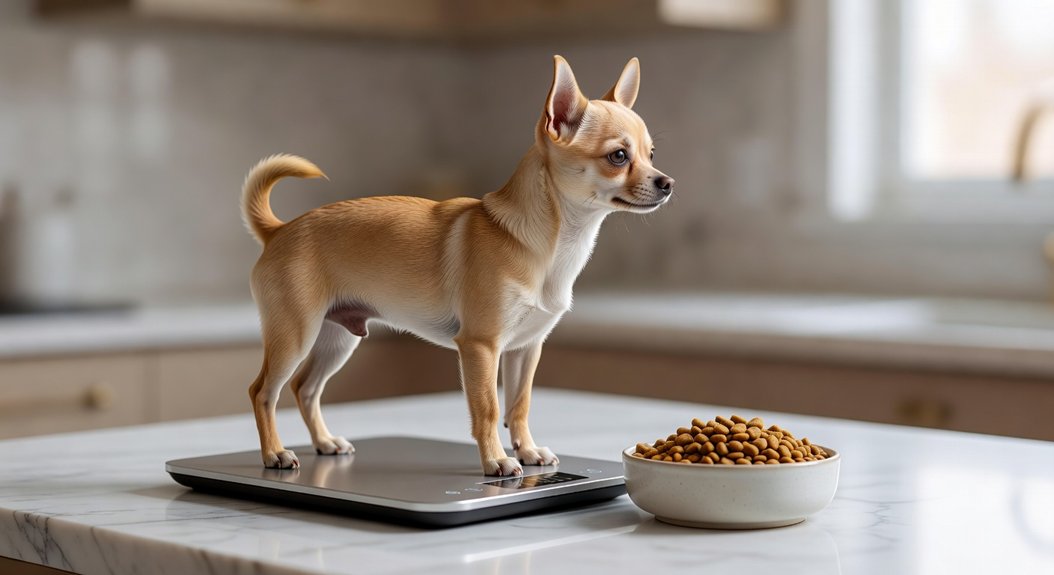
Small dogs can pack on pounds so subtly that you might not notice until the weight’s already a problem. Think of it like a slow-motion sausage transformation. First, run your hands along your dog’s ribcage — you should feel the ribs without pressing hard. If you’re fundamentally performing an archaeological dig just to find them, that’s a red flag. Next, view your dog from above; a healthy silhouette shows a visible waist. No waist? You’ve got a tiny barrel on legs. Also watch for reduced activity — if your Chihuahua’s winded after walking to the food bowl, something’s off. Weigh your dog monthly since even a pound on a small breed equals significant body percentage. Catch it early; it’s much easier fixing than reversing.
Healthy Treats for Small Dogs That Won’t Wreck Their Diet
Catching weight gain early is only half the battle — what you feed your dog between meals matters just as much. Treats can quietly sabotage even the best diet, especially for tiny dogs where one biscuit equals basically a full meal. Keep snacks smart with these options:
- Baby carrots – Crunchy, low-calorie, and oddly satisfying to watch them demolish.
- Blueberries – Tiny fruit for a tiny dog; nature’s perfect portion size.
- Plain cooked chicken – High protein, zero guilt, maximum tail-wagging enthusiasm.
- Green beans – The veggie even picky eaters somehow tolerate.
Limit treats to 10% of your dog’s daily calories. Yes, those puppy eyes are powerful, but your discipline is more powerful.
When to Switch to Adult or Senior Small Breed Food
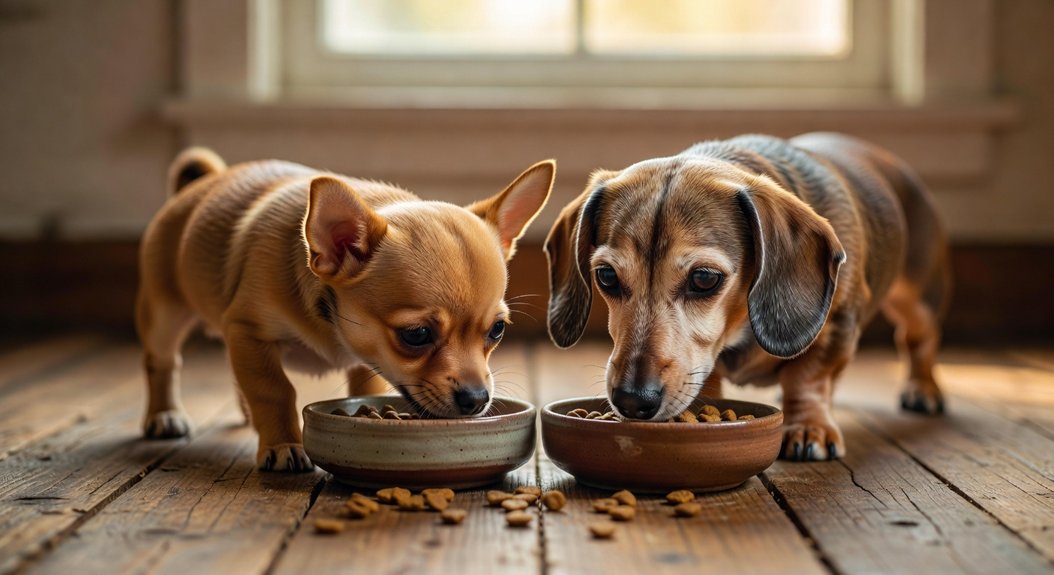
Knowing when to shift your small dog from puppy to adult food is essential, as most petite breeds are ready for the switch between 9 and 12 months of age. Once your dog reaches their senior years—typically around 7 to 10 years for small breeds—you’ll want to reassess their nutritional needs, since older dogs often require fewer calories and more joint-supporting nutrients. Watch for signs like weight gain, decreased activity, or changes in coat quality, as these can signal that it’s time to adjust their diet accordingly.
Transitioning From Puppy Food
Unlike large breeds, small and toy breeds reach adulthood much sooner—typically between 9 and 12 months of age—which means you’ll need to make the switch from puppy to adult food earlier than you might expect. Rushing the change, though, upsets tiny tummies fast. Follow these steps:
- Days 1–3: Mix 75% puppy food with 25% adult food.
- Days 4–6: Go 50/50—equal parts puppy and adult.
- Days 7–9: Flip it to 25% puppy, 75% adult.
- Day 10: Full adult food, no training wheels.
If your pup’s stomach protests with loose stools or vomiting, slow down the process. Their digestive systems are small but mighty—and surprisingly dramatic.
Recognizing Senior Diet Needs
Once your small breed has settled into adult food, the next milestone sneaks up faster than most owners expect—the senior years. Tiny dogs age like dramatic little divas—slowing down, napping more, and suddenly requiring joint support. Typically, small breeds hit “senior” status around 10–12 years.
| Life Stage | Age Range | Key Nutritional Focus |
|---|---|---|
| Puppy | 0–1 year | High protein, DHA |
| Young Adult | 1–5 years | Balanced calories |
| Mature Adult | 5–9 years | Weight management |
| Senior | 10–12 years | Joint support, fiber |
| Geriatric | 13+ years | Digestibility, omega-3s |
Watch for weight gain, stiff movement, or pickier eating—those are your dog’s hints. Switch to senior-formula food that’s easier to digest and gentler on aging kidneys.