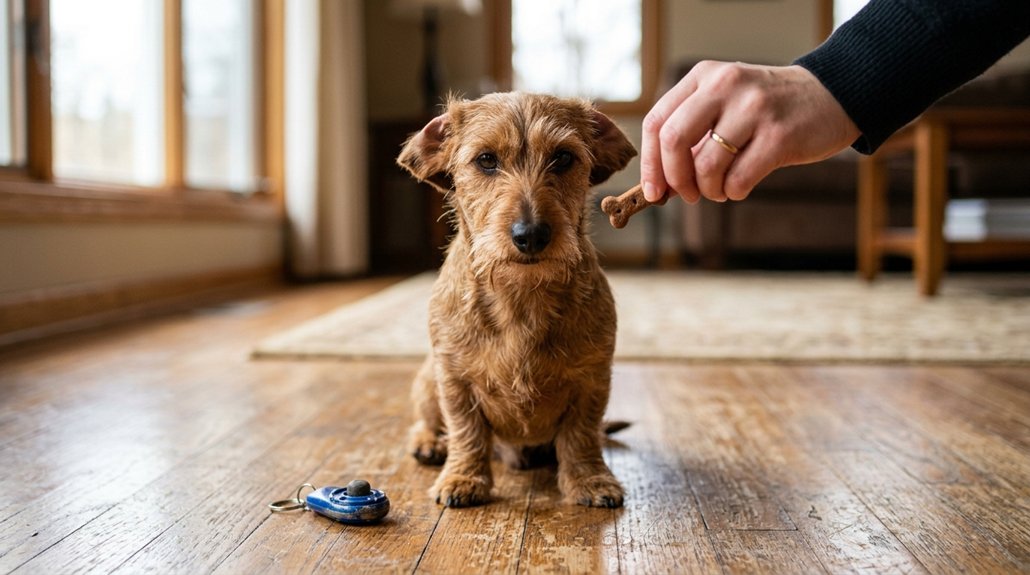
You think a small dog should be easy to train. It’s a small dog, after all. But if you’ve ever tried teaching a Dachshund to sit or a Chihuahua to come, you already know that’s not how it goes. Stubbornness in little breeds isn’t random—it has real roots. Understanding those roots changes everything about your approach.
Why Are Small Dogs Harder to Train Than You Think?
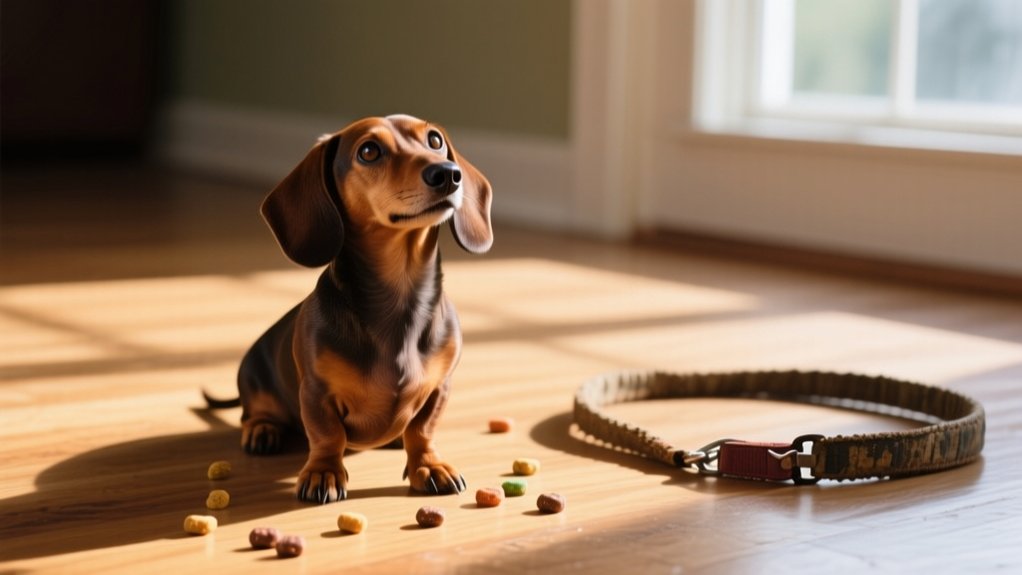
Small dogs might look easy to manage, but their size is exactly what makes training them so deceptive. You think you’re dealing with a fluffy, pocket-sized angel, but what you’ve actually got is a tiny dictator with an agenda. Small breeds often have outsized personalities, and their humans tend to baby them constantly, accidentally rewarding bad behavior. You wouldn’t let a Rottweiler jump on guests, but a Chihuahua doing it? “Adorable!” That inconsistency is precisely why your little guy thinks he’s running the household. Small dogs are also incredibly stubborn, genetically wired for independence. They’re smart enough to know what you want and bold enough not to care. Training them isn’t impossible — it just requires you to stop being manipulated by their cuteness.
What Small Dogs Need Before You Teach Them Anything
Before you can teach your small dog a single command, you’ve got to set the right conditions — because skipping this step is exactly why most people fail. Your tiny dictator needs three things first: trust, energy management, and consistency.
Without trust, you’re basically a stranger with snacks. Build it through calm handling and predictable routines. Your dog’s watching your every move, judging silently like a tiny, furry therapist.
Next, burn off that chaotic energy before training. A Chihuahua running on pure excitement learns nothing — except how to ignore you faster.
Finally, establish yourself as the decision-maker. Not aggressively, just confidently. Small dogs respect clarity. The moment you waffle, they’ve already mentally redecorated your entire house and promoted themselves to CEO.
Training Methods That Actually Work on Small Dogs
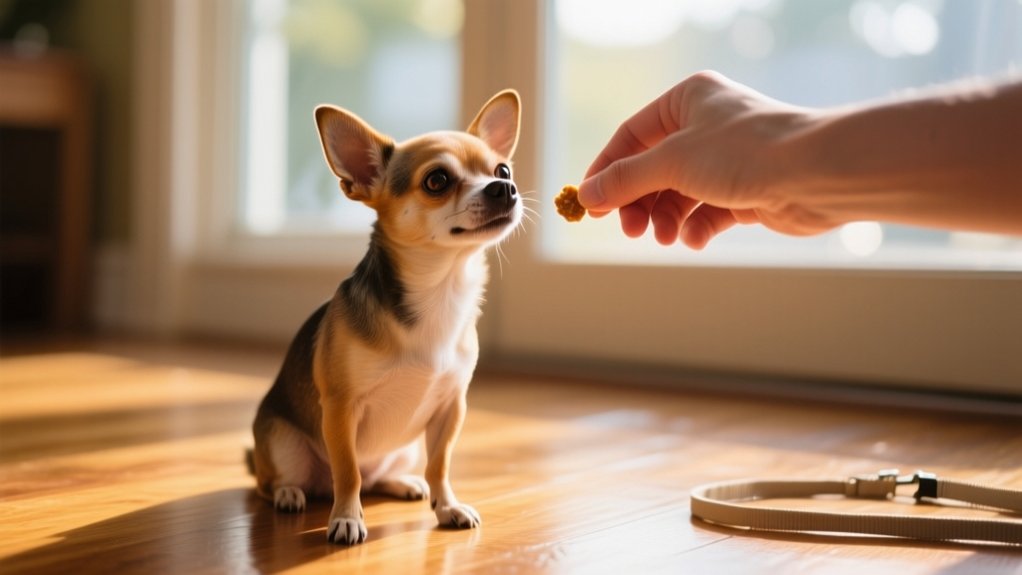
Once the groundwork’s laid, you can start using methods that actually stick with small dogs — and the most effective one is positive reinforcement done right, not just tossing treats randomly and hoping for the best. Time your rewards within two seconds of the behavior, keep sessions under five minutes, and stay consistent.
| Method | Why It Works | Common Mistake |
|---|---|---|
| Positive Reinforcement | Rewires their tiny brains fast | Rewarding too late |
| Clicker Training | Marks exact behavior clearly | Inconsistent clicking |
| Luring | Guides movement naturally | Fading lure too slowly |
| Shaping | Builds complex behaviors gradually | Skipping small steps |
Small dogs aren’t dumb — they’re just selectively motivated. Match the method to your dog’s personality, and you’ll actually get somewhere.
What to Do When Your Small Dog Checks Out Mid-Session
Even with the right method locked in, you’ll hit a wall the moment your small dog mentally clocks out — and it happens faster than you’d expect. One second they’re focused; the next, they’re aggressively sniffing a corner like it holds the secrets of the universe.
Don’t chase the session. End it instead. Stubbornly pushing forward only teaches your dog that ignoring you eventually works — because it does.
Reset with a two-minute break, a quick play burst, or a change of scenery. Then restart with something they already know so you can finish on a win.
Keep sessions under five minutes anyway. Small dogs have small attention spans, and that’s not negotiable — it’s just Tuesday.
Common Mistakes That Make Training a Small Dog Backfire
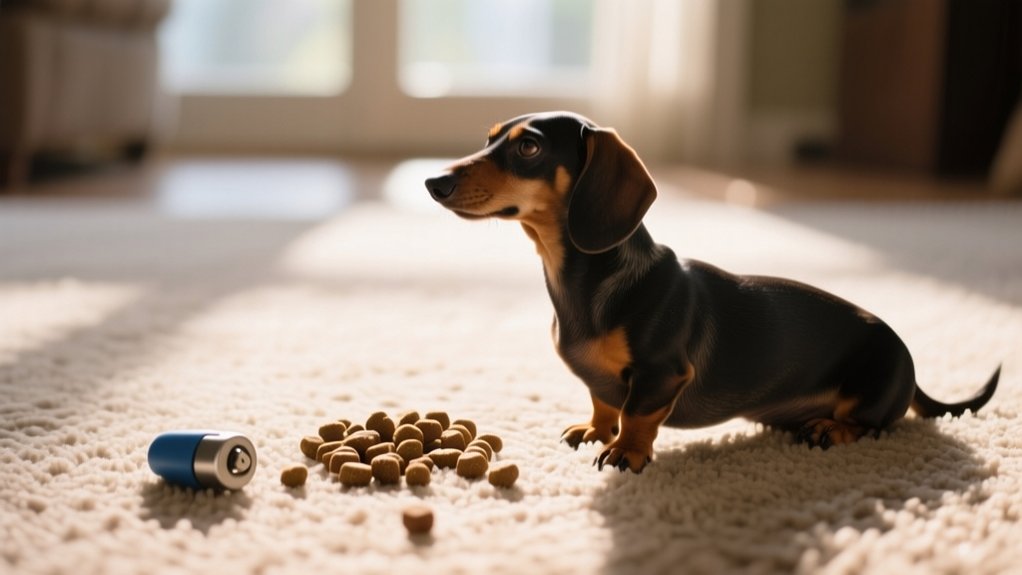
Most small dog training falls apart not because the method is wrong, but because a handful of repeated mistakes quietly cancel out every bit of progress you’ve made. You’re basically building a sandcastle while the tide’s rolling in.
The biggest offenders? Inconsistency tops the list. If “off the couch” means something different depending on your mood, your dog’s just playing the odds — and winning. You’re also probably rewarding the wrong moments without realizing it, like treating them just to stop the barking.
Then there’s the classic mistake of repeating commands. Saying “sit, sit, SIT” teaches them that the first two don’t count. Your dog isn’t broken — you’ve accidentally trained them to ignore you. Fix the pattern, not the dog.


Comments are closed, but trackbacks and pingbacks are open.