Why Your Chihuahua Thinks She Can Take a Golden Retriever (And What’s Actually Happening)
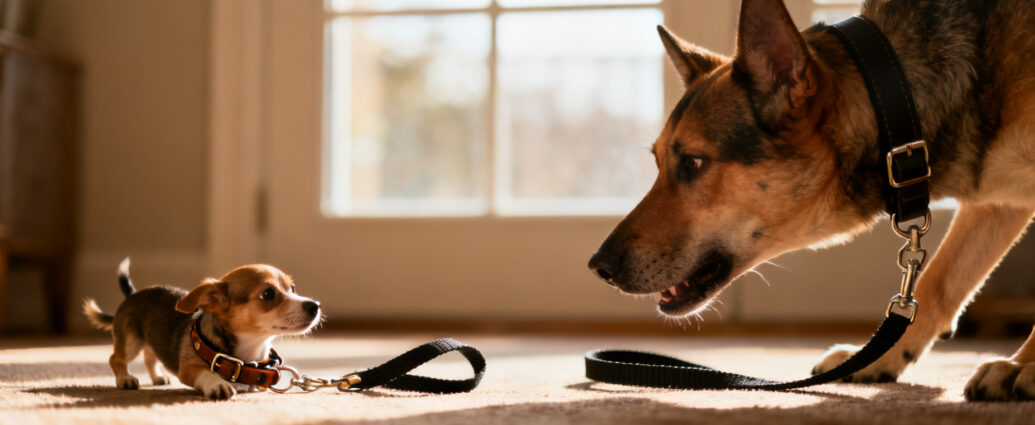
Your tiny six-pound Chihuahua spots a huge seventy-pound Golden Retriever across the street. Suddenly, she acts like she wants to fight! It looks crazy. But here’s the thing – it totally makes sense to her.
Small dogs feel scared and worried just like big dogs do. But there’s one huge difference: they don’t have much space to run away. Think about it. A German Shepherd can back up, look around, and figure things out. Your little Yorkie? She doesn’t have that luxury. By the time her brain says “that might be scary,” the big dog is already way too close. So she freaks out faster. It’s not because she’s mean or wasn’t trained right. Her body is doing exactly what it’s supposed to do when she can’t escape.
Here’s something most people don’t know: the type of dog matters a lot! Terriers were made to fight badgers and rats – animals that actually fight back hard. Toy breeds were chosen because they were brave and super loyal to their owners, not because they were nice to bigger animals. That tough attitude isn’t a mistake. It’s exactly what people wanted when they bred these dogs. The fact that your Pomeranian now goes bonkers at a Bernese Mountain Doodle? That’s just the same bravery showing up in a different situation.
Watch for these body language clues before your dog lunges:
• Her shoulders get stiff and tight first
• Her weight moves forward onto her front paws – she might rock onto her toes
• Her ears do a quick flick about two to three seconds before she reacts (this is your warning!)
I’ve walked plenty of small dogs around here in the neighborhood, and once you know what to look for, you’ll spot that ear flick every single time. It’s like her body is saying “I’m about to lose it” before she actually does.
Trigger #1: Leash Tension (The Invisible Panic Button)
Leash tension is the biggest trigger, and it’s super hard to notice because it happens in your hand, not where you’re looking.
Even pulling the leash tight by just half an inch creates a panic loop. Your Yorkie feels stuck. She pulls forward to check things out or get away. You pull back because you’re worried. She feels even more trapped. Everything gets worse, fast. This whole thing happens in less than three seconds, and neither of you is really thinking about it.
Here’s the exact moment to watch for: Your dog sees the bigger dog but hasn’t barked or lunged yet. Your hand automatically pulls the leash shorter by six to eight inches without you even thinking about it. You think you’re getting ready to help. What you’re really doing is hitting the panic button for your dog.
What to do instead: Try the two-second rule. The second you see something that might scare your dog, make the leash loose before her shoulders get tight. Let it hang down in a loop. I know it feels weird – maybe even dangerous – but a loose leash tells your dog “we’re not getting ready to fight.”
Local tip: Around here, where we’ve got narrow sidewalks and lots of dogs in small spaces, a front-clip harness works way better than a collar for dogs under fifteen pounds. You can guide your dog without squeezing her throat, which just makes the panic worse.
Trigger #2: Territorial Boundaries (The Invisible Fence in Your Dog’s Mind)
Your Pomeranian has an invisible territory that she thinks is hers. And it moves around with her!
Most small dogs think they own the space about fifteen to twenty-five feet around important spots: your front door, your car, that one park bench you always use. Inside that circle, she’ll react way more, even to dogs she sees every single day. Outside that circle? She’s usually totally fine.
There’s a big difference between “home territory” and “moving territory.” Why does your dog go crazy at the neighbor’s Lab when you’re on your porch, but she’s okay with the same dog at the park? Because the porch is hers. The park belongs to everyone. Moving territory – that bubble that follows you around – is smaller and changes depending on where you are, but it’s just as real to her.
Early warning signs before she lunges:
• She puts herself between you and the other dog
• She plants her feet and won’t walk forward when she’s still twenty feet away from the other dog
• She’s not being stubborn – she’s telling you that dog is too close to her space and she’s getting ready to protect it
Picture a Chihuahua who’s perfectly friendly at the dog park downtown, but loses her mind when any dog walks past her apartment building. That’s territorial boundaries at work. The apartment? That’s her castle. The park? Neutral ground where everyone plays by different rules.
Trigger #3: Fear Postures in Bigger Dogs (When Friendly Looks Threatening)
Big dogs don’t try to be scary. They just are, when you’re only nine inches tall.
Certain things big dogs do make small dogs panic: walking straight at them head-on, leaning over them from above, and doing that play bow that looks like they’re about to pounce when you’re watching from way down low. A friendly Golden Retriever’s normal body language – loose, bouncy, walking right up – looks like hunting behavior to a seven-pound Maltese. When one dog is so much bigger than the other, the signals get all mixed up.
What to watch in the bigger dog before your dog reacts:
• Ears pointing forward
• Staring directly at your dog for more than two seconds
• Moving closer faster than a normal walking speed
These are totally normal, friendly behaviors in dog language. But to a small dog who can’t see much and has survival instincts like a prey animal, they look like threats.
You can’t control what the other dog does. But you can watch for these signs and step in before your dog’s brain hits the panic button.
Trigger #4: Resource Guarding Zones (It’s Not Just About the Toy)
Small dogs protect weird stuff. Your attention, obviously. But also that sunny spot on the sidewalk. The exact path you walk every morning. Even the smell of that interesting bush she was sniffing.
A bigger dog coming within ten to twelve feet can set this off, even if the big dog doesn’t care at all about whatever your dog is protecting. Your Westie doesn’t think about what the other dog wants. She only cares that another dog is too close to her stuff.
Pre-guarding behavior is sneaky. Watch for:
• Your dog moving closer to your legs
• She turns her body sideways to the other dog – not looking right at it, but not ignoring it either
• She suddenly grabs a stick or leaf she didn’t care about three seconds ago (she’s making up something to protect because another dog is near)
This gets way more intense if you have multiple dogs at home. Your small dog might only lunge at outside dogs when your other dog is with you. She’s not protecting you. She’s defending the team – a resource that only exists when both dogs are together.
Imagine a household with a Chihuahua and a Beagle. When the Chihuahua is alone on walks, she might ignore other dogs completely. But when both dogs walk together? She turns into a tiny bodyguard, lunging at dogs she’d normally walk right past. That’s coalition guarding in action.
Trigger #5: Owner Anxiety Transfer (Your Tight Shoulders Become Her Battle Cry)
Your dog reads your body like you’re a book she memorized.
The physical signs she picks up on:
• You slow down by half when you see a big dog fifty feet away
• Your breathing changes – shorter, faster, or you hold your breath
• You grip the leash handle super tight, knuckles white, hand stiff
How your Chihuahua understands your tension: She doesn’t think “oh, my owner is being careful.” She thinks “there’s danger and we’re getting ready to handle it together.” You think you’re being cautious. She thinks you’re confirming that the Rottweiler walking toward you is dangerous. So she lunges before the other dog even looks at her, because you already told her it was necessary.
The weird solution that actually works: Keep walking at your exact same speed and keep breathing normally, even when you see a big dog coming. This tells her “we’re safe” way better than saying anything. Saying “good girl” in a tight, high voice while your shoulders are up by your ears? She hears your body, not your words.
I’ll be honest – this is the hardest one for me personally. When I see a huge dog coming down the sidewalk and I’m walking a tiny Yorkie, every muscle in my body wants to tense up. But the second I stay loose and keep my normal pace, the little dog stays way calmer.
Trigger #6: Size Disparity Panic (When Big Gets Too Close, Too Fast)
There’s a distance where the size difference stops being just “big dog over there” and becomes overwhelming.
For most small dogs, that distance is six to eight feet. Inside that circle, a bigger dog fills up their entire view. Running away isn’t possible anymore – there’s no time, no space. So fighting takes over. It’s not a choice. Her nervous system just takes control.
How fast the big dog moves makes it worse. A big dog going from fifteen feet away to five feet away in less than three seconds creates panic that doesn’t happen with slow approaches. The speed looks like hunting behavior, and your dog’s brain doesn’t wait around to figure out if it’s friendly or not.
What this looks like in real time: Your dog is fine. Calm. Maybe even curious. Then the bigger dog takes two quick steps forward, and your Yorkie goes from calm to flying through the air in half a second. You didn’t miss a warning sign. The speed was the warning sign.
Picture a Maltese sitting calmly on the sidewalk, watching a Labrador across the street. Everything’s fine. Then the Lab spots a squirrel and bounds forward three steps. Suddenly the Maltese is barking and lunging like her life depends on it. Same dog, same situation – just different speed.
Trigger #7: Previous Negative Encounters (The Memory That Shortens the Fuse)
One bad experience changes everything.
Getting stepped on, snapped at, or knocked over by a big dog creates a memory that spreads fast. Your dog might now react to all big dogs, or just all big dogs that are a certain color, size, or move a certain way. Her brain doesn’t save these memories with details. It saves them under “dangerous – stay away.”
Trauma memories get bigger over time. Your dog might react to a Labrador thirty feet away now because a different Labrador got in her space six months ago at six feet. The distance got bigger, the fuse got shorter, and the original situation doesn’t matter anymore. Her nervous system is just trying to keep her safe.
This is where you need professional help. Figuring out if you’re dealing with one bad memory or a pattern that needs serious training isn’t something you can figure out on your own reliably. A certified trainer can look at the behavior, make a plan to help your dog feel safe again, and help you rebuild her confidence slowly without overwhelming her. Picture a trainer working with a Maltese who was stepped on at a dog park – sessions might start with the small dog watching calm, trained big dogs from fifty feet away, gradually closing distance over weeks, not days. That’s how long real recovery takes.
Around here, we’ve got some great trainers who really understand small dog behavior. It’s worth finding someone who gets it, because not all trainers know how to work with tiny dogs who’ve been scared.
Spotting the Pre-Lunge Window (Your 3-Second Intervention Opportunity)
The sequence happens the same way every time: body gets stiff, staring, weight moves forward, then lunge.
You need to redirect when her body gets stiff, not after she starts staring. Once the stare locks in, her nervous system has already decided. The window is small – three seconds, maybe four – but it’s definitely there.
Practical ways to redirect:
-
The 180-degree turn: Turn around and walk away. Simple, works great, removes the problem.
-
The “find it” scatter-treat game: Toss a small handful of treats on the ground in front of her and let her sniff and search. It stops the stare and gives her brain something else to do.
-
The emergency sit-and-watch method: When you can’t avoid the other dog, ask for a sit, keep feeding her treats the whole time the other dog passes, and only release her when the trigger is gone.
What success really looks like: Not a perfectly calm dog. A dog who sees the trigger, looks at you, and can eat food or follow a command. That’s your goal. That’s the behavior you’re building. Being calm will come later, after lots of practice and confidence. Right now, you’re just looking for that moment where her brain can still choose something other than lunging.
| Stage | What You See | What To Do |
|---|---|---|
| Early (4-5 seconds before) | Ears perk up, body slightly tense | Create loose leash, get treats ready |
| Middle (2-3 seconds before) | Stiffening, weight shifting forward | Redirect NOW – turn away or scatter treats |
| Late (1 second before) | Locked stare, body coiled | Too late for training – just create distance |
Imagine a Chihuahua owner who practices these redirections every single day for two months on their morning walks through the neighborhood. At first, they’re turning around and walking away ten times per walk. After a month, maybe five times. After two months, their dog starts looking at them before getting stiff, checking in like “should we worry about this?” That’s real progress, and it’s absolutely possible with consistency.