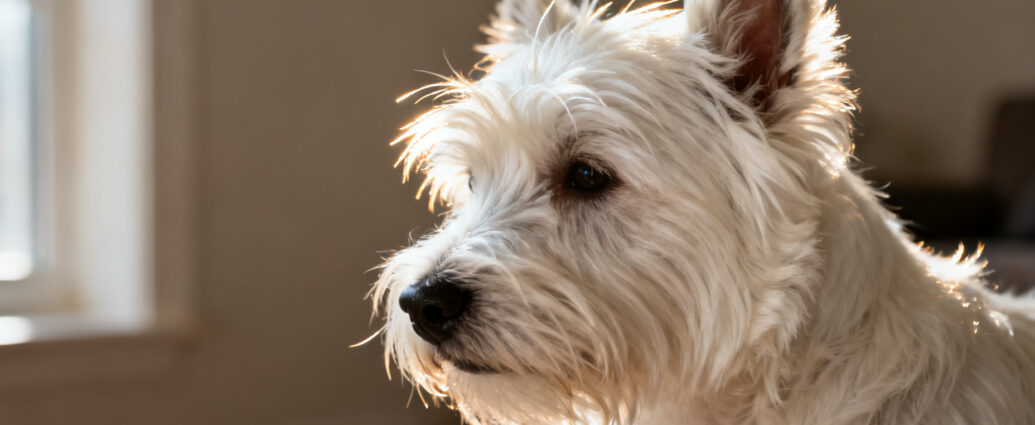
This isn’t bad luck. It’s in their genes.
West Highland White Terriers are born more likely to get itchy, irritated skin and yeast problems because of how their skin works – or really, how it doesn’t work quite right. Their bodies react too strongly to things that wouldn’t bother most other dogs. That means stuff in the air or grass that a Labrador wouldn’t even notice can make a Westie scratch like crazy. And the natural yeast that lives on every dog’s skin can grow out of control on a Westie’s skin. You didn’t mess up by picking the wrong shampoo or missing a bath. The breed just got dealt a tough set of cards.
But here’s the tricky part: not all Westie skin problems look alike, and treating the wrong thing can actually make everything worse!
Yeast infections have clear signs. You’ll smell it before you see it – a musty, corn-chip smell that sticks to your dog even right after a bath. The skin feels greasy and oily, especially around the paws, armpits, and private areas. You’ll often notice red-brown stains on the white fur where your Westie has been licking over and over. The problem spots look red and feel sticky when you touch them.
Allergic skin looks totally different. Crazy itching comes first, often before you can see anything wrong. Then red, angry patches show up – usually on the belly, between the toes, around the face and ears. The skin looks mad and dry, not oily at all. Your Westie might scratch so hard they make raw, bleeding spots. The itching gets even worse at night or after playing outside.
Simple dry, flaky skin is the easiest of the three. White flakes dust the coat like dandruff, the fur looks dull and sad, and the skin feels tight like it needs lotion. No weird smell. No grease. Just uncomfortable dryness that makes your dog look a bit shabby and feel itchy all over instead of in just a few spots.
Why does knowing the difference matter so much? Because using a rich, moisturizing shampoo on a yeast infection gives the yeast exactly what it wants – more moisture, more oils, a perfect place to grow! You’ll actually make the infection worse while scratching your head about why your expensive shampoo isn’t helping. On the flip side, hitting allergic skin with a harsh yeast-fighting shampoo will strip away the skin’s protection and cause even more redness and swelling. You have to match the right product to the right problem.
Best Shampoos for Yeast Dermatitis in Westies
For active yeast infections, you need a shampoo that kills fungus. Look for one with either ketoconazole or chlorhexidine as the main ingredient. How much of that ingredient matters a lot – look for 2% chlorhexidine or 1% ketoconazole. That’s strong enough to work without being too harsh.
On a 15-20 pound Westie, you’ll need about 2-3 tablespoons of shampoo for a full, sudsy bath. That’s actually more than you probably think! Work it all the way down to the skin, not just on top of the fur. Then – and this is the step most people skip – you absolutely have to leave it sitting on your dog for a full 10 minutes. Set a timer on your phone. The medicine needs time touching the skin to actually kill the yeast. If you rinse after 30 seconds, you just gave your dog a regular expensive bath with zero yeast-fighting power.
Here’s what you need for a proper yeast-fighting bath:
• 2-3 tablespoons of medicated shampoo
• Work it down to the skin, not just the top fur
• Leave it on for 10 full minutes (set a timer!)
• Rinse really, really well
• Do this every 5-7 days during bad flare-ups
For keeping yeast away between bad times, or for mild cases that haven’t gotten really bad yet, a gentler anti-yeast shampoo works well. These usually mix chlorhexidine with soothing stuff like aloe or oatmeal. They’re better at stopping yeast before it becomes a full infection, but they won’t cure a bad infection that’s already going strong. The good news? They’re easier on the skin for regular use.
In real testing, the stronger anti-yeast shampoos got rid of that musty smell within just two baths when people used them correctly – meaning they left it on long enough and rinsed really well. The gentler maintenance shampoos needed four weeks of bathing twice a week to get the same results. Some shampoos left the coat feeling stripped and straw-like, especially the ones with lots of chlorhexidine but nothing to soften the fur. Your Westie’s coat should feel clean and a tiny bit crisp after it dries, not brittle and crunchy.
How you apply the shampoo matters way more on Westies than on most dogs because of that thick double coat. You absolutely have to get the shampoo into the fluffy undercoat around the armpits, groin, and between the toe pads – exactly where yeast loves to grow in warm, damp spots. Part the fur with your fingers and work the suds down to the actual skin. If you’re just scrubbing the surface, you’re only treating the top half-inch of fur and completely missing the real problem underneath.
Picture a Westie owner in Glasgow who spent three weeks bathing their dog twice weekly, wondering why the yeasty smell kept coming back. Turns out, they were only lathering the top coat and rinsing after two minutes. Once they started parting the fur to reach the skin and leaving the shampoo on for the full ten minutes, the smell disappeared within a week. That’s the difference technique makes!
Best Shampoos & Treatments for Atopic Dermatitis (Allergic Skin)
For medium to really bad allergic skin problems, medicated shampoos with hydrocortisone (usually 1%), colloidal oatmeal, or ceramides give the most relief. Hydrocortisone calms down inflammation right away. Colloidal oatmeal soothes and makes a protective coating. Ceramides help rebuild the damaged skin barrier that’s causing the whole problem in the first place.
How much for a Westie: about 2 tablespoons, worked really well into damp fur and left on for 5-10 minutes. Don’t expect magic overnight results. You’re looking at 3-4 weeks of regular use – usually twice a week – before you see real improvement. The itching might get better within a week, but the skin itself needs time to actually heal and rebuild its protection.
Once the really bad phase passes, switch to a gentle, allergy-friendly maintenance shampoo. No fragrance and no soap are absolute must-haves for Westies with confirmed allergies to stuff in the environment. The pH level matters more than most owners realize – dog skin sits around 7.0 to 7.5, which is more neutral than human skin. Shampoos made for people or with the wrong pH can mess up the skin barrier even more and cause new flare-ups.
Leave-on treatments and balms are tricky on a Westie’s wiry coat. Most just slide right off or sit on top of the fur without ever reaching the skin. The products that actually work are a bit thicker – not quite like paste, but heavier than regular lotion. Look for balms with ceramides, fatty acids, and anti-itch ingredients like hydrocortisone or pramoxine.
Whether they feel greasy depends on what’s in them. Some soak in within 10-15 minutes and leave the coat feeling totally normal. Others leave a slightly sticky feeling that attracts dirt and makes white fur look dingy and grey. In testing, the best balms soaked in clean but still left a protective layer you could feel when you touched the skin.
The licking problem is super real. Westies will absolutely lick off anything that smells or tastes even a little bit interesting. Tricks that actually help: put the balm on after a walk when your dog is tired, give them a long-lasting chew to distract them for 10-15 minutes while it soaks in, or use one of those cone collars for the first few times until your Westie gets used to the routine.
Things that help stop the licking:
• Apply after walks when they’re tired
• Give a special chew as a distraction
• Use a cone collar for the first few applications
• Put it on right before mealtime
What didn’t work: lightweight lotions that just ran right off the double coat before soaking in, balms that left a yellow stain on white fur even after the skin got better, and treatments that stopped itching at first but seemed to cause new hot spots a week later – probably because of ingredients that clogged pores or reactions to fake scents.
Imagine a Westie owner in Edinburgh trying five different leave-on balms over two months, each one either sliding off completely or turning their dog’s pristine white chest a dingy yellow. Finally finding one that actually absorbed and didn’t stain felt like winning the lottery! That’s why testing matters so much with these products.
Best Products for Dry, Flaky Skin (No Infection, Just Uncomfortable)
Simple dryness needs moisture, not medicine. The best moisturizing shampoos for Westies have ceramides or fatty acids – ingredients that strengthen the skin’s natural barrier and help it hold onto water. These are different from anti-yeast and anti-itch shampoos because they’re not trying to kill anything or calm down swelling. They’re just adding back what the skin is missing.
Use them every 3-4 weeks for regular maintenance, or every 10-14 days if the dryness is really bad. Bathing more often, even with a moisturizing shampoo, can backfire by washing away natural oils faster than the skin can make new ones.
Leave-in conditioners and coat oils are where you get the biggest improvement for dry skin. The challenge with Westies is finding products that add moisture without making the coat look flat and limp or causing that dreaded yellow color on white fur. The best ones are lightweight, soak in quickly, and have ingredients like argan oil, jojoba oil, or squalane.
Amount matters a lot. For covering a whole Westie, you’ll use about 3-4 pumps of a spray-on leave-in conditioner or 4-6 drops of a concentrated coat oil. Put it on damp fur after bathing, focusing on the areas that feel driest – usually the back, sides, and the base of the tail. Avoid the face and ears unless the product specifically says it’s safe for those areas.
Omega supplements and skin treatments take longer to show results, but they work from the inside out. In testing, both capsules and liquid omega supplements made the coat better, but liquids mixed into food seemed to work a bit faster – possibly because dogs absorb them better. Realistic timeline: 6-8 weeks before you see the coat looking shinier and the flaking getting better. Picture a Westie owner in Aberdeen giving daily fish oil for two months, seeing absolutely no change, and then suddenly noticing at the ten-week mark that the coat looks shiny and healthy and the flaking has completely stopped. That’s the typical pattern with omega supplements – nothing, nothing, nothing, then suddenly improvement!
Hot Spot & Emergency Treatments for Westie Skin Crises
Hot spots show up overnight. Your Westie was totally fine yesterday; today there’s a raw, weeping patch of skin that’s clearly painful and getting worse every hour.
The best emergency sprays and foams have both germ-killing ingredients (to stop infection) and anti-itch stuff (to stop the scratch-lick cycle that makes hot spots spread). Look for products with chlorhexidine or benzalkonium chloride plus hydrocortisone or lidocaine. Whether they sting when you spray them on varies by product – some Westies don’t react at all, others will snap or try to bite when the spray hits raw skin. Test on a small spot first if your dog is already stressed and upset.
Relief comes fast with good products. The itching should ease up within 15-30 minutes. The redness and swelling take longer – usually 24-48 hours to show visible improvement.
Emergency hot spot treatment timeline:
| Time | What to Expect |
|---|---|
| 15-30 minutes | Itching should ease up |
| 2-4 hours | Dog stops scratching constantly |
| 24-48 hours | Redness starts to fade |
| 3-5 days | Raw spot begins healing over |
Protective balms and barrier creams do something different: they make a physical barrier that keeps the area clean and stops more damage from licking and scratching. The best ones for Westies stay put between paw pads and on belly skin – areas that move and rub a lot. Thick, waxy formulas work better than creams. Your Westie will still try to lick them off, so distraction and watching them closely are essential for the first 20 minutes after you put it on.
Staining is a real worry. Some barrier creams have zinc oxide or other stuff that leaves white or grey marks on bedding and furniture. Others are clear but slightly greasy and can rub off onto fabric. If staining matters to you, test the product on an old towel first before using it on your dog.
When to stop home treatment and call the vet: if the hot spot spreads even though you’re treating it, if you see oozing or pus, if the skin feels hot when you touch it, or if your Westie gets a fever or seems tired and sick. You’re also done with home treatment if the hot spot hasn’t improved even a little bit within 48 hours of taking care of it consistently. Some infections need antibiotics that go through the whole body, not just topical treatment you put on the skin.
Imagine a hot spot appearing on a Thursday night after your Westie spent the afternoon in the garden. By Friday morning, it’s the size of a 50p coin and weeping clear fluid. You apply an emergency spray, and by Friday evening, your dog has stopped frantically licking it. But by Sunday, it’s twice as big and now oozing yellow pus – that’s when you need the vet, not more home treatment. Knowing when to switch from DIY to professional help can save your dog days of misery.
Application Tips, Bathing Frequency & What Actually Works on Westie Coats
Bathing frequency is a balancing act. During active skin problems, you’ll bathe every 5-7 days with medicated shampoo – often enough to treat the problem, but not so often that you strip away the natural oils that protect the skin. For regular maintenance once the problem is under control, every 3-4 weeks is the sweet spot for most Westies.
Drying technique stops new problems from starting. Letting a Westie air-dry creates the perfect environment for yeast to grow – that thick undercoat stays damp for hours, making warm, moist pockets where yeast absolutely thrives. Use a dryer on a cool or low setting. High heat can irritate sensitive skin and cause new inflammation. Work carefully: blow-dry in sections, lifting the top coat to get air down to the undercoat. Pay special attention to the armpits, groin, and between the toes. The coat should be completely dry when you touch it – not just surface-dry, but dry all the way down to the skin.
Important! A damp Westie is a yeast factory. That thick double coat can stay wet for 4-6 hours if you don’t blow-dry properly. That’s 4-6 hours of creating the perfect warm, moist environment for yeast to multiply. Always blow-dry completely, especially in those hidden spots like armpits and between toes!
Combining products requires some thought. You can safely use a medicated shampoo followed by a leave-in conditioner or balm, as long as the leave-in product doesn’t have ingredients that undo what the shampoo’s active ingredients just did. For example, using an anti-yeast shampoo and then putting on a heavy oil-based conditioner doesn’t make sense – you’re treating yeast and then creating perfect conditions for it to grow back! But an anti-yeast shampoo followed by a light, non-greasy leave-in with ceramides works great together.
Some combinations cancel each other out or cause irritation. Don’t use multiple products with hydrocortisone at the same time – you’ll use too much and it won’t be safe. Don’t layer a leave-on treatment with alpha-hydroxy acids over a shampoo with salicylic acid unless your vet specifically tells you to. When you’re moving from treatment products to maintenance products as the skin gets better, phase them in gradually. Use the medicated shampoo once a week and the maintenance shampoo once a week for a few weeks, then switch completely to maintenance.
Real cost breakdown for treating Westie skin problems over three months:
For mild issues, expect to spend roughly £40-60 total. That’s one 8 oz bottle of medicated shampoo (around £18-25), one leave-in conditioner or balm (around £15-20), and one maintenance shampoo (around £12-18). An 8 oz bottle of shampoo lasts about 6-8 baths on a Westie, which is plenty for three months of weekly treatment that tapers down to monthly maintenance.
For severe issues, you’re looking at £90-140. Multiple bottles of medicated shampoo as you work through the really bad phase, a prescription-strength leave-on treatment (£25-40), emergency hot spot spray (£12-18), barrier cream (£10-15), and maintenance products for after the crisis passes. You might also add omega supplements (£15-25 for a three-month supply).
No one needs a gallon jug of shampoo for a Westie! The 8 oz or 12 oz sizes make way more sense for a 15-20 pound dog. Bigger sizes go bad or stop working before you use them up.
Picture a family in Manchester spending £35 on a massive 32 oz bottle of medicated shampoo, thinking they’re saving money. Eighteen months later, they’re still using that same bottle, not realizing the active ingredients started breaking down after about eight months. They’re basically washing their Westie with expensive water at that point. Smaller bottles used up within their effective period work so much better!
What Didn’t Make the List (And Why)
Several popular products failed in real Westie testing. Some highly-rated shampoos simply didn’t address the specific problems Westies face – they were fine general-purpose shampoos, but they didn’t have the active ingredients needed for yeast infections or allergic skin. Others caused new irritation, with Westies developing redness and itching that wasn’t there before treatment started. The absolute worst ones didn’t rinse clean from the double coat, leaving a residue that attracted dirt and made the white fur look grey and dingy within just a few days.
Ingredients to avoid for Westies with sensitive skin:
• Artificial fragrances (they serve no purpose and often trigger reactions)
• Tea tree oil (can be toxic to dogs in higher amounts)
• Citrus oils (common irritants that cause more itching)
• Harsh sulfates like sodium lauryl sulfate (strips too much away)
Why some highly-rated dog shampoos don’t work for breed-specific Westie issues comes down to how they’re designed. Products made for single-coated breeds or bigger dogs don’t account for the thick, wiry texture of a Westie’s double coat. A shampoo that works beautifully on a Greyhound or a Poodle might not get through a Westie’s undercoat or might leave residue trapped against the skin. Concentration matters too – a product designed for a 70 pound Golden Retriever might be too watered-down to work on a 17 pound Westie’s more concentrated skin issues, or the recommended amount might be way too much for a small dog’s surface area.
The wrong product won’t just fail to help. It can actively make things worse, setting you back weeks in the treatment process and leaving your Westie more uncomfortable and miserable than when you started. That’s why understanding your specific Westie’s specific problem matters so much – there’s no one-size-fits-all solution here, despite what some marketing claims!