Your Chihuahua has 42 teeth. So does a German Shepherd.
The big difference? Those 42 teeth are squeezed into a jaw that’s about one-third the size. It’s like trying to fit a whole classroom of kids into a closet! This crowded mouth traps food bits and lets plaque build up way faster than it does in bigger dogs. Small dogs aren’t bad at keeping their teeth clean – their mouths just make it really, really hard from day one.
Some small dog breeds have serious tooth problems that vets see all the time. Yorkies and Chihuahuas often start losing teeth super early, sometimes by age 3 to 5 if nobody helps them. Pomeranians get gum disease that doesn’t just hurt their mouths – it can mess with their hearts, kidneys, and how long they live. These aren’t made-up scary stories. This is what really happens when you have a dog whose jaw got smaller over time but kept all the same teeth.
Here’s something nobody likes to talk about: You can’t force a 6-pound dog to do anything. With a big, friendly Labrador, you might be able to gently hold them still. But try that with a tiny dog and you’ll have a wiggling, scared animal – and maybe some bite marks on your fingers. Your tooth-brushing routine has to work with your dog, not against them. That’s not treating them like a baby – it’s just common sense.
Step 1: The Pre-Brush Calm-Down (5 Minutes Before)
Trying to brush your Westie’s teeth right after dinner or playtime? You’re basically asking for a fight you don’t need.
Wait until they’re naturally chilled out. Not sleepy or worn out – just calm and happy to hang out with you without bouncing around.
The lap-and-touch prep takes 2-3 minutes:
• Get your dog on your lap or next to you
• Gently touch their muzzle and face
• Lift their lips a tiny bit without any tools
• Give them a quiet “good dog” or a gentle scratch when they stay calm
You’re teaching them something important here: having their mouth touched is normal and boring, not something scary that’s about to happen.
The biggest mistake? Grabbing the toothbrush first thing. Do that too many times and your dog figures out that seeing the brush means their mouth is about to get invaded. You’ve accidentally made them scared of the brush before you even touch them.
Step 2: Lip Lift and Visual Check
What you’re looking for: red or puffy gums, crusty yellow-brown stuff on teeth (especially the big ones in back), any bleeding, or a stinky smell that tells you something’s infected.
Here’s the trick for tiny mouths: Use your thumb to gently pull the lip up and back. Don’t try to force their whole mouth open. You can see most of the problem spots without making them uncomfortable, which small dogs really hate anyway.
Why check first before brushing? Because if you see swollen gums or a wobbly tooth, you’ll need to be extra gentle or skip that spot completely and call your vet. Way better to know what you’re dealing with before you start scrubbing around in there.
Imagine a Chihuahua with a loose tooth that’s barely hanging on – if you went straight to brushing without looking, you might hurt them badly and make them never trust you again.
Step 3: Finger Brush or Gauze Warm-Up
Here’s a smart idea: don’t even use the toothbrush at first.
A finger brush (it’s like a little rubber cap for your finger) or a piece of gauze wrapped around your finger gives you way more control in a mouth the size of a grape. You can actually feel what you’re doing. It’s also less scary for suspicious Pomeranians who think anything stick-shaped is probably dangerous.
How much toothpaste? A pea-sized blob. Not a big stripe like you’d see in a toothpaste commercial – for a 7-pound Yorkie, that tiny amount really is enough. More than that is just wasted and might upset their stomach.
The right way to move your finger: Gentle circles along the gum line where the gross stuff actually builds up. Not hard scrubbing across the teeth that can hurt the enamel or scare your dog so much they never let you try again.
Step 4: Toothbrush Work on the Problem Zones
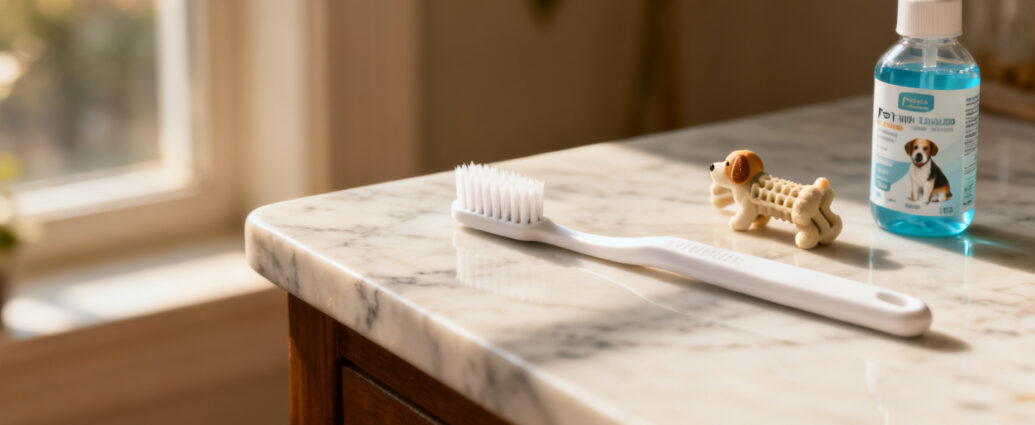
Real talk about brushes: Those super tiny brushes sold for cats or puppies? Those are actually the right size for adult Chihuahuas. A regular “small dog” brush is often still too big to fit properly in a really small mouth.
Start with the upper back teeth. These are the ones that get the most crusty buildup and are the hardest to reach, so tackle them while your dog is still being good. Spend about 15 to 20 seconds on each side. That’s not very long, but it works if you do it regularly.
Here’s where people mess up and give up: Trying to brush every single tooth perfectly every single day. Just hit the outside surfaces of the top teeth and the pointy fangs, and you’ve done about 70% of the good stuff in around 2 minutes. That’s something you can actually keep doing for months and years, which matters way more than one perfect job followed by weeks of nothing.
When should you stop? If your dog starts pulling away or acting stressed – showing the whites of their eyes, licking their lips a lot, getting stiff – stop on a good note. Forcing them to finish every tooth when they’re done cooperating just teaches them that you don’t care what they’re trying to tell you. Tomorrow will be even harder if you do that.
Picture a Yorkie who’s had enough and keeps turning their head away – if you grab their face and keep going anyway, next time they’ll hide when they see the toothbrush coming.
Step 5: Optional Dental Wipe for the Stubborn
Use this trick on days when your Westie is absolutely not going to let you brush, or when you’re on vacation without all your usual stuff.
A dental wipe that rubs off some of the slimy plaque is better than skipping completely. Not by a ton, but enough to help over time.
What wipes actually do:
• Remove the sticky film that bacteria stick to
• Buy you time until the next real brushing
• Work okay for the outside of teeth
What wipes DON’T do:
• Reach under the gums or between crowded teeth
• Stop serious crusty buildup on their own
• Replace actual brushing
The right way to use them: Wrap the wipe around your pointer finger and use firm but gentle pressure along the outside of the teeth and gum line. Imagine you’re wiping a smudge off a mirror, not scrubbing dried food off a pan. You want to remove stuff, not scratch anything.
Step 6: The Post-Care Reward Protocol
Timing is everything.
Give the treat right after you let your dog go, not five minutes later when they’ve forgotten what just happened. You’re teaching them “tooth brushing ends with something awesome,” and that only works if it happens immediately.
What makes a good reward:
• A small dental chew like a Greenies Petite (get the right size for your dog’s weight)
• A frozen treat
• Fun playtime with their favorite toy
• NOT the same training treats you use all day – those aren’t special enough
The mistake that ruins everything? Giving them the treat early because your Pomeranian is giving you sad puppy eyes. This teaches them that whining gets them out of it early AND gets them a prize. You just made tomorrow way harder for yourself.
Adjusting the Routine for Real Life
The honest truth about daily minimum: If you can’t do a full brush session, at least do the finger-with-gauze rub on the top teeth. Thirty seconds of something beats zero minutes of nothing, and doing it every day matters more than doing it perfectly once in a while.
When do you need the vet’s help? If you’re brushing every day but still seeing crusty buildup or red gums, your small breed probably needs professional teeth cleaning every 12 to 18 months no matter what you do at home. Some dogs just make that crusty stuff faster. It’s not your fault.
For older dogs or dogs with bad teeth already: Use softer brushes, be even more gentle, and maybe switch to a dental gel that doesn’t need brushing if your 12-year-old Yorkie has sore gums. Imagine a dog who’s already missing several teeth and has tender, painful tissue – forcing a brush session hurts them more than it helps. Do what they can handle, and let your vet take care of the rest.
IMPORTANT: If your small dog’s breath suddenly smells really bad, they stop eating, or you see blood when you check their mouth, call your vet right away. These can be signs of serious problems that need professional help, not just home brushing.